Effects of Neuromuscular Priming with Spinal Cord Transcutaneous Stimulation on Lower Limb Motor Performance in Humans: A Randomized Crossover Sham-Controlled Trial
Simone Zaccaron, Lara Mari, Mattia D’Alleva, Jacopo Stafuzza, Maria Parpinel, Stefano Lazzer, Enrico Rejc

TL;DR
This study shows that spinal cord stimulation during exercise helps maintain lower limb strength and performance, unlike a placebo treatment.
Contribution
The novel finding is that spinal cord transcutaneous stimulation during exercise prevents performance decline in maximal lower limb efforts.
Findings
scTS priming increased or maintained maximal isometric torque and explosive force, unlike sham stimulation.
scTS was associated with significant improvements in force development rate compared to sham.
Preliminary neurophysiological trends suggest scTS affects spinal circuitry excitability.
Abstract
Background: Lower limb motor output contributes to determining functional performance in many motor tasks. This study investigated the effects of non-invasive spinal cord transcutaneous stimulation (scTS) applied during an exercise-based priming protocol on lower limb muscle force and power generation. Methods: Twelve young, physically active male volunteers (age: 22.7 ± 2.1 years) participated in this randomized crossover, sham-controlled study. The maximal voluntary contraction and low-level torque steadiness of knee extensors, as well as the maximal explosive extension of lower limbs, were assessed before and after the priming protocol with scTS or sham stimulation over a total of four experimental sessions. Further, characteristics of evoked potentials to scTS related to spinal circuitry excitability were assessed in the supine position before and after the scTS priming protocol.…
Genes, proteins, chemicals, diseases, species, mutations and cell lines named across the full text — each resolved to its canonical identifier and authoritative record.
Click any figure to enlarge with its caption.
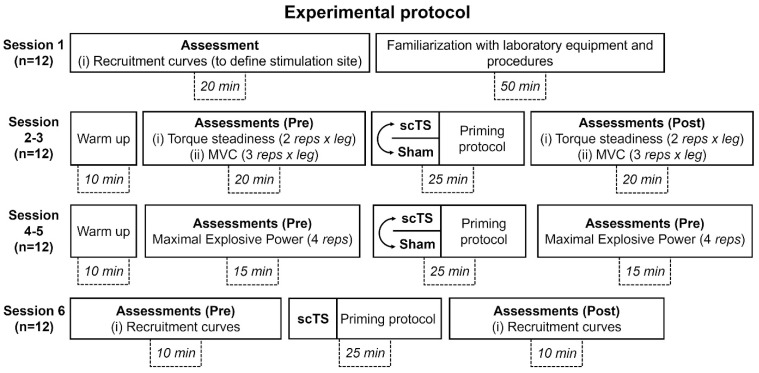 Figure 1
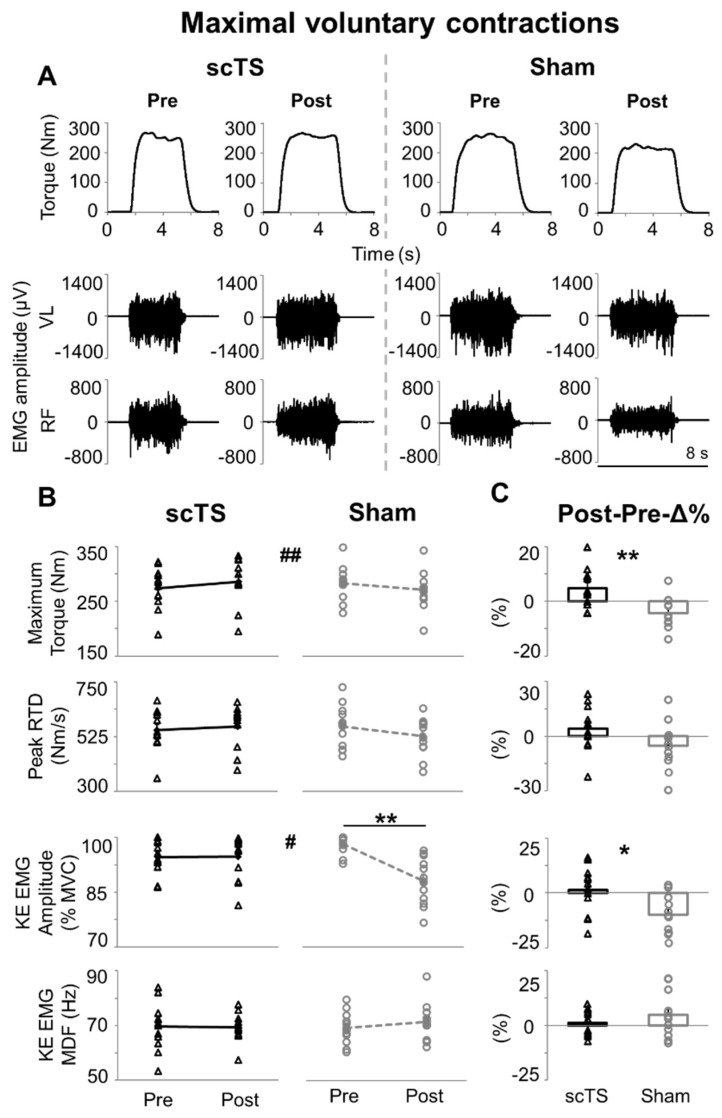 Figure 2
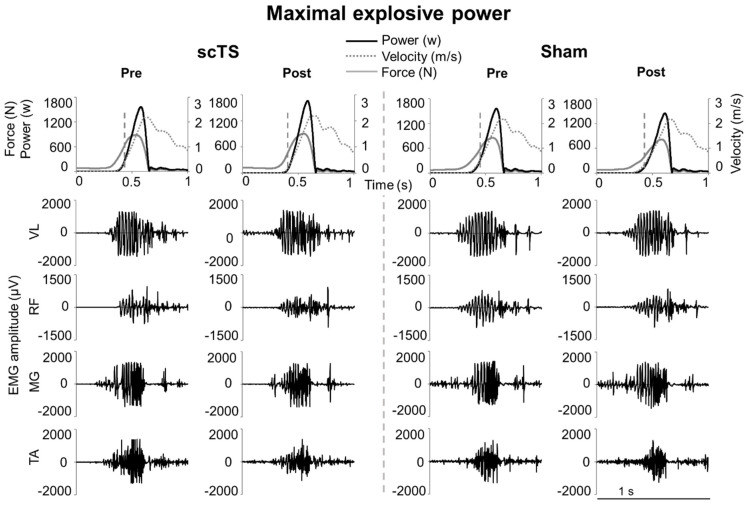 Figure 3
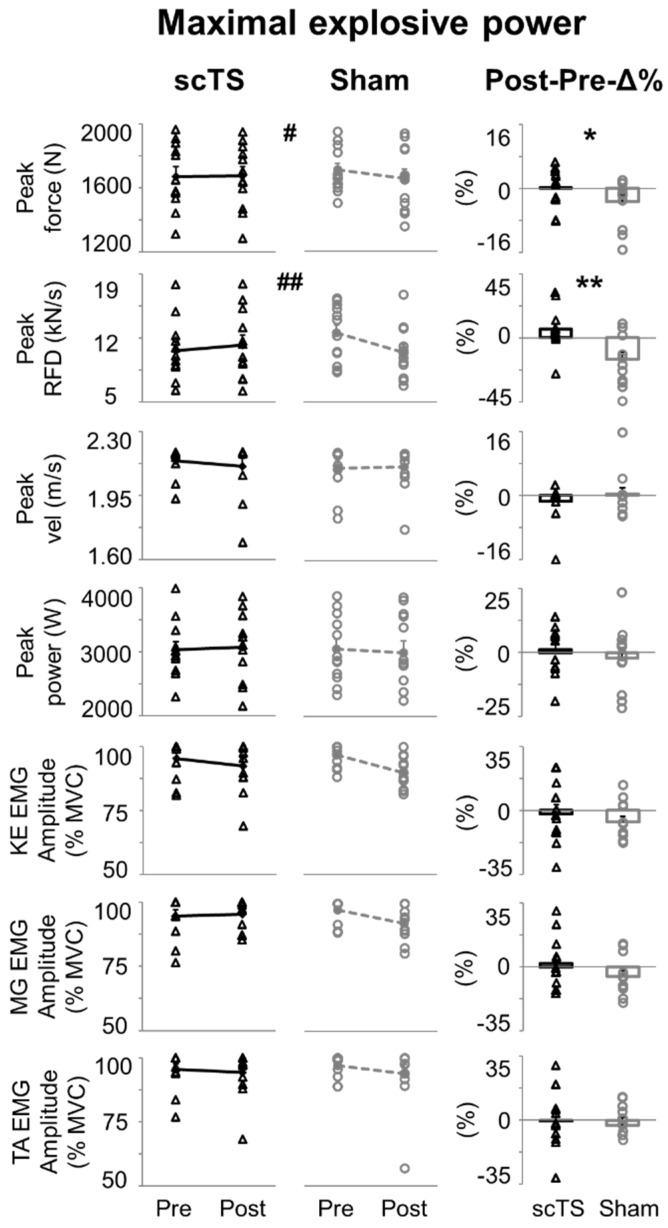 Figure 4
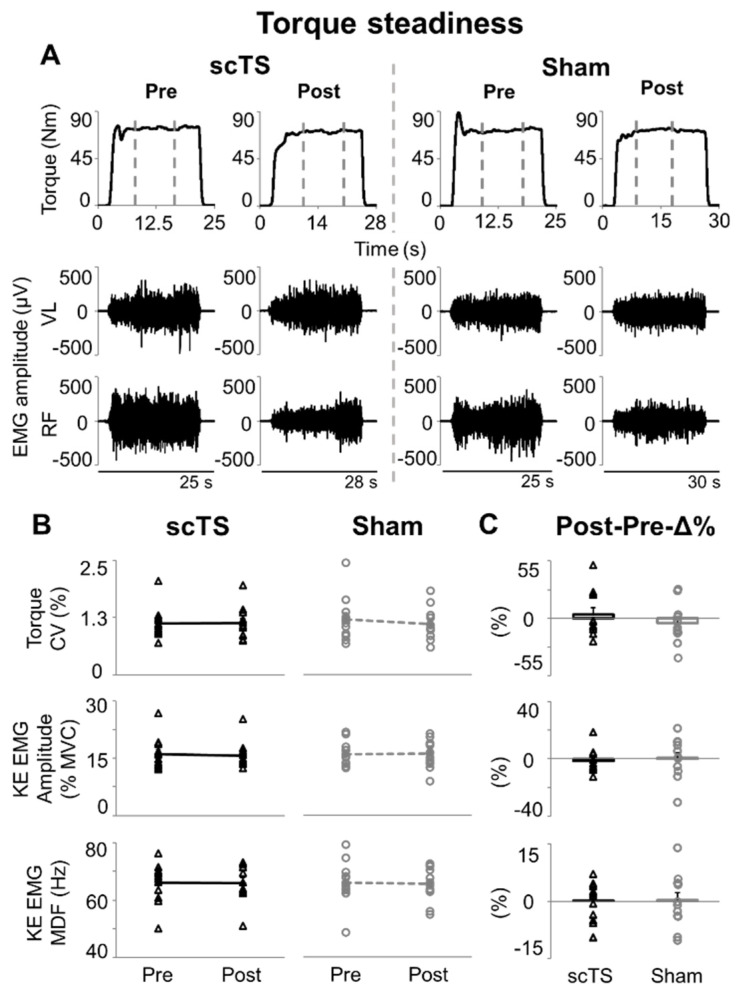 Figure 5
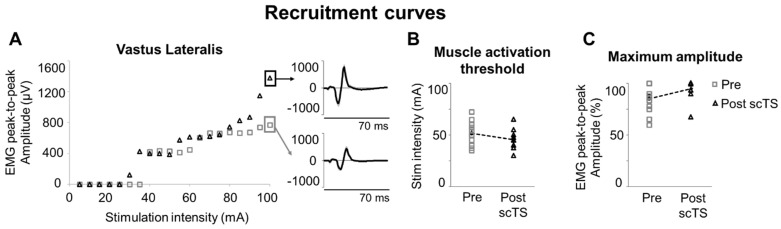 Figure 6
Peer Reviews
No public reviews on file for this paper yet. If you reviewed it on a platform where reviews are public (OpenReview, ICLR, NeurIPS, ICML), you can paste yours below so the community can read it here.
Videos
No videos yet. Explain this paper in a talk, walkthrough, or lecture? Add one.
Taxonomy
TopicsTranscranial Magnetic Stimulation Studies · Spinal Cord Injury Research · Stroke Rehabilitation and Recovery