Alterations in Adipokine Levels Are Associated with Human Perinatal Anxiety and Depression
Ignacio Camacho-Arroyo, Mónica Flores-Ramos, Ismael Mancilla-Herrera, Fausto Manuel Cruz-Coronel, Blanca Farfan-Labonne, Laura Elena Jiménez-Aquino, María del Pilar Meza-Rodríguez, Joselin Hernández-Ruiz, Philippe Leff-Gelman

TL;DR
This study found that higher levels of certain fat-related proteins in pregnant women are linked to anxiety and depression symptoms in late pregnancy.
Contribution
The study identifies specific adipokines associated with anxiety and depression during pregnancy, highlighting resistin's role in depressive symptoms.
Findings
Adipokine levels were significantly higher in women with anxiety and depression compared to healthy controls.
Resistin levels strongly correlated with depressive symptoms after adjusting for confounders.
Leptin and resistin may contribute to anxiety severity, while adiponectin may counteract their effects.
Abstract
Background: Adipokines secreted by the adipose tissue and placenta play a critical role in regulating metabolic functions that are essential for fetoplacental development and embryonic growth. While adipokines are known to impact a wide range of physiological and pathological conditions, their role in affective disorders during pregnancy remains underexplored. In this study, we aimed to assess the serum levels of distinct adipokines and examine their association with anxiety and comorbid depression in pregnant women. Methods: Third-trimester pregnant women with severe anxiety (ANX, n = 45) and anxiety plus depressive symptoms (ANX + DEP, n = 61) were enrolled in the study, along with healthy control subjects (CTRL, n = 33). Participants were classified using the Hamilton Anxiety Rating Scale (HARS) and the Hamilton Depression Rating Scale (HDRS). Serum levels of adiponectin, adipsin,…
Genes, proteins, chemicals, diseases, species, mutations and cell lines named across the full text — each resolved to its canonical identifier and authoritative record.
Click any figure to enlarge with its caption.
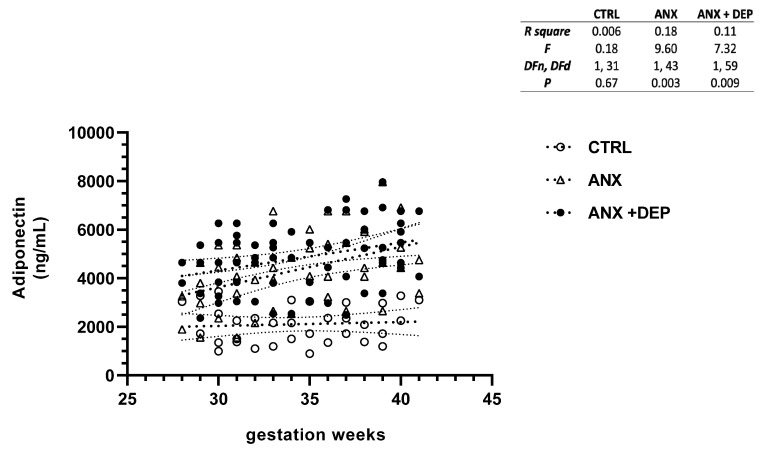 Figure 1
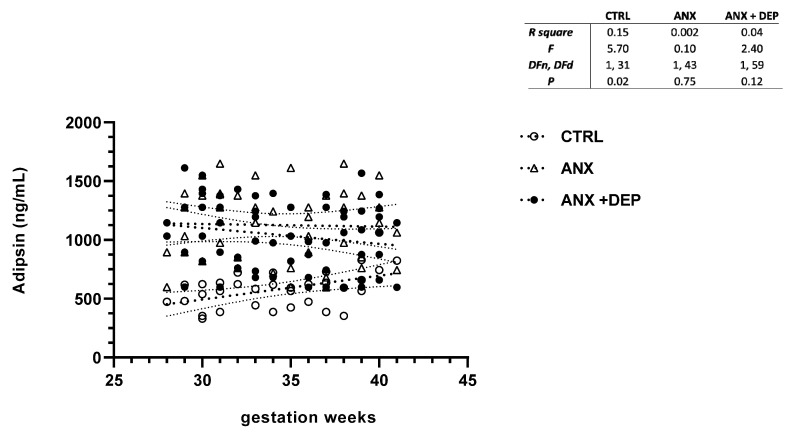 Figure 2
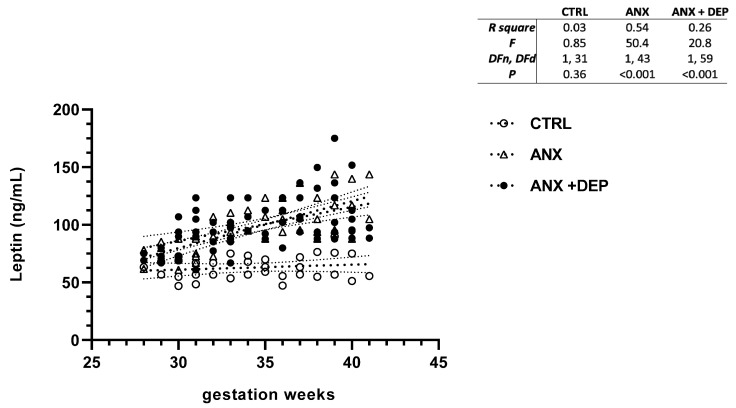 Figure 3
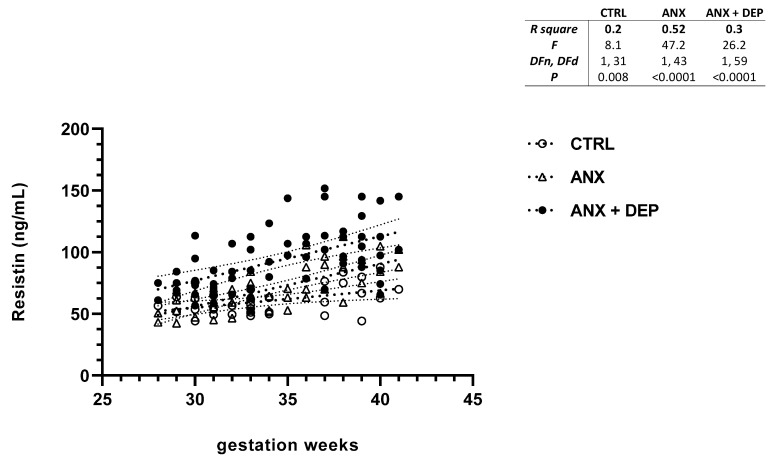 Figure 4
Peer Reviews
No public reviews on file for this paper yet. If you reviewed it on a platform where reviews are public (OpenReview, ICLR, NeurIPS, ICML), you can paste yours below so the community can read it here.
Videos
No videos yet. Explain this paper in a talk, walkthrough, or lecture? Add one.
Taxonomy
TopicsMaternal Mental Health During Pregnancy and Postpartum · Infant Development and Preterm Care · Child and Adolescent Psychosocial and Emotional Development