Chemical Defenses in Medusozoa
Oliver J. Lincoln, Jonathan D. R. Houghton, Muhammad Zakariya, Chiara Lauritano, Isabella D’Ambra

TL;DR
This paper reviews non-toxin-based chemical defenses in Medusozoa, highlighting their potential for biotechnology and ecology.
Contribution
The paper compiles and organizes scattered information on Medusozoa's non-toxin defenses, emphasizing antimicrobial activities and potential biotechnological applications.
Findings
Antimicrobial activities are the most studied and potentially exploitable defense in Medusozoa.
Some Medusozoa species studied as model organisms may share defensive strategies with related classes.
Integrated understanding of Medusozoa defenses can inform both ecological frameworks and biotech applications.
Abstract
Cnidarian defensive strategies are commonly associated with the toxins they synthesize. Because toxins have negative, sometimes lethal, effects on humans, research has focused on them for medical and biotechnological applications. However, Cnidaria possess a variety of defensive systems complementing toxins. In recent decades, ecological and biotechnological studies have shed light on these systems, particularly in Anthozoa, while the knowledge of defensive systems different from toxins has remained limited in Medusozoa (Cubozoa, Hydrozoa, Scyphozoa and Staurozoa). In this review, we collected the scattered information available in the literature and organized it into four main topics: UV-light protection compounds, antioxidants, antimicrobial peptides, and endosymbionts. Within the topics, we found the largest amount of data refers to antimicrobial activities, which suggests this line…
Genes, proteins, chemicals, diseases, species, mutations and cell lines named across the full text — each resolved to its canonical identifier and authoritative record.
Click any figure to enlarge with its caption.
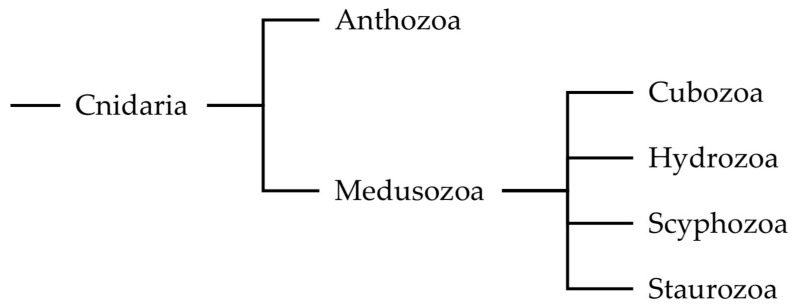 Figure 1
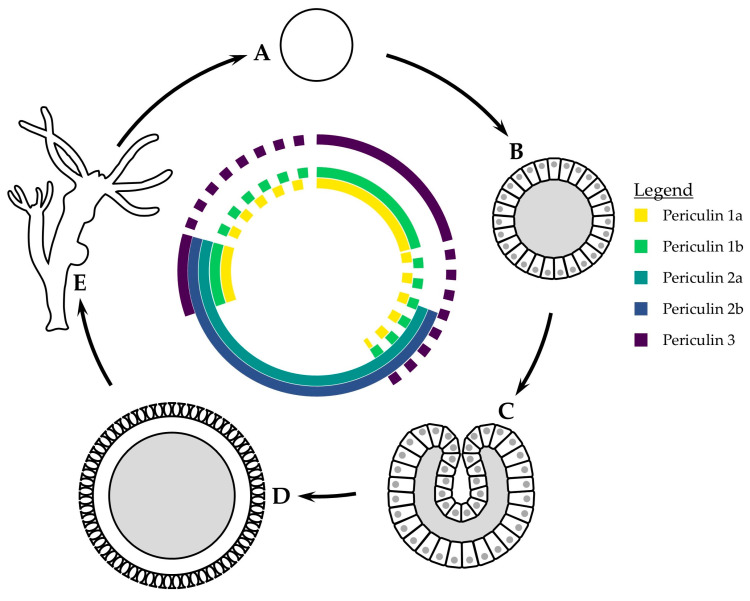 Figure 2
Peer Reviews
No public reviews on file for this paper yet. If you reviewed it on a platform where reviews are public (OpenReview, ICLR, NeurIPS, ICML), you can paste yours below so the community can read it here.
Videos
No videos yet. Explain this paper in a talk, walkthrough, or lecture? Add one.
Taxonomy
TopicsMarine Invertebrate Physiology and Ecology · Marine Ecology and Invasive Species · Marine Toxins and Detection Methods