Vitacrystallography: Appearance and Development of Cancer-Induced Structural Biomarkers in a Mouse Model
Oleksii Avdieiev, Sergey A. Denisov, Ashkan Ajeer, Lois Adams, Charlene Greenwood, Heather Nesbitt, Keith Thomas, Keith Rogers, Olga Solovyeva, Lev Mourokh, Pavel Lazarev

TL;DR
This study uses X-ray scattering to identify structural changes in mouse prostate tissue as cancer progresses, offering a potential early detection method.
Contribution
The study introduces a cancer-induced structural biomarker based on lipid-water X-ray scattering peak ratios in a mouse model.
Findings
X-ray scattering peak ratios of lipids and water serve as a structural biomarker for prostate cancer progression.
The biomarker trajectory correlates with tumor advancement and can indicate healing or disease progression.
Control samples from healthy mice showed no such structural changes over time.
Abstract
Structural biomarkers determined by X-ray scattering of the tissues can complement conventional diagnostics and provide a pathway for early detection of diseases. In the present study, mouse models were utilized to observe the progression of prostate cancer. We induced cancer in the left lobe of the mouse prostate, whilst the right lobe was left uninoculated. The mice were sacrificed at increasing systematic time points, and lobe samples were subsequently analyzed using X-ray scattering. Control samples were also collected from healthy mice sacrificed at the same time points. This investigation revealed that the ratio between the X-ray scattering peaks associated with the lipids and water can serve as a structural biomarker of cancer, and this biomarker develops as the tumor advances. The obtained cancer trajectory can serve as a baseline for the determination of the disease stage, and…
Genes, proteins, chemicals, diseases, species, mutations and cell lines named across the full text — each resolved to its canonical identifier and authoritative record.
Click any figure to enlarge with its caption.
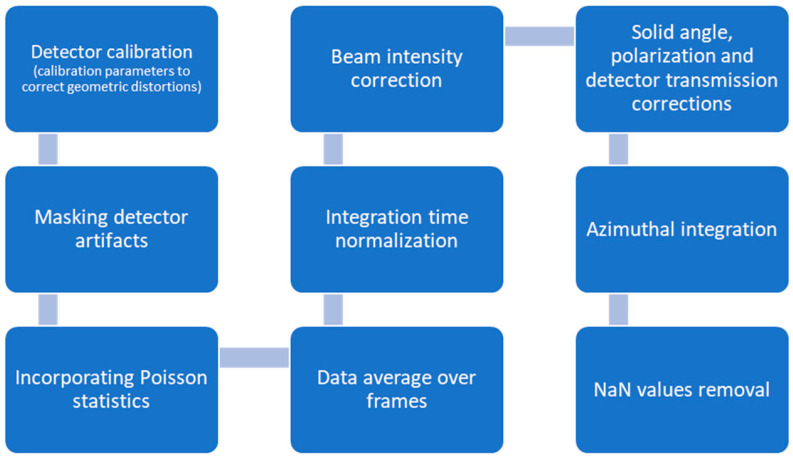 Figure 1
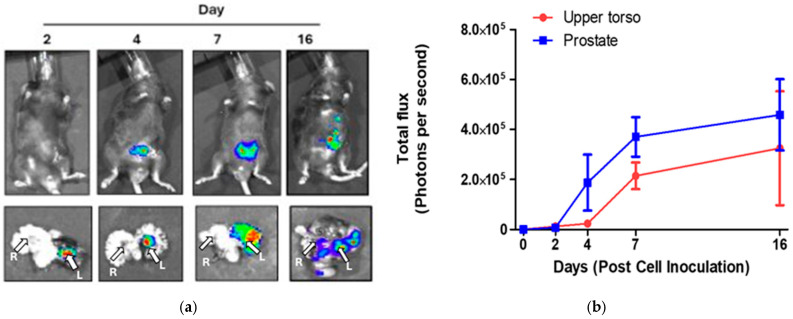 Figure 2
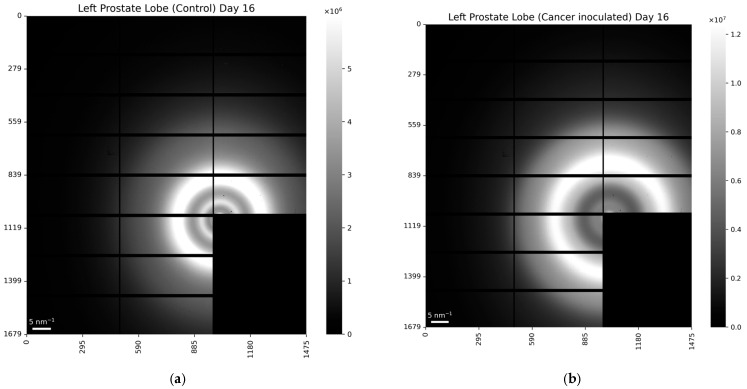 Figure 3
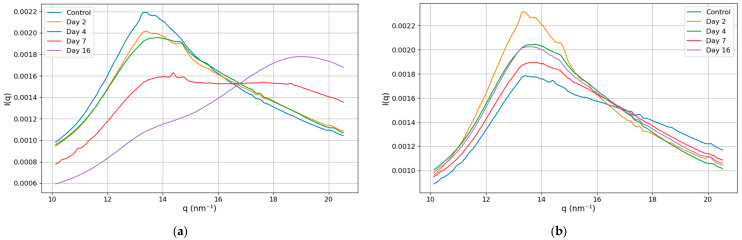 Figure 4
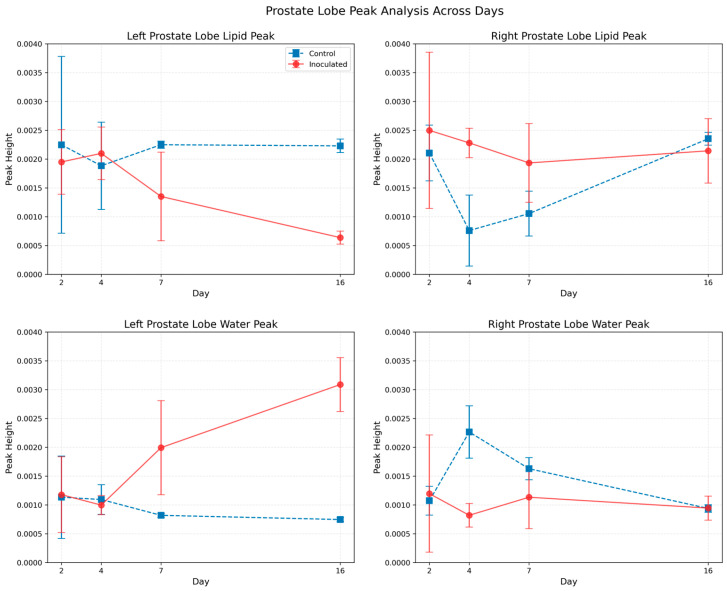 Figure 5
Peer Reviews
No public reviews on file for this paper yet. If you reviewed it on a platform where reviews are public (OpenReview, ICLR, NeurIPS, ICML), you can paste yours below so the community can read it here.
Videos
No videos yet. Explain this paper in a talk, walkthrough, or lecture? Add one.
Taxonomy
TopicsMetabolomics and Mass Spectrometry Studies · Heat shock proteins research · Cancer, Lipids, and Metabolism