Incidence of Sepsis-Induced Coagulopathy (INSIC) Trial: Study Protocol of a Combined Retrospective and Prospective, Multicenter, International, Cross-Sectional, Longitudinal, and Epidemiological Observational Trial
Thomas Schmoch, Patrick Möhnle, Markus A. Weigand, Maximilian Dietrich, Jonas Gregorius, Sandra Frank, Josef Briegel, David I. Radke, Michael Bauer, Frank Bloos, Patrick Meybohm, Holger Bogatsch, Thorsten Brenner

TL;DR
This study aims to understand how common and severe coagulation problems are in sepsis patients, tracking their recovery over time to guide future treatments.
Contribution
The first large-scale study to measure both the prevalence and incidence of sepsis-induced coagulopathy and its spontaneous recovery rates.
Findings
The study will track SIC prevalence on specific days across multiple hospitals from 2019 to 2024.
It will assess SIC incidence and recovery rates over a 14-day period starting in 2025.
The study will correlate coagulopathy severity with survival and complications like bleeding or thromboembolism.
Abstract
Background/Objectives: Sepsis and septic shock are the most severe forms of infection. Due to the intensive cross-talk of the coagulation and immune system, coagulopathies regularly occur in sepsis. The International Society on Thrombosis and Hemostasis refers to these coagulation abnormalities as sepsis-induced coagulopathies (SICs). The presence of SICs can be assessed using the SIC score. In parallel, a score for “sepsis-associated coagulopathy” (SAC) was introduced that, in contrast to the SIC score, allows coagulopathy to be classified according to its severity. In the past, multicenter, randomized controlled trials have repeatedly failed to prove the efficacy of specific therapeutic measures targeting SICs or SACs. This could potentially be explained by insufficient knowledge about the prevalence and incidence of SIC and the rate of spontaneous recovery. The Incidence of…
Genes, proteins, chemicals, diseases, species, mutations and cell lines named across the full text — each resolved to its canonical identifier and authoritative record.
Click any figure to enlarge with its caption.
 Figure 1
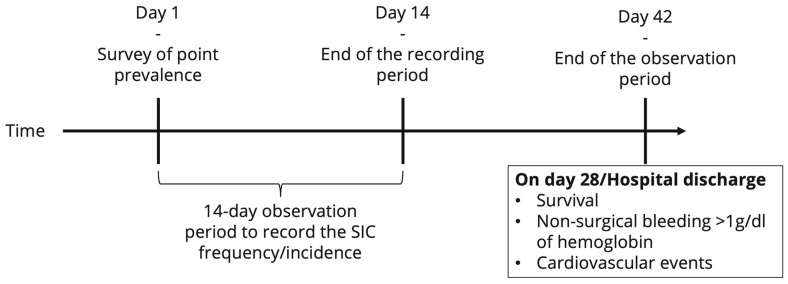 Figure 2
Peer Reviews
No public reviews on file for this paper yet. If you reviewed it on a platform where reviews are public (OpenReview, ICLR, NeurIPS, ICML), you can paste yours below so the community can read it here.
Videos
No videos yet. Explain this paper in a talk, walkthrough, or lecture? Add one.
Taxonomy
TopicsSepsis Diagnosis and Treatment · Hemodynamic Monitoring and Therapy · Trauma, Hemostasis, Coagulopathy, Resuscitation