Accurate Diagnosis of Peritonsillar Abscesses Using Relative CT Number Measurements in Low-Density Areas of Contrast CT Images
Shu Kikuta, Takeshi Oshima

TL;DR
This study identifies a CT-based measurement to accurately distinguish peritonsillar abscesses from cellulitis, improving diagnostic accuracy.
Contribution
The study introduces relative CT number measurements as a novel diagnostic criterion for differentiating peritonsillar abscesses from cellulitis.
Findings
Relative CT numbers for peritonsillar abscesses were significantly lower than those for cellulitis.
A relative CT number of less than 0.46 was significantly associated with peritonsillar abscesses.
Relative CT number was the only factor with predictive value in multivariate analysis for distinguishing abscesses from cellulitis.
Abstract
Objectives: A diagnostic indicator for differentiating peritonsillar abscess (PTA) from peritonsillar cellulitis (PTC) has not been established. Our aim was to define radiological criteria for differentiating PTA from PTC. Methods: We retrospectively extracted low-density areas around the tonsils of PTA and PTC cases from contrast-enhanced CT images between 2021 and 2024. PTA cases were identified as those in which drainage by puncture or incision was observed, while PTC cases were those in which drainage was not observed. A total of 138 cases were finally analyzed (PTA, 111 cases; PTC, 27 cases). The CT attenuation value of a low-density area relative to that of the area surrounding the low-density area was used as the relative CT number, and relative CT numbers were compared between PTA and PTC cases. Using univariate and multivariate analyses, we identified factors that had…
Genes, proteins, chemicals, diseases, species, mutations and cell lines named across the full text — each resolved to its canonical identifier and authoritative record.
Click any figure to enlarge with its caption.
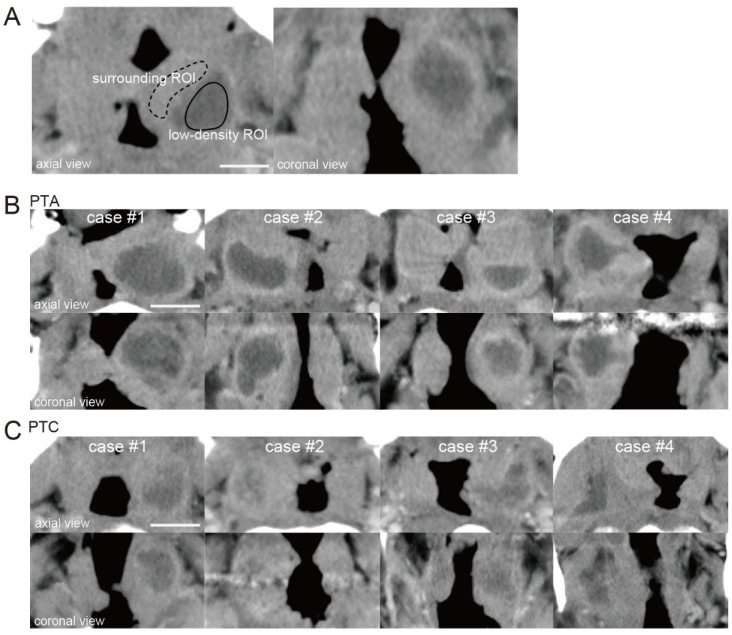 Figure 1
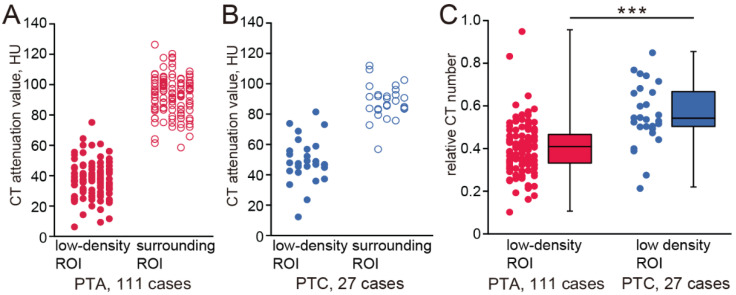 Figure 2
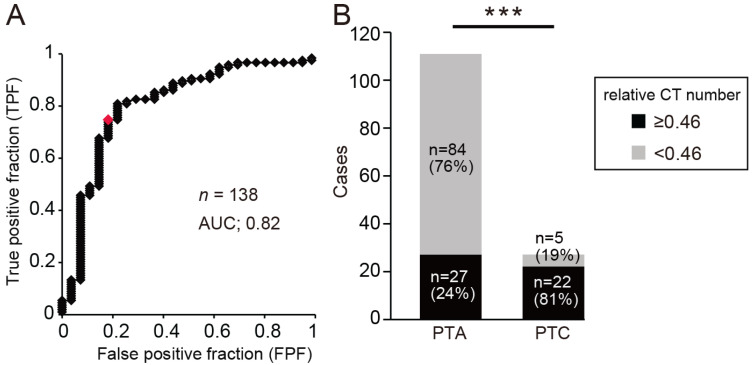 Figure 3
Peer Reviews
No public reviews on file for this paper yet. If you reviewed it on a platform where reviews are public (OpenReview, ICLR, NeurIPS, ICML), you can paste yours below so the community can read it here.
Videos
No videos yet. Explain this paper in a talk, walkthrough, or lecture? Add one.
Taxonomy
TopicsOtolaryngology and Infectious Diseases · Infectious Diseases and Tuberculosis · Pelvic and Acetabular Injuries