Efficacy and Safety of L-Menthol During Gastrointestinal Endoscopy—A Systematic Review and Meta-Analysis of Randomized Clinical Trials
Dorottya Gergő, Andrea Tóth-Mészáros, Alexander Schulze Wenning, Péter Fehérvári, Uyen Nguyen Do To, Péter Hegyi, Bálint Erőss, Attila Ványolós, Dezső Csupor

TL;DR
L-menthol, a compound from peppermint oil, safely reduces gut movement during endoscopies, making procedures easier without causing side effects.
Contribution
This study is the first systematic review and meta-analysis evaluating L-menthol's role in gastrointestinal endoscopy as an alternative to antispasmodics.
Findings
L-menthol significantly reduced peristalsis during endoscopy, improving mucosal visualization.
It enhanced ease of examination without prolonging withdrawal time or increasing adverse events.
However, it did not significantly improve adenoma detection rates.
Abstract
Background: Gastrointestinal endoscopy is crucial for diagnosing colorectal cancer and inflammatory bowel diseases, but its effectiveness can be impacted by peristalsis, poor bowel preparation, and inadequate withdrawal time. Conventional antispasmodics, though effective, may not be suitable for elderly patients or those with comorbidities. L-menthol, derived from peppermint oil, has emerged as a safer alternative. Through calcium channel blockade, L-menthol promotes GI smooth muscle relaxation. This study evaluated L-menthol’s efficacy and safety as a potential alternative to antispasmodic agents in endoscopy. Methods: Following PRISMA2020 guidelines and the Cochrane Handbook, we conducted a systematic review and meta-analysis of randomized controlled trials involving adults undergoing endoscopy, comparing L-menthol to placebo. The primary outcome was the adenoma detection rate, with…
Genes, proteins, chemicals, diseases, species, mutations and cell lines named across the full text — each resolved to its canonical identifier and authoritative record.
Click any figure to enlarge with its caption.
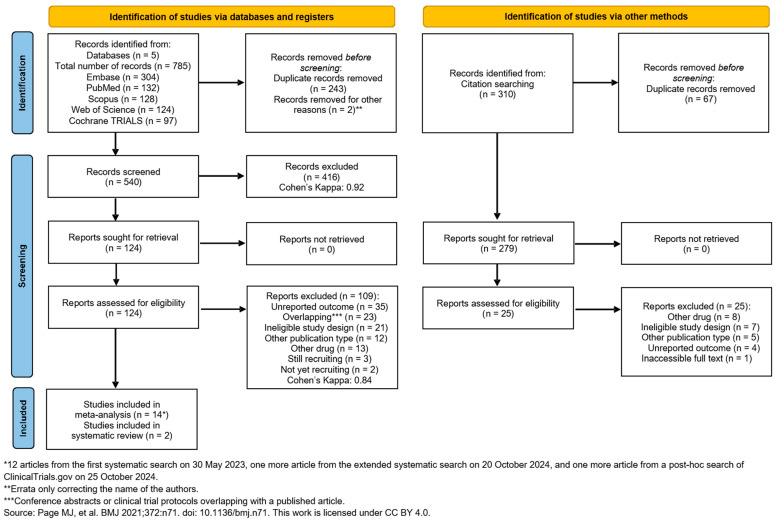 Figure 1
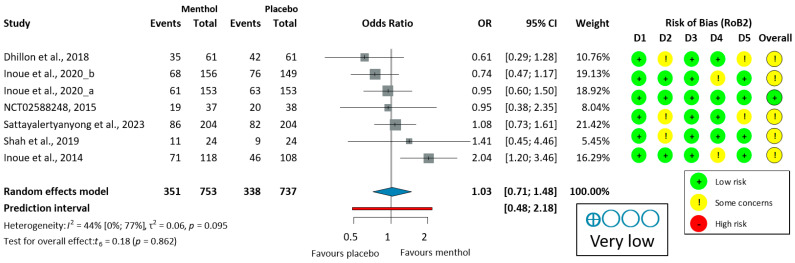 Figure 2
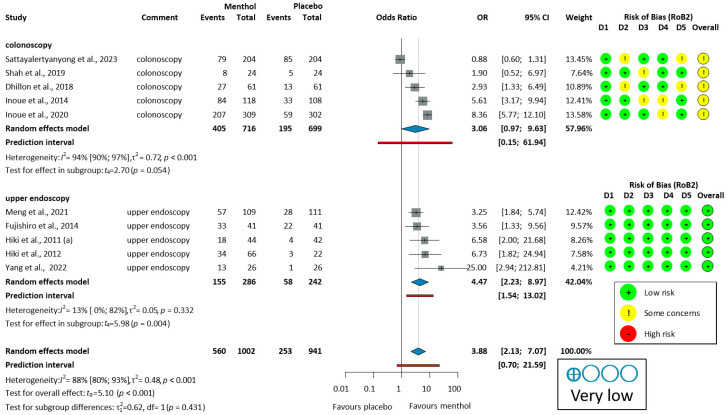 Figure 3
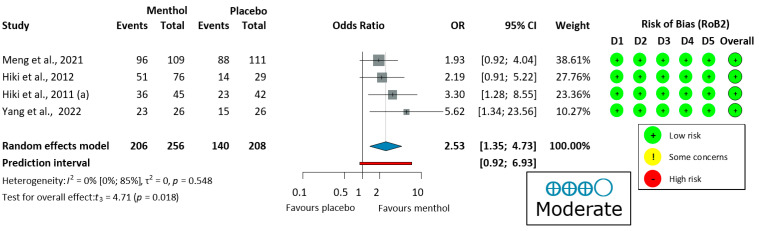 Figure 4
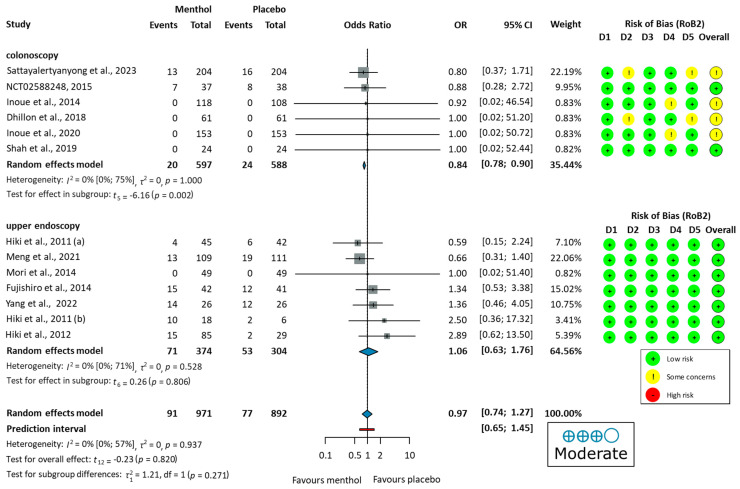 Figure 5
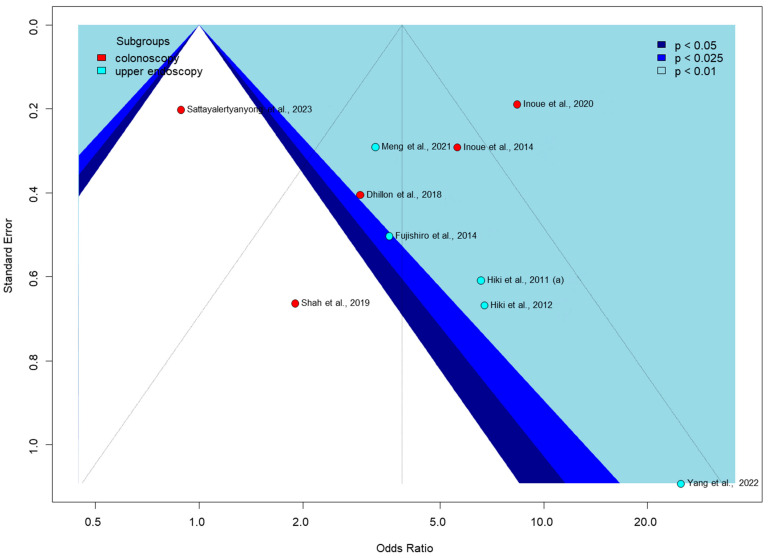 Figure 6
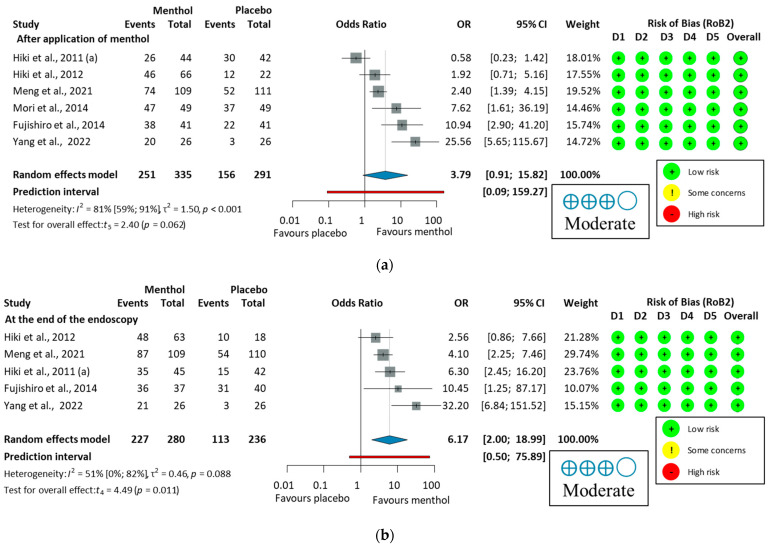 Figure 7
 Figure 8
Peer Reviews
No public reviews on file for this paper yet. If you reviewed it on a platform where reviews are public (OpenReview, ICLR, NeurIPS, ICML), you can paste yours below so the community can read it here.
Videos
No videos yet. Explain this paper in a talk, walkthrough, or lecture? Add one.
Taxonomy
TopicsColorectal Cancer Screening and Detection · Gastric Cancer Management and Outcomes · Helicobacter pylori-related gastroenterology studies