Clinical Characteristics of Dizzy Patients Showing Discordant Results Between Bithermal Caloric Test and Video Head Impulse Test
Hahn Jin Jung, Sangeun Lee, Hyeop Oh, Jee Hye Wee, Chang Gun Cho, Joo Hyun Park

TL;DR
This study explores how conflicting results from two vestibular tests help diagnose dizziness, showing that combining both tests improves accuracy in identifying specific inner ear issues.
Contribution
The study reveals that discordant results between caloric and vHIT tests are common and provide key insights into peripheral vestibular disorders.
Findings
Discordant results occurred in 36.5% of patients, with most cases linked to peripheral vestibular disorders.
Abnormal caloric/normal vHIT was more common and associated with low-frequency dysfunction.
Both discordant patterns primarily indicated peripheral etiologies like Ménière’s disease.
Abstract
Background/Objectives: To evaluate the clinical characteristics and diagnostic significance of dissociation between bithermal caloric test and video head impulse test (vHIT) in patients presenting with dizziness. Methods: We retrospectively reviewed 644 patients who underwent bithermal caloric testing and vHIT at a university-affiliated general hospital. Patients were classified into concordant and discordant groups based on test results. The discordant group was further subdivided into those with abnormal caloric test and normal vHIT, and those with normal caloric test and abnormal vHIT. Demographic data, vestibular function test outcomes, and clinical diagnoses were analyzed. Results: Discordant results were observed in 36.5% of patients. Among these, 31.8% had abnormal caloric responses with normal vHIT, and 4.7% had normal caloric responses with abnormal vHIT. Most patients in both…
Genes, proteins, chemicals, diseases, species, mutations and cell lines named across the full text — each resolved to its canonical identifier and authoritative record.
Click any figure to enlarge with its caption.
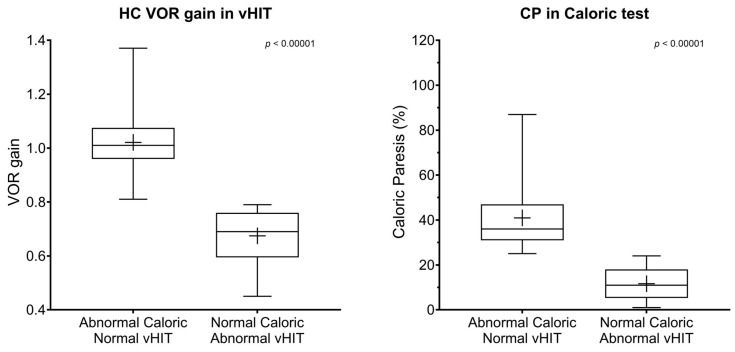 Figure 1
Peer Reviews
No public reviews on file for this paper yet. If you reviewed it on a platform where reviews are public (OpenReview, ICLR, NeurIPS, ICML), you can paste yours below so the community can read it here.
Videos
No videos yet. Explain this paper in a talk, walkthrough, or lecture? Add one.
Taxonomy
TopicsVestibular and auditory disorders · Healthcare and Venom Research · Traditional Chinese Medicine Studies