Potentially Suitable Habitat for the Pest Histia rhodope Based on Its Host Plant Bischofia polycarpa and Climatic Factors in China
Huicong Du, Jingxin Shen, Wenping Luo, Zi Yang, Daizhen Zhang, Xiangbo Kong

TL;DR
This study predicts how climate change will expand the habitat of a pest moth and its host plant in China, helping to manage future outbreaks.
Contribution
The study identifies shared climatic factors and predicts future habitat expansion of a pest and its host under climate change scenarios.
Findings
The potentially suitable habitat for H. rhodope is predicted to increase significantly by the 2070s.
Precipitation of the Warmest Quarter is the most influential factor for the distribution of both H. rhodope and B. polycarpa.
Both the pest and its host plant are expected to shift to higher elevations under future climate scenarios.
Abstract
In this study, the MaxEnt model was used to investigate the potentially suitable ranges for the defoliating pest Histia rhodope and its main host Bischofia polycarpa. The results showed that 8 of the 10 most important climatic factors influencing the distribution of potential habitats are common for both the moth and its host tree. Under different climate scenarios in the 2050s and 2070s, the potentially suitable areas are predicted to increase and spread to high-latitude regions, particularly for H. rhodope. These results provide information that can help monitor the potentially suitable areas of H. rhodope and improve our understanding of the climate-driven distribution of this species. Histia rhodope is a defoliating pest that feeds mainly on the ornamental garden plant Bischofia polycarpa. Recently, frequent outbreaks of H. rhodope in Southern China have severely affected…
Genes, proteins, chemicals, diseases, species, mutations and cell lines named across the full text — each resolved to its canonical identifier and authoritative record.
Click any figure to enlarge with its caption.
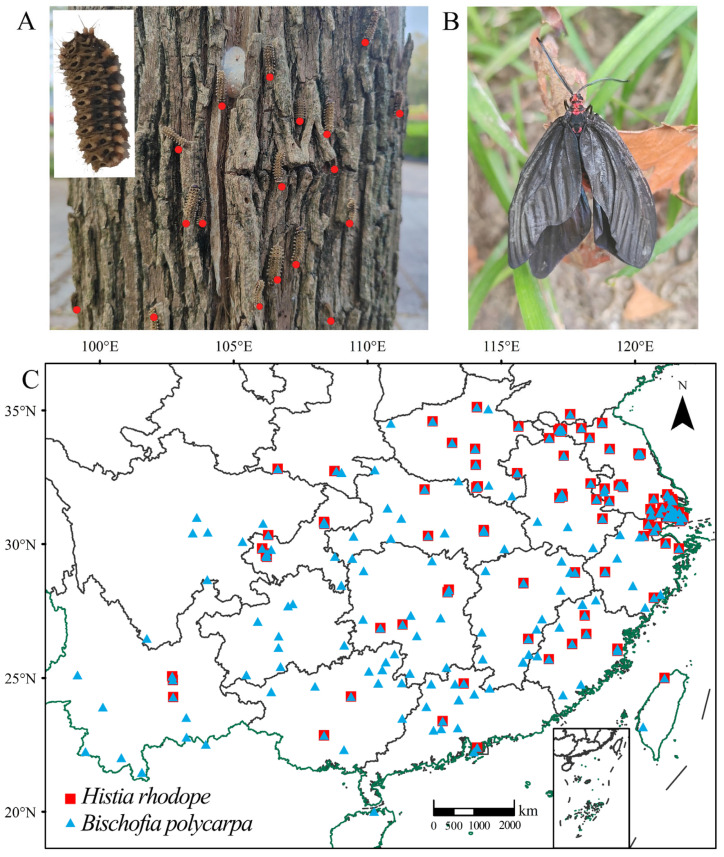 Figure 1
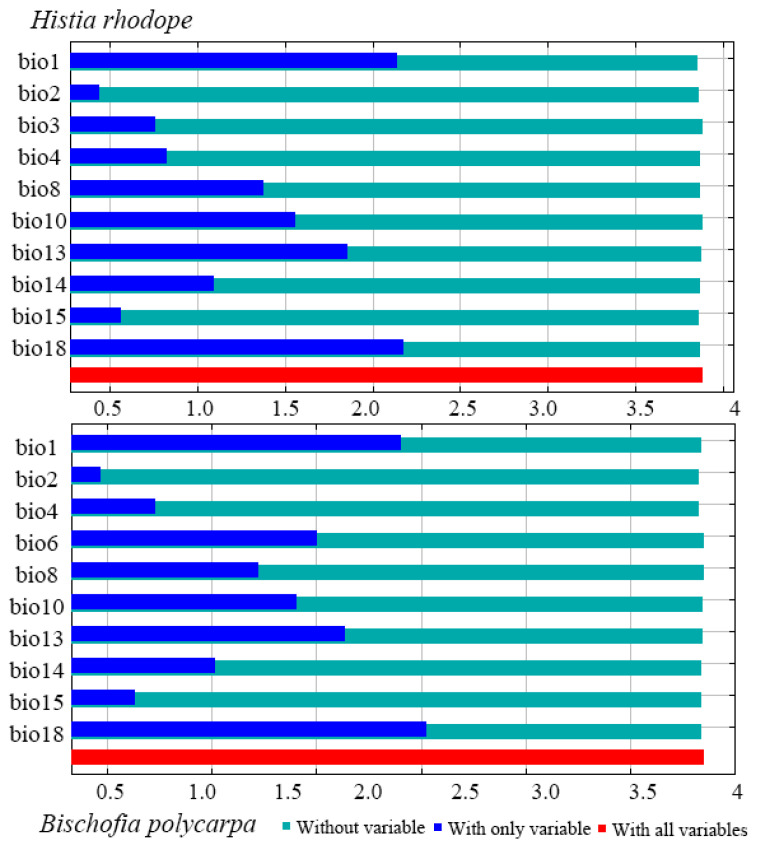 Figure 2
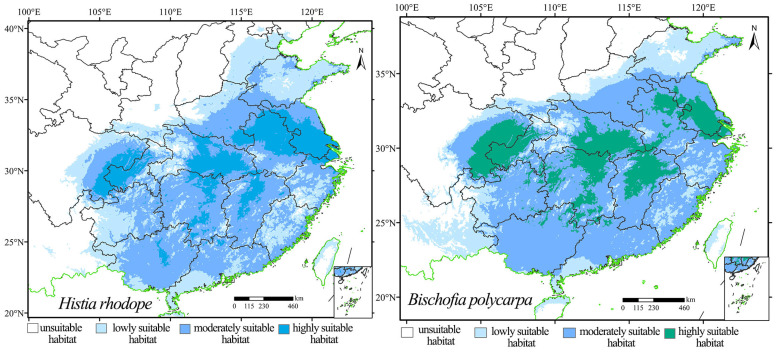 Figure 3
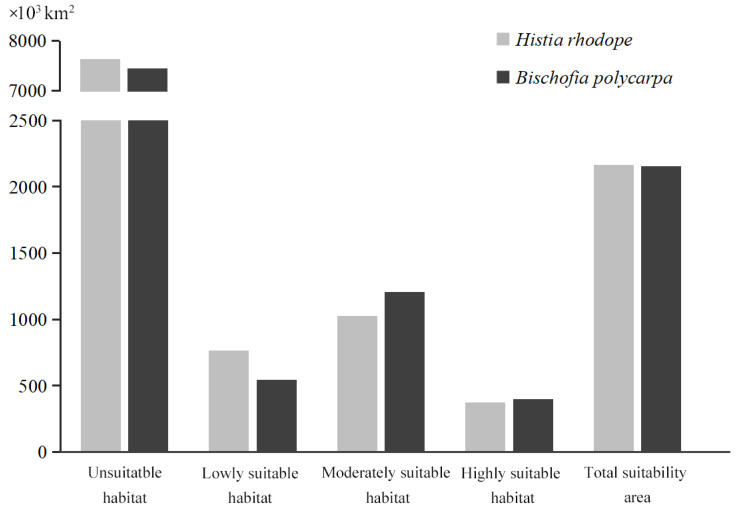 Figure 4
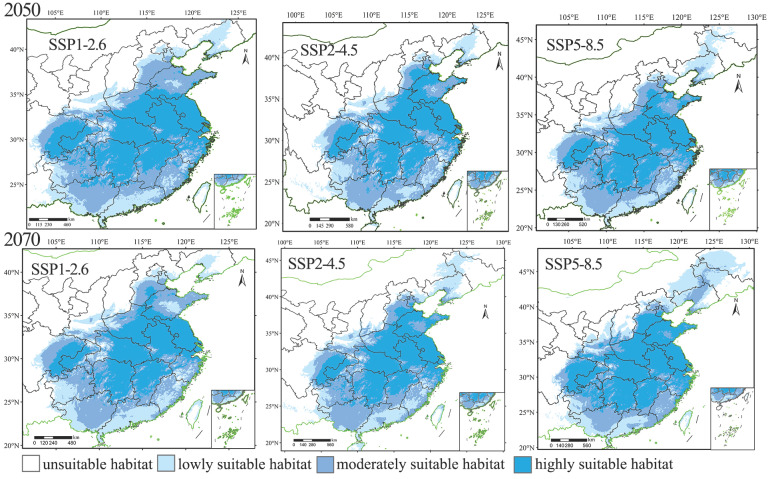 Figure 5
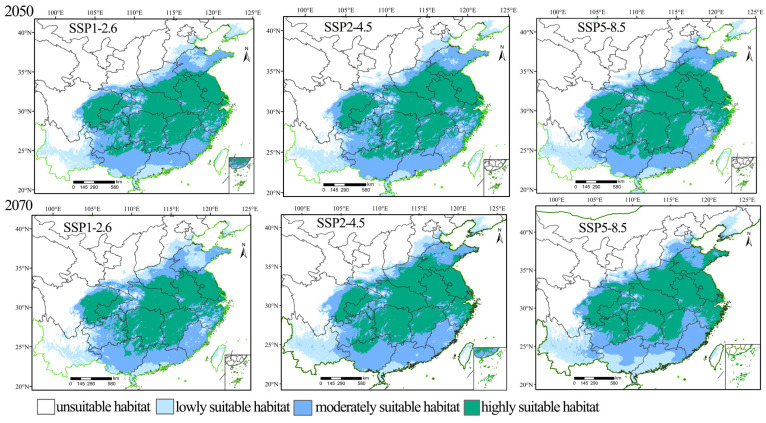 Figure 6
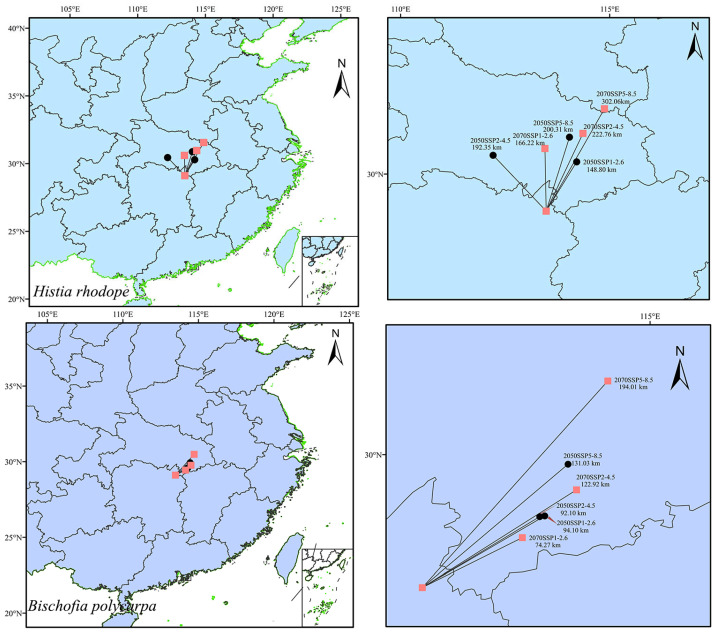 Figure 7
Peer Reviews
No public reviews on file for this paper yet. If you reviewed it on a platform where reviews are public (OpenReview, ICLR, NeurIPS, ICML), you can paste yours below so the community can read it here.
Videos
No videos yet. Explain this paper in a talk, walkthrough, or lecture? Add one.
Taxonomy
TopicsPlant Parasitism and Resistance · Plant and Fungal Interactions Research · Forest Insect Ecology and Management