Obstacle Circumvention and Motor Daily Dual Task During a Simulation of Street Crossing by Individuals with Parkinson’s Disease
Carolina Favarin Soares, Aline Prieto Silveira-Ciola, Lucas Simieli, Patrícia de Aguiar Yamada, Fábio Augusto Barbieri, Flávia Roberta Faganello-Navega

TL;DR
This study examines how people with Parkinson’s disease navigate simulated street crossings and obstacles, finding that they take smaller, slower steps compared to healthy individuals.
Contribution
The study introduces a novel simulation of street crossing with dual tasks to assess gait in Parkinson’s disease.
Findings
Individuals with PD took smaller, narrower, slower, and shorter steps compared to controls.
Spatiotemporal gait parameters changed under difficult crossing conditions, except for step duration.
Control group outperformed the Parkinson’s group in most gait parameters except double support time.
Abstract
Parkinson’s disease (PD) causes attentional deficits and worse dual-task (DT) performance, which increases the risk of being run over. In addition to motor deficits, the decision-making ability and the response to external stimuli are impaired. The aim of this study was to evaluate the spatiotemporal parameters of gait during everyday tasks of individuals with PD, specifically during street crossing simulation, obstacle circumvention, and motor DT. People with PD (PG) and matched controls (CG) were distributed into two groups and were evaluated under six different gait and randomized conditions: without a concomitant task (NW); with obstacle circumvention (OC); and four other conditions under simulation of street crossing (without concomitant task (SC); with obstacle circumvention (SCOC); carrying bags (SCB); and carrying bags concomitant to obstacle circumvention (SCOC+B)). The CG…
Genes, proteins, chemicals, diseases, species, mutations and cell lines named across the full text — each resolved to its canonical identifier and authoritative record.
Click any figure to enlarge with its caption.
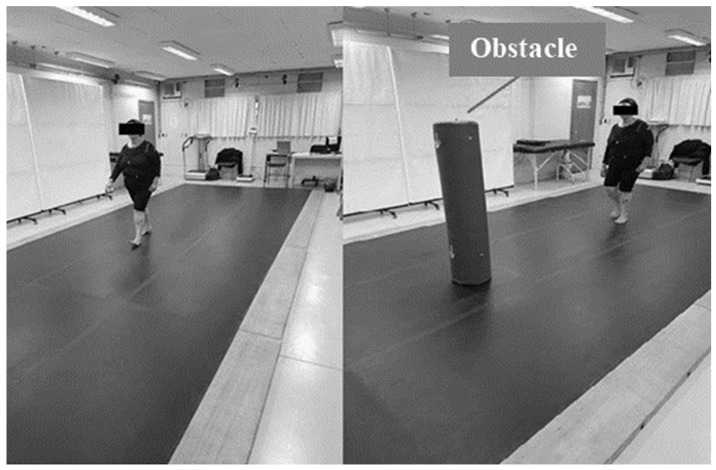 Figure 1
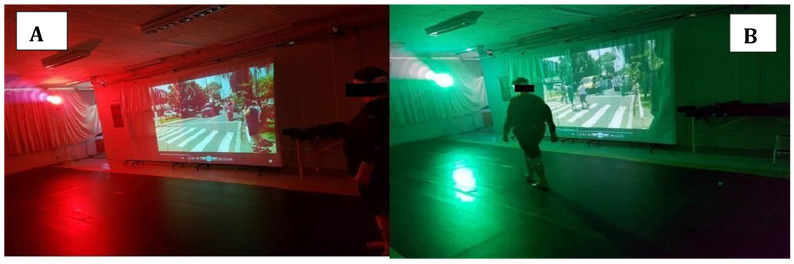 Figure 2
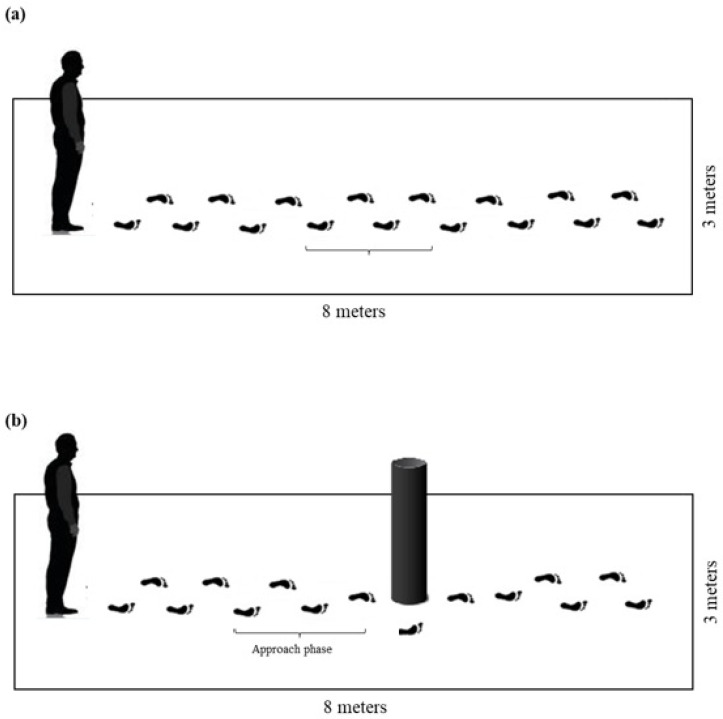 Figure 3
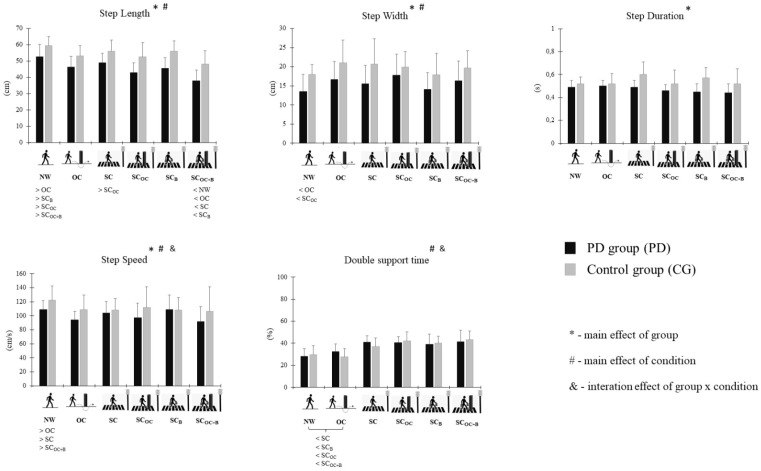 Figure 4
Peer Reviews
No public reviews on file for this paper yet. If you reviewed it on a platform where reviews are public (OpenReview, ICLR, NeurIPS, ICML), you can paste yours below so the community can read it here.
Videos
No videos yet. Explain this paper in a talk, walkthrough, or lecture? Add one.
Taxonomy
TopicsBalance, Gait, and Falls Prevention · Cerebral Palsy and Movement Disorders · Older Adults Driving Studies