Change in the Location of a Pseudotumor Around the C2 Odontoid Process from Posterior to Anterior to the Odontoid Process in the Natural Course: A Case with “Antero-Odontoid Pseudotumor” or “Peri-Odontoid Pseudotumor”
Hiroki Takeda, Takaya Imai, Yuki Akaike, Soya Kawabata, Nobuyuki Fujita, Shinjiro Kaneko

TL;DR
A patient with rheumatoid arthritis developed a pseudotumor that moved from behind to in front of the odontoid process over time, revealing a rare progression pattern.
Contribution
This case report documents the first known instance of a pseudotumor shifting from posterior to anterior around the odontoid process.
Findings
The pseudotumor initially appeared retro-odontoid but later became antero-odontoid.
The movement was linked to joint immobilization and ligament rupture due to advanced rheumatoid arthritis.
Such progression is rare, as most retro-odontoid pseudotumors are surgically treated before this stage.
Abstract
Background: A pseudotumor adjacent to the odontoid has been reported to be a non-neoplastic mass that is mainly associated with atlantoaxial instability. Methods: Case report. Results: A 72-year-old woman presented to our clinic with a chief complaint of bilateral fine motor dysfunction and gait disturbance. She had rheumatoid arthritis as a comorbidity. Physical examination revealed bilateral hand fine motor dysfunction and signs of myelopathy, including hyperreflexia of the deep tendon reflexes in the lower extremities. Magnetic resonance imaging (MRI) showed a retro-odontoid pseudotumor. Surgery was proposed to the patient, but she did not wish to undergo surgery at this time. At a follow-up visit approximately one year after the initial visit, she complained of the progression of the bilateral hand fine motor dysfunction and gait disturbance. MRI demonstrated a pseudotumor in the…
Genes, proteins, chemicals, diseases, species, mutations and cell lines named across the full text — each resolved to its canonical identifier and authoritative record.
Click any figure to enlarge with its caption.
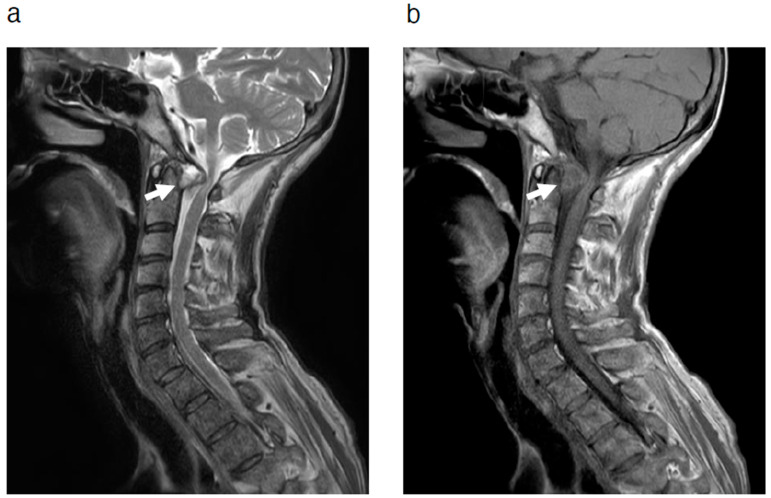 Figure 1
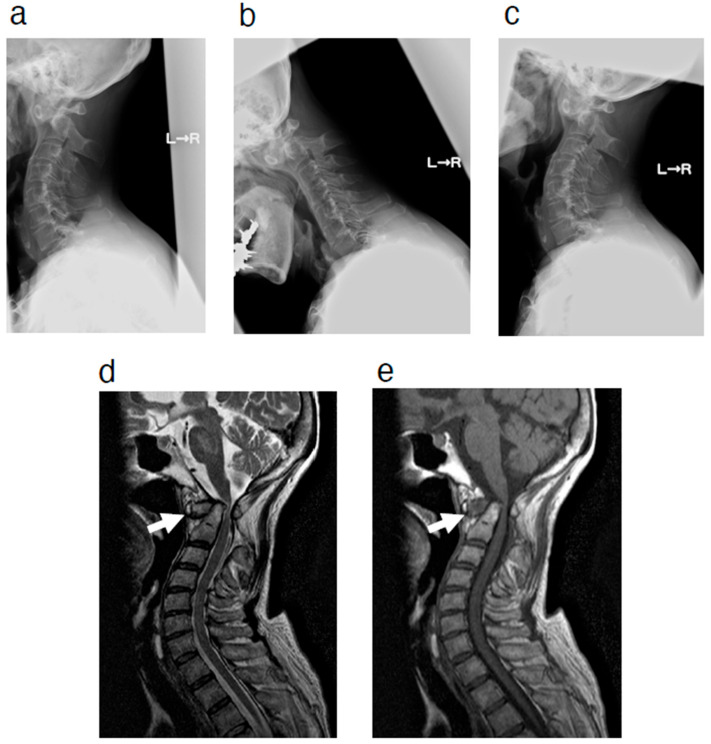 Figure 2
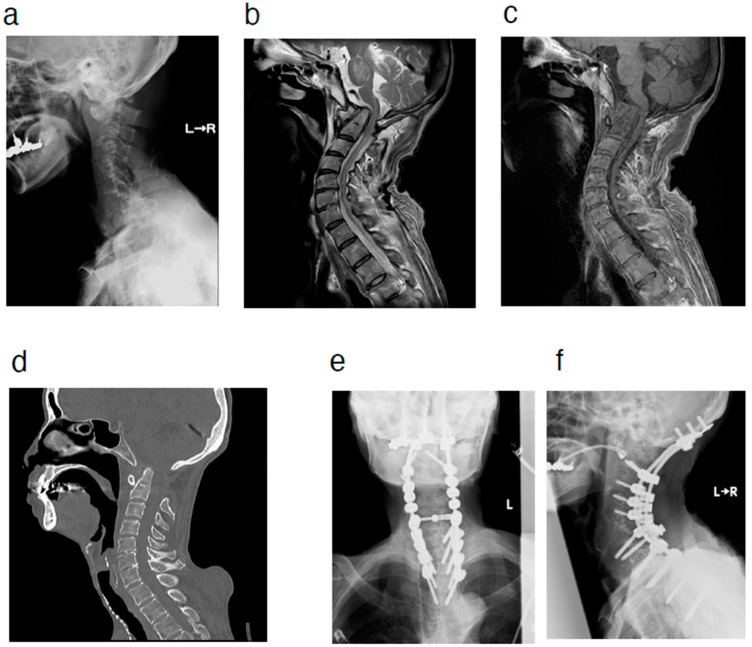 Figure 3
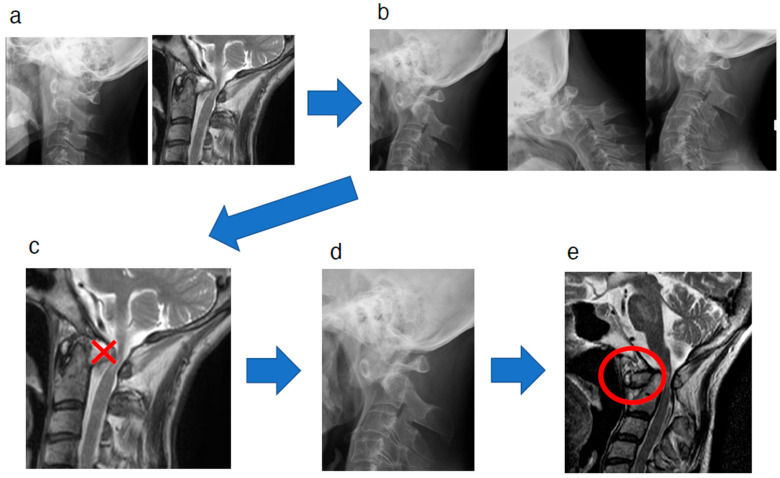 Figure 4
Peer Reviews
No public reviews on file for this paper yet. If you reviewed it on a platform where reviews are public (OpenReview, ICLR, NeurIPS, ICML), you can paste yours below so the community can read it here.
Videos
No videos yet. Explain this paper in a talk, walkthrough, or lecture? Add one.
Taxonomy
TopicsSpinal Fractures and Fixation Techniques · Cervical and Thoracic Myelopathy · Spinal Hematomas and Complications