Post-Exercise Hypotension Induced by a Short Isometric Exercise Session Versus Combined Exercise in Hypertensive Patients with Ischemic Heart Disease: A Pilot Study
Matteo Vitarelli, Francesco Laterza, Saúl Peñín-Grandes, Marco Alfonso Perrone, Alejandro Santos-Lozano, Maurizio Volterrani, Giuseppe Marazzi, Vincenzo Manzi, Elvira Padua, Barbara Sposato, Valentina Morsella, Ferdinando Iellamo, Giuseppe Caminiti

TL;DR
This study compared the effects of short isometric and combined exercise on blood pressure in patients with heart disease and high blood pressure.
Contribution
The study is novel in comparing post-exercise hypotension from isometric versus combined exercise in hypertensive patients with ischemic heart disease.
Findings
Combined exercise reduced systolic blood pressure more than isometric exercise.
Isometric exercise was as effective as combined exercise in reducing diastolic blood pressure.
Neither exercise type significantly changed diastolic blood pressure compared to control.
Abstract
Background: Short sessions of isometric exercise have been shown to reduce blood pressure (BP) in normotensive and hypertensive subjects. However, there are few data in hypertensive patients with underlying ischemic heart disease (IHD). In the present study, we compared post-exercise hypotension (PEH) induced by isometric versus combined, aerobic plus dynamic resistance exercise in IHD patients. Methods: Twenty-five stable patients with established IHD and with treated hypertension were enrolled. The study had a cross-over design. All patients performed in a random order and on different days: (1) isometric exercise session (IES) consisting of bilateral knee extension, performed at 20% of maximal voluntary contraction and lasting 20 min; (2) combined exercise session (CES) including moderate-intensity continuous exercise at and dynamic resistance exercise performed at 60% of one…
Genes, proteins, chemicals, diseases, species, mutations and cell lines named across the full text — each resolved to its canonical identifier and authoritative record.
Click any figure to enlarge with its caption.
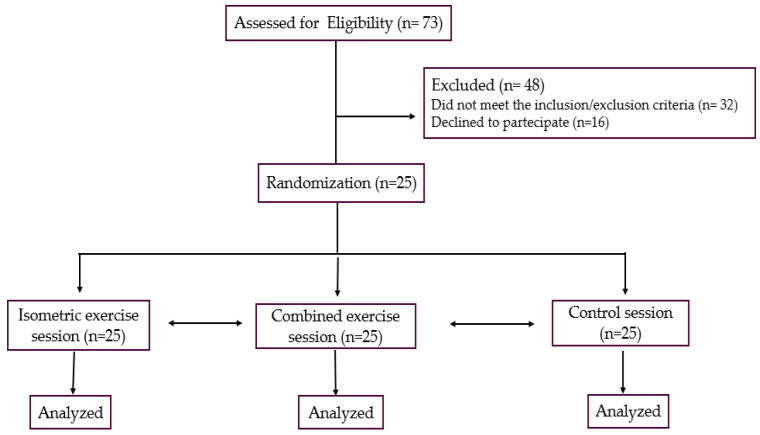 Figure 1
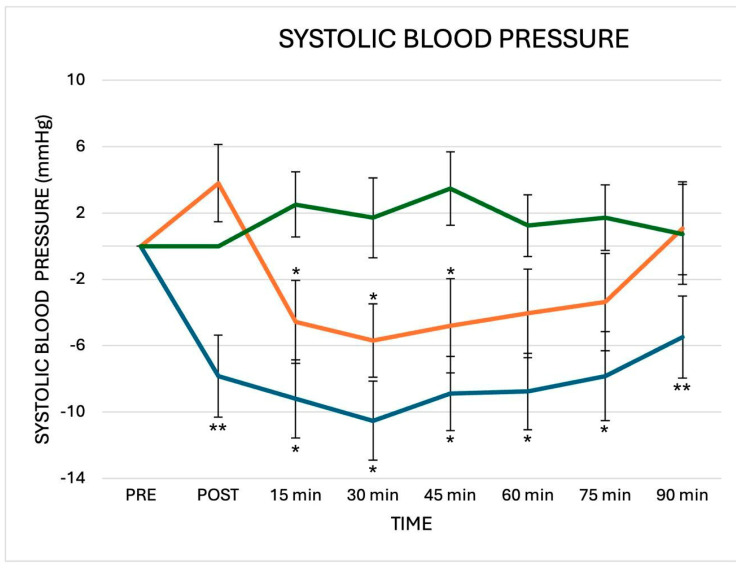 Figure 2
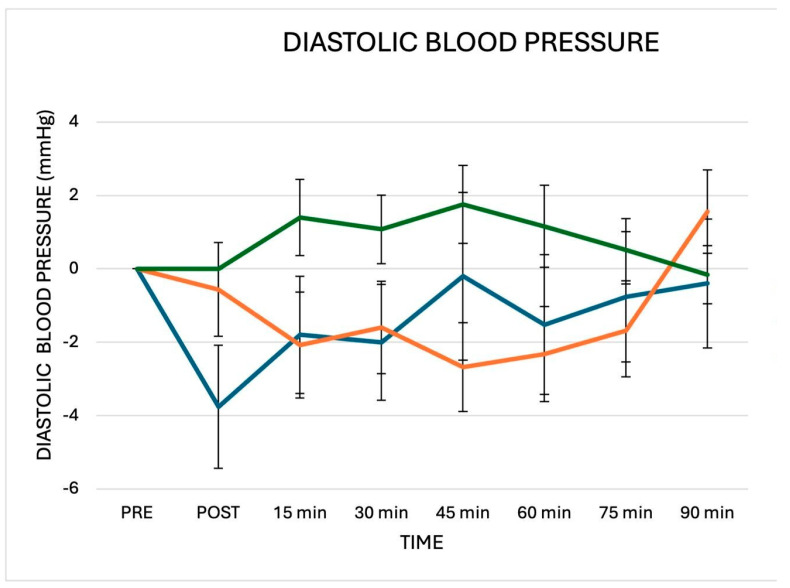 Figure 3
Peer Reviews
No public reviews on file for this paper yet. If you reviewed it on a platform where reviews are public (OpenReview, ICLR, NeurIPS, ICML), you can paste yours below so the community can read it here.
Videos
No videos yet. Explain this paper in a talk, walkthrough, or lecture? Add one.
Taxonomy
TopicsCardiovascular and exercise physiology · Heart Rate Variability and Autonomic Control · Cardiac Health and Mental Health