Numerical simulation and parallel implementation of freight train air brake system
Zongze Yu, Yuguang Wei, Chuxuan Hu

TL;DR
This paper presents a parallel computing model to efficiently simulate the air brake system of long freight trains, improving simulation speed and accuracy.
Contribution
The novelty lies in a parallel computing approach for simulating train air brakes, using C# with ThreadPool and Parallel libraries to enhance efficiency.
Findings
Parallel computing outperforms serial computing in simulation efficiency, with speedup increasing with more CPU threads.
ThreadPool implementation is more efficient than Parallel library due to reduced scheduling overhead.
Simulation efficiency stabilizes when workload distribution is fully optimized, even with more vehicles.
Abstract
Numerical simulations of railway air brake systems are becoming increasingly computationally demanding due to the growing complexity and length of trains. This study introduces a parallel computing-enhanced model for simulating pressure dynamics in heavy-haul trains. The proposed approach assigns dedicated threads to each vehicle, with additional threads managing the interface fluxes of brake pipe connections, and is implemented in C# using the ThreadPool and Parallel libraries. A train configuration consisting of one locomotive and 116 vehicles was simulated under various brake pipe pressure reduction conditions. The validity of the air braking system simulation model was confirmed through comparisons with experimental data. Furthermore, the impact of parallel computing on simulation efficiency was investigated. The results indicate that the efficiency of serial computing is primarily…
Genes, proteins, chemicals, diseases, species, mutations and cell lines named across the full text — each resolved to its canonical identifier and authoritative record.
Click any figure to enlarge with its caption.
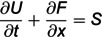 Figure 1
 Figure 2
 Figure 3
 Figure 4
 Figure 5
 Figure 6
 Figure 7
 Figure 8
 Figure 9
 Figure 10
 Figure 11
 Figure 12
 Figure 13
 Figure 14
 Figure 15
 Figure 16
 Figure 17
 Figure 18
 Figure 19
 Figure 20
 Figure 21
 Figure 22
 Figure 23
 Figure 24
 Figure 25
 Figure 26
 Figure 27
 Figure 28
 Figure 29
 Figure 30
 Figure 31
 Figure 32
 Figure 33
 Figure 34
 Figure 35
 Figure 36
 Figure 37
 Figure 38
 Figure 39
 Figure 40
 Figure 41
 Figure 42
 Figure 43
 Figure 44
 Figure 45
 Figure 46
 Figure 47
 Figure 48
 Figure 49
 Figure 50
Peer Reviews
No public reviews on file for this paper yet. If you reviewed it on a platform where reviews are public (OpenReview, ICLR, NeurIPS, ICML), you can paste yours below so the community can read it here.
Videos
No videos yet. Explain this paper in a talk, walkthrough, or lecture? Add one.
Taxonomy
TopicsRailway Engineering and Dynamics · Railway Systems and Energy Efficiency · Aerodynamics and Fluid Dynamics Research