Prognostic Value of Matrix Metalloproteinase 9 (MMP9) in Patients Following Off-Pump Coronary Artery Bypass Grafting
Mikhail Popov, Siarhei Dabravolski, Vladislav Dontsov, Sergei Vzvarov, Evgeniy Agafonov, Dmitriy Zybin, Olga Radchenkova, Dmitriy Saveliev, Victoria Pronina, Natalia Kashirina, Liudmila Lipatova, Mikhail Peklo, Pavel Rutkevich, Elena Yanushevskaya, Alisa Sokolovskaya

TL;DR
This study shows that higher levels of MMP9 one year after heart surgery are linked to worse heart function, suggesting MMP9 could predict long-term outcomes.
Contribution
The study identifies MMP9 as a potential novel biomarker for long-term prognosis after off-pump coronary artery bypass grafting.
Findings
MMP9 levels decreased significantly 48 hours after surgery.
Higher 1-year MMP9 levels correlated with lower left ventricular ejection fraction.
MMP9 levels showed no significant preoperative correlation with age or baseline lab parameters.
Abstract
Background: Matrix metalloproteinase 9 (MMP9) has recently emerged as a risk predictor in patients with cardiovascular diseases (CVD). However, little is known regarding the significance of elevated plasma MMP9 levels in patients during the long-term period following myocardial revascularisation. We aimed to investigate the role of MMP9 in relation to myocardial status before and after myocardial revascularisation and to assess its long-term prognostic value. Methods: This prospective observational study included 200 male patients with ischaemic heart disease. All patients underwent direct myocardial revascularisation on a beating heart (off-pump surgery). Plasma MMP9 levels were analysed preoperatively, at 48 h postoperatively, and during the long-term follow-up period (one year postoperatively). Key echocardiographic parameters, specifically left ventricular ejection fraction (LVEF)…
Genes, proteins, chemicals, diseases, species, mutations and cell lines named across the full text — each resolved to its canonical identifier and authoritative record.
Click any figure to enlarge with its caption.
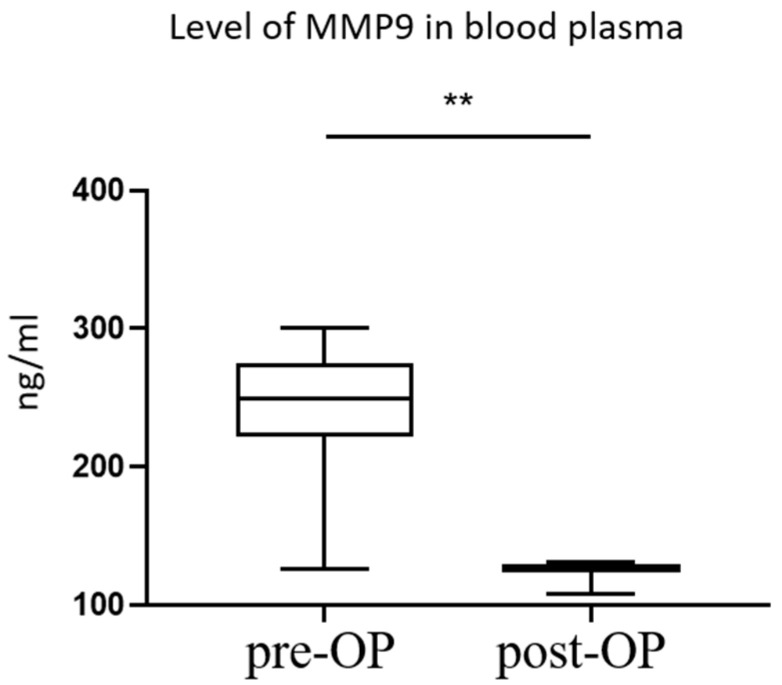 Figure 1
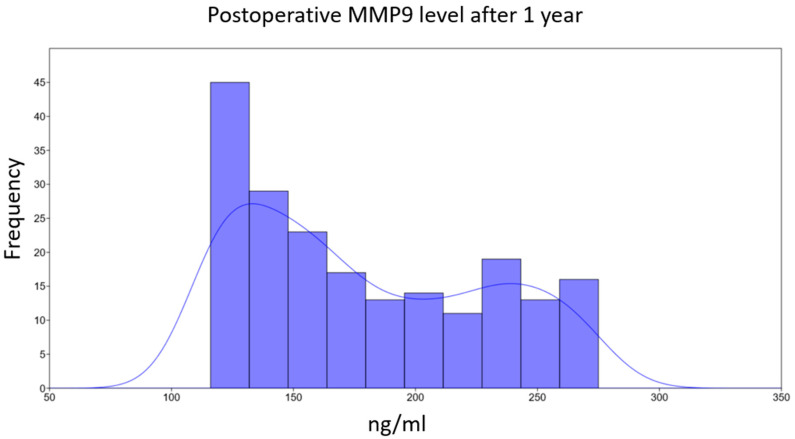 Figure 2
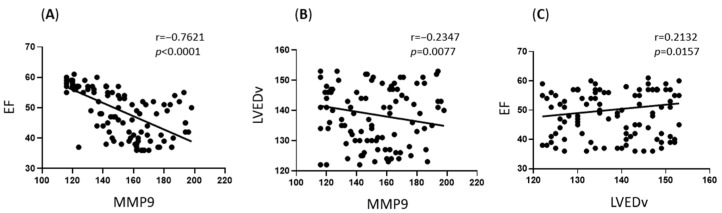 Figure 3
Peer Reviews
No public reviews on file for this paper yet. If you reviewed it on a platform where reviews are public (OpenReview, ICLR, NeurIPS, ICML), you can paste yours below so the community can read it here.
Videos
No videos yet. Explain this paper in a talk, walkthrough, or lecture? Add one.
Taxonomy
TopicsCardiac Fibrosis and Remodeling · Protease and Inhibitor Mechanisms · Signaling Pathways in Disease