Different Approaches to Extracting Proximally Migrated or Broken and Retained Pancreatic Stents
Navkiran Randhawa, Ahamed Khalyfa, Raahi Patel, Rahil Desai, Mahnoor Inamullah, Haoran Peng, Varshita Goduguchinta, Subbaramiah Sridhar, Kamran Ayub

TL;DR
This study shows that endoscopic techniques are highly effective for retrieving migrated or broken pancreatic stents, with all procedures successful and no major complications.
Contribution
The study evaluates multiple endoscopic methods for retrieving migrated pancreatic stents and reports a 100% success rate using specialized techniques.
Findings
All 12 endoscopic retrieval procedures were successful with an average retrieval time of 30 to 45 minutes.
Two patients experienced pancreatic duct narrowing, which was resolved with balloon dilation.
No major complications were observed, and all stents were eventually removed after follow-up.
Abstract
Background: Pancreatic stents (PSs) play a crucial role in the management of pancreatic duct obstructions, particularly in the context of endoscopic retrograde cholangiopancreatography (ERCP). However, stent migration remains a significant complication, leading to risks such as pancreatitis, pancreatic duct stenosis, and abscess formation. This study aims to evaluate the efficacy of various endoscopic techniques for retrieving proximally migrated or broken pancreatic stents, highlighting optimal strategies for improving patient outcomes. Methods: A retrospective multicenter review was conducted across six hospitals from 2016 to 2024. Patients with proximally migrated or broken pancreatic stents referred for endoscopic retrieval after failed attempts at other facilities were included. Demographic data, stent characteristics, and retrieval techniques were analyzed. Endoscopic methods…
Genes, proteins, chemicals, diseases, species, mutations and cell lines named across the full text — each resolved to its canonical identifier and authoritative record.
Click any figure to enlarge with its caption.
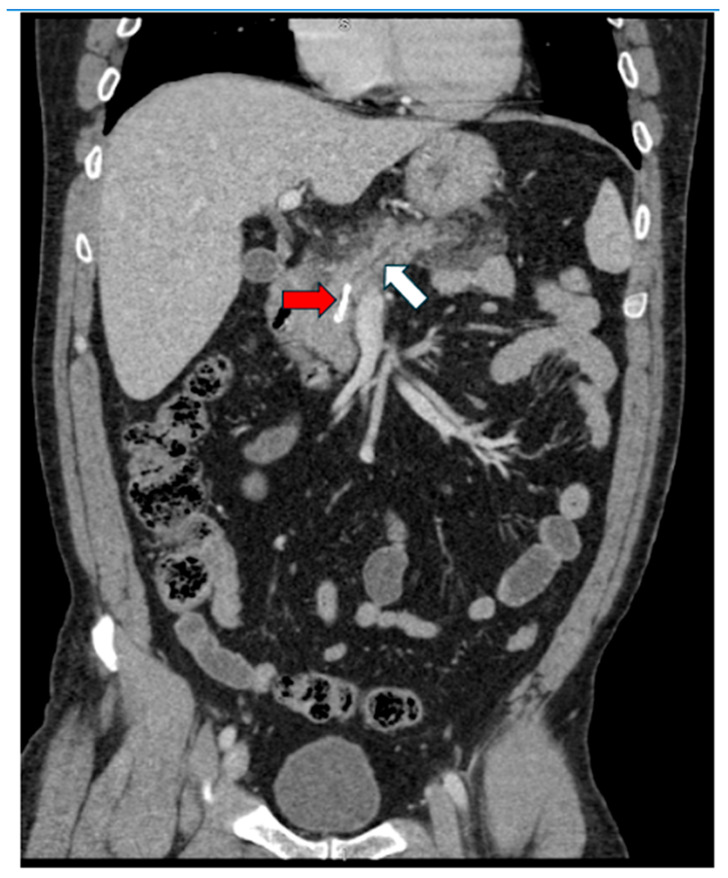 Figure 1
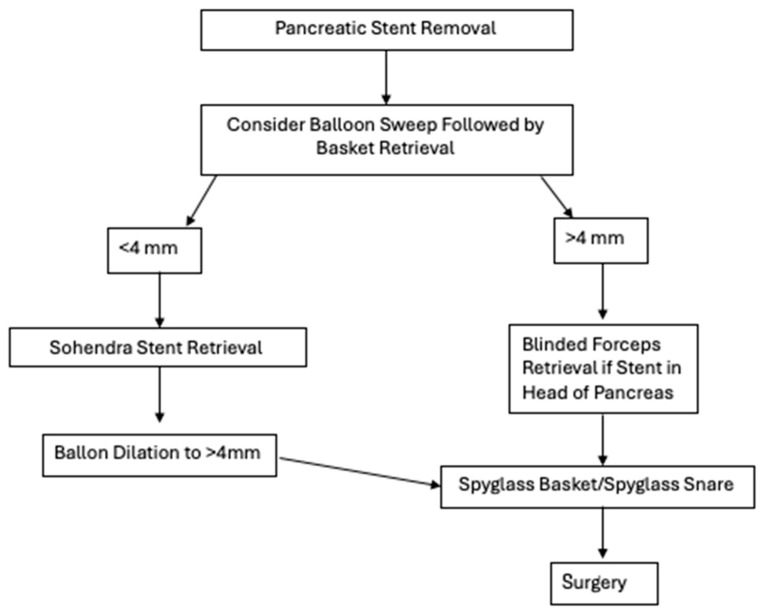 Figure 2
Peer Reviews
No public reviews on file for this paper yet. If you reviewed it on a platform where reviews are public (OpenReview, ICLR, NeurIPS, ICML), you can paste yours below so the community can read it here.
Videos
No videos yet. Explain this paper in a talk, walkthrough, or lecture? Add one.
Taxonomy
TopicsGallbladder and Bile Duct Disorders · Pediatric Hepatobiliary Diseases and Treatments · Pancreatic and Hepatic Oncology Research