Ensemble-Based Binding Free Energy Profiling and Network Analysis of the KRAS Interactions with DARPin Proteins Targeting Distinct Binding Sites: Revealing Molecular Determinants and Universal Architecture of Regulatory Hotspots and Allosteric Binding
Mohammed Alshahrani, Vedant Parikh, Brandon Foley, Gennady Verkhivker

TL;DR
This study explores how engineered DARPin proteins interact with the KRAS oncoprotein, revealing shared and unique molecular mechanisms that could aid in developing targeted cancer therapies.
Contribution
The study introduces a multi-scale approach combining simulations and network analysis to uncover universal and mechanism-specific hotspots in KRAS-DARPin interactions.
Findings
KRAS residues I36, Y40, M67, and H95 are consistently critical for binding stability across DARPin systems.
Allosteric binders K13 and K19 stabilize a KRAS pocket and rewire communication without full immobilization.
A unifying allosteric architecture is preserved across complexes, mirroring KRAS's intrinsic communication framework.
Abstract
KRAS is a pivotal oncoprotein that regulates cell proliferation and survival through interactions with downstream effectors such as RAF1. Despite significant advances in understanding KRAS biology, the structural and dynamic mechanisms of KRAS allostery remain poorly understood. In this study, we employ microsecond molecular dynamics simulations, mutational scanning, and binding free energy calculations together with dynamic network modeling to dissect how engineered DARPin proteins K27, K55, K13, and K19 engage KRAS through diverse molecular mechanisms ranging from effector mimicry to conformational restriction and allosteric modulation. Mutational scanning across all four DARPin systems identifies a core set of evolutionarily constrained residues that function as universal hotspots in KRAS recognition. KRAS residues I36, Y40, M67, and H95 consistently emerge as critical contributors…
Genes, proteins, chemicals, diseases, species, mutations and cell lines named across the full text — each resolved to its canonical identifier and authoritative record.
Click any figure to enlarge with its caption.
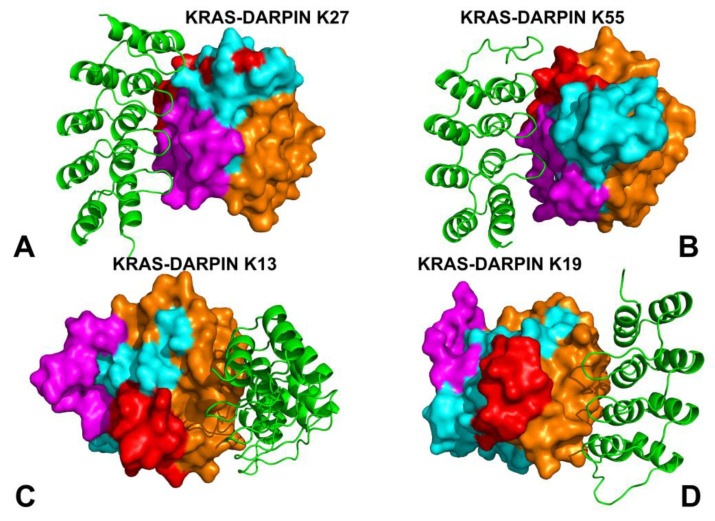 Figure 1
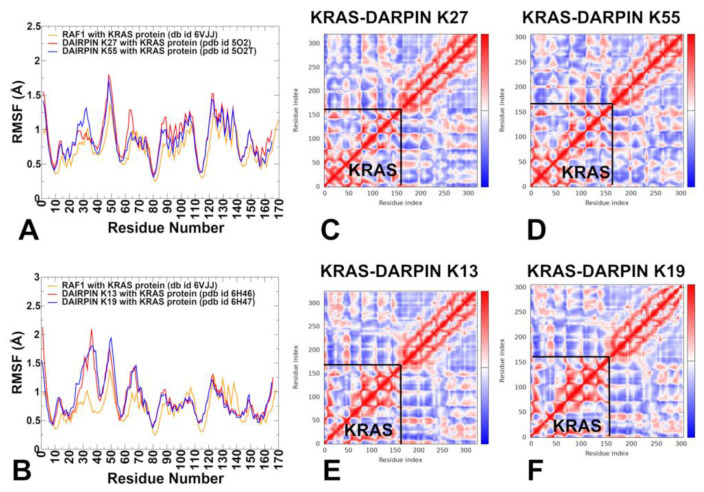 Figure 2
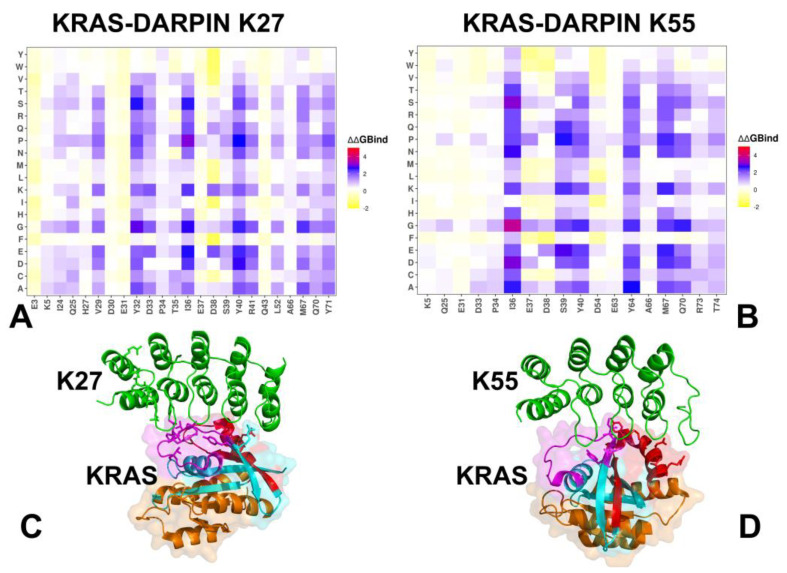 Figure 3
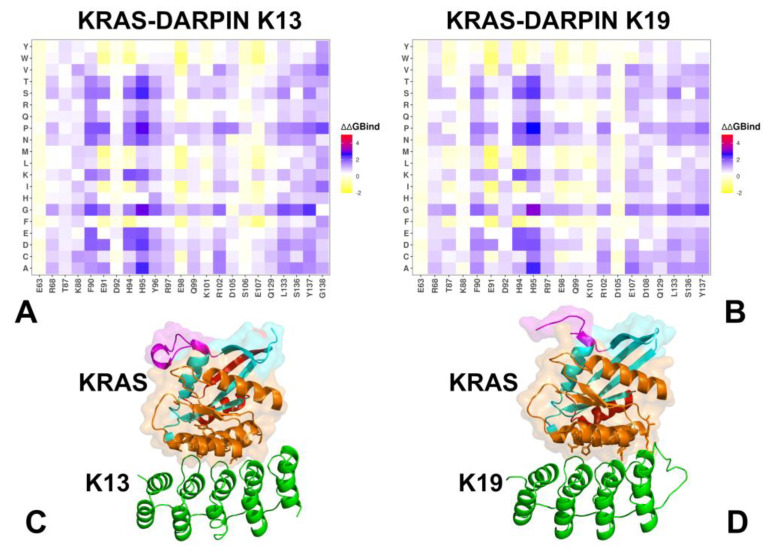 Figure 4
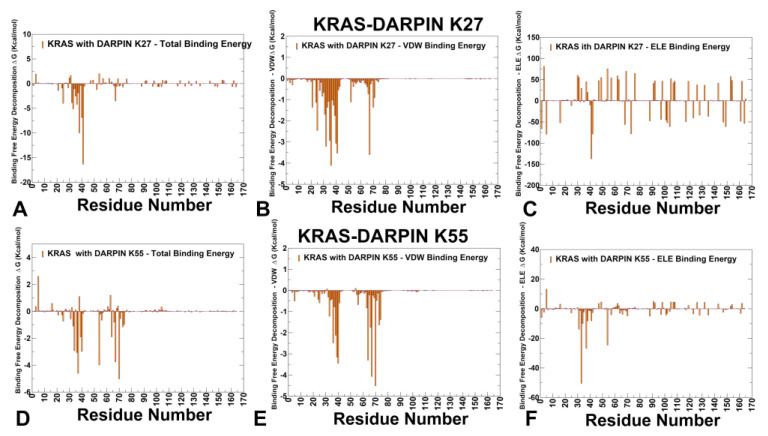 Figure 5
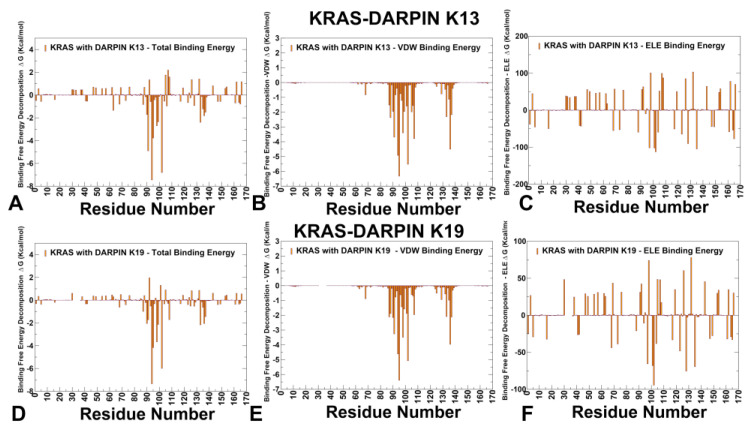 Figure 6
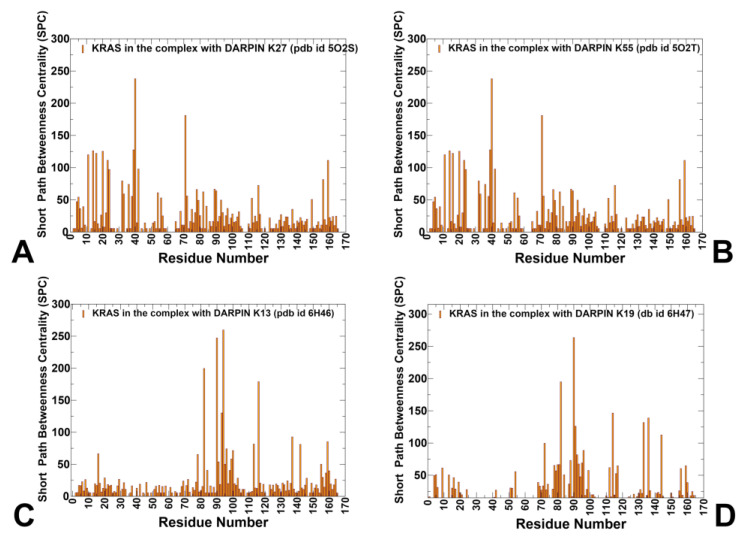 Figure 7
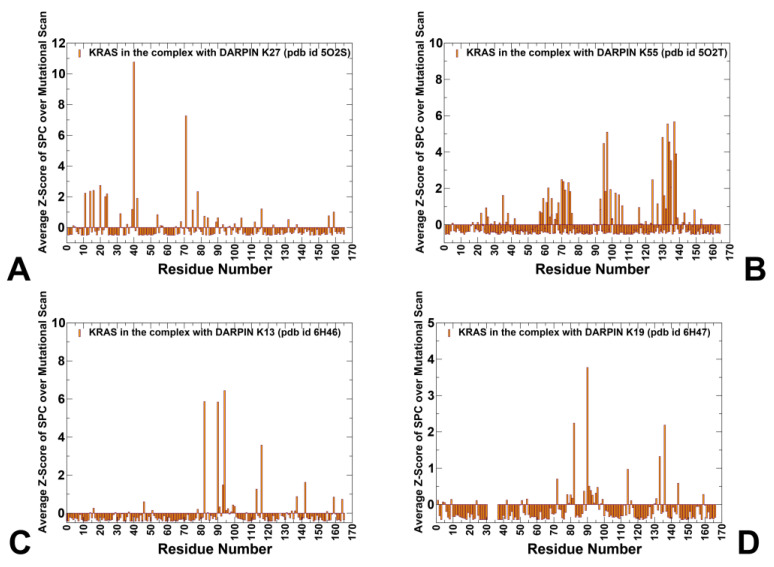 Figure 8
Peer Reviews
No public reviews on file for this paper yet. If you reviewed it on a platform where reviews are public (OpenReview, ICLR, NeurIPS, ICML), you can paste yours below so the community can read it here.
Videos
No videos yet. Explain this paper in a talk, walkthrough, or lecture? Add one.
Taxonomy
TopicsProtein Structure and Dynamics · Computational Drug Discovery Methods · Protein Kinase Regulation and GTPase Signaling