Mechanisms Underlying Hyperexcitability: Combining Mossy Fiber Sprouting and Mossy Cell Loss in Neural Network Model of the Dentate Gyrus
Dariusz Świetlik

TL;DR
This study uses a computational model to show how changes in brain structures after head injury can increase seizure risk in temporal lobe epilepsy.
Contribution
The study uniquely combines mossy fiber sprouting and mossy cell loss in a model to show their individual effects on brain excitability.
Findings
Mossy fiber sprouting strongly correlates with increased granule cell activity (R = 0.95, p < 0.0001).
Removing mossy cells reduces network excitability (R = -0.40, p < 0.0001).
Higher sprouting levels lead to significantly increased granule cell activity (p < 0.01).
Abstract
Background/Objectives: A concussive head injury increases the likelihood of temporal lobe epilepsy through mechanisms that are not entirely understood. This study aimed to investigate how two key histopathological features shared by both TLE (temporal lobe epilepsy) and head injury—mossy fiber sprouting and hilar excitatory cell loss—contribute to the modulation of dentate gyrus excitability. Methods: A computational approach was used to explore the impact of specific levels of mossy fiber sprouting and mossy cell loss, while avoiding the confounding effects of concurrent changes. The dentate gyrus model consists of 500 granule cells, 15 mossy cells, 6 basket cells and 6 hilar perforant path-associated cells. Results: My simulations demonstrate a correlation between the degree of mossy fiber sprouting and the number of spikes in dentate gyrus granule cells (correlations coefficient R =…
Genes, proteins, chemicals, diseases, species, mutations and cell lines named across the full text — each resolved to its canonical identifier and authoritative record.
Click any figure to enlarge with its caption.
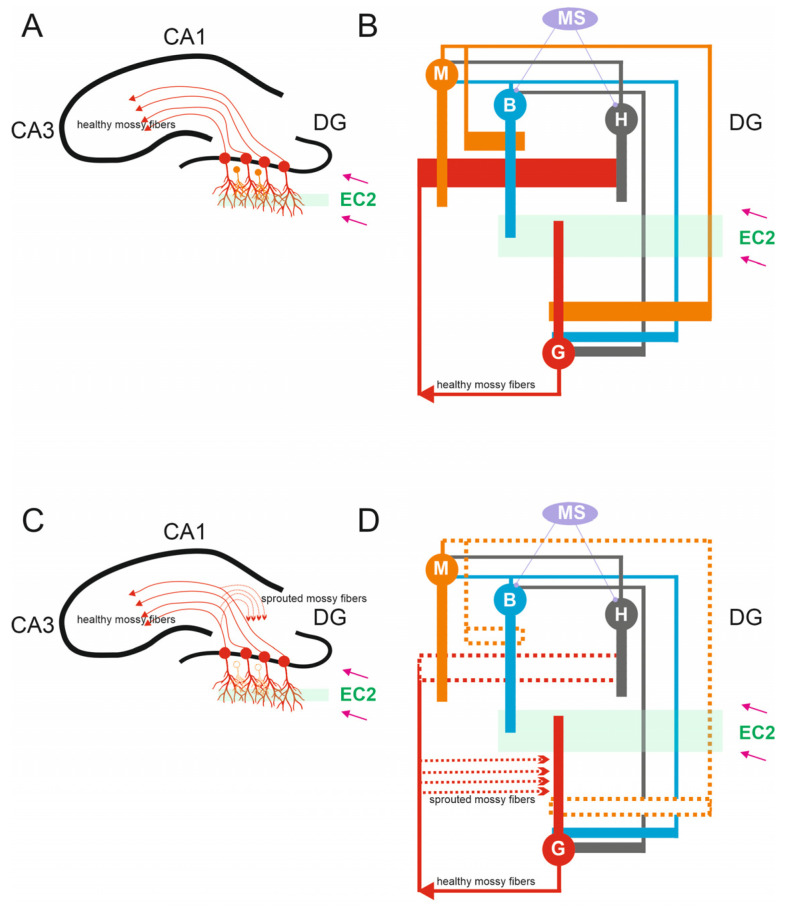 Figure 1
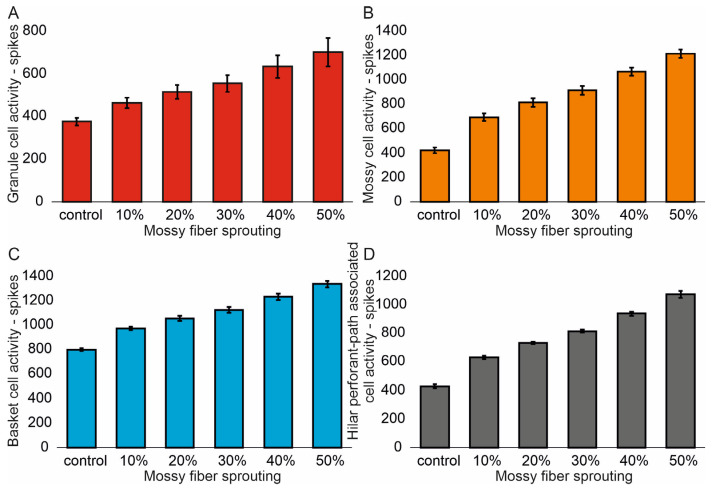 Figure 2
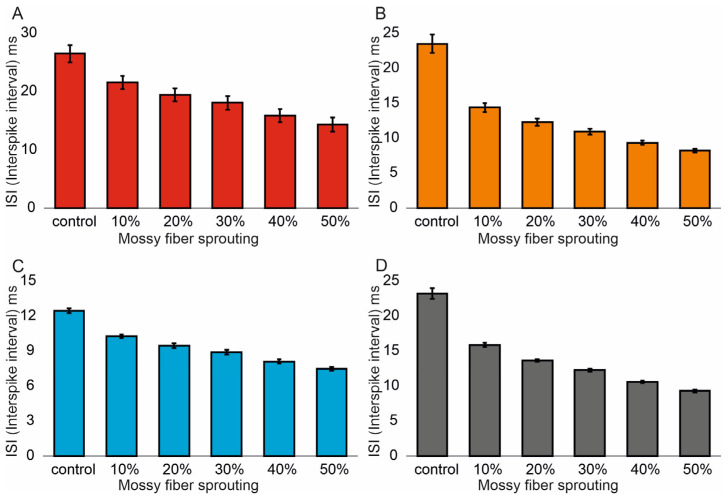 Figure 3
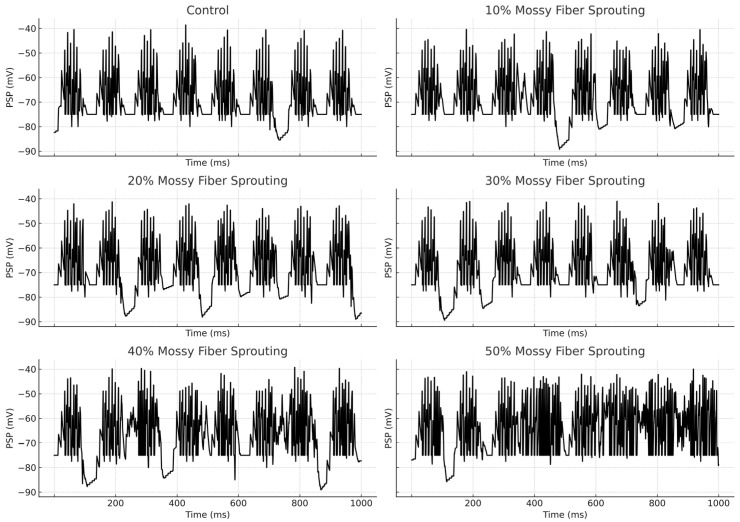 Figure 4
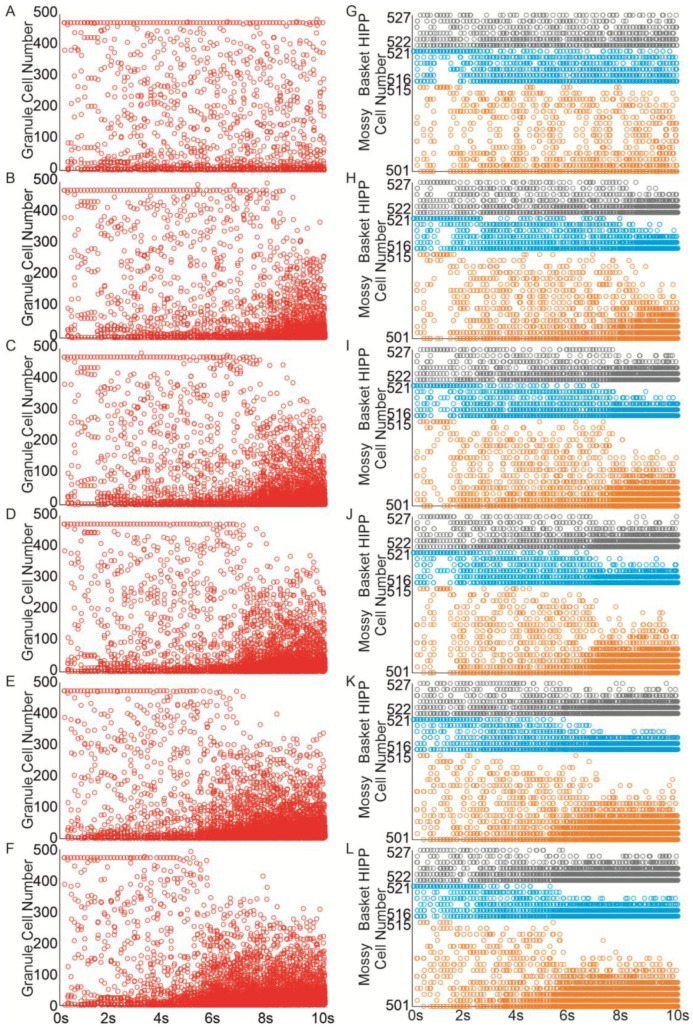 Figure 5
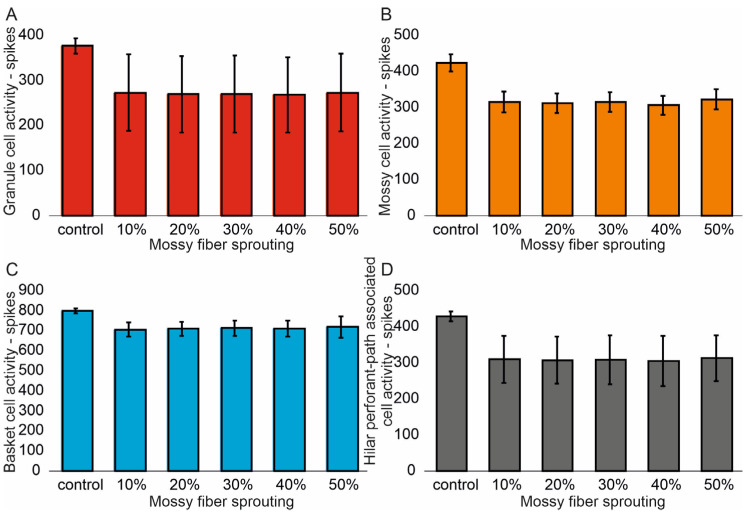 Figure 6
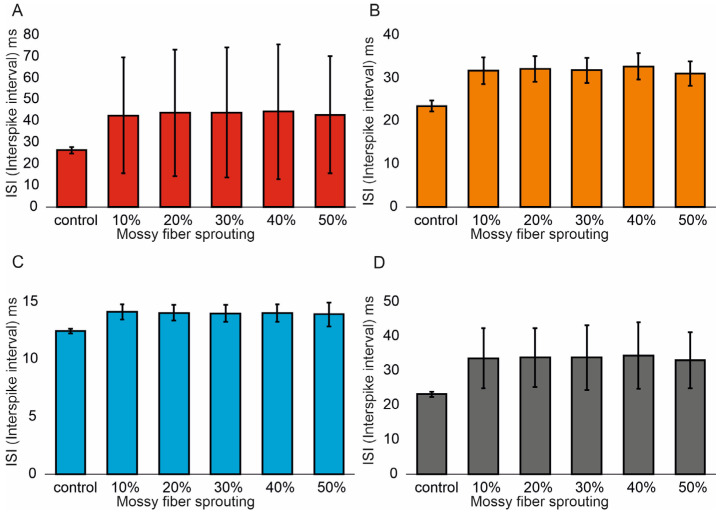 Figure 7
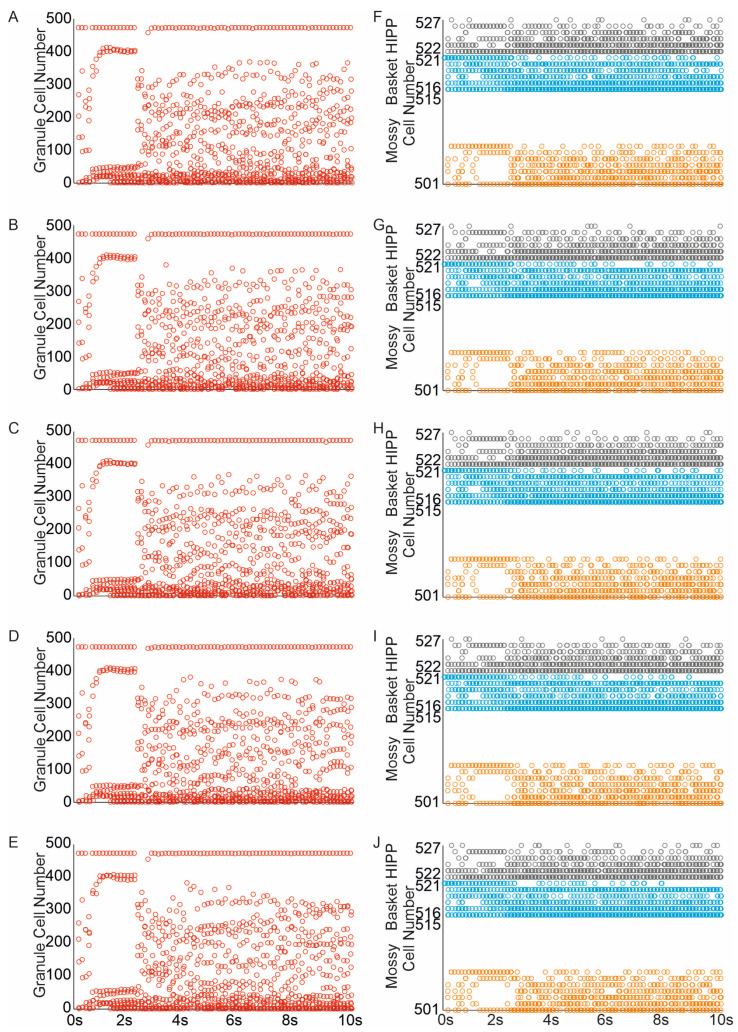 Figure 8
Peer Reviews
No public reviews on file for this paper yet. If you reviewed it on a platform where reviews are public (OpenReview, ICLR, NeurIPS, ICML), you can paste yours below so the community can read it here.
Videos
No videos yet. Explain this paper in a talk, walkthrough, or lecture? Add one.
Taxonomy
TopicsNeuroscience and Neuropharmacology Research · Neurogenesis and neuroplasticity mechanisms · Sleep and Wakefulness Research