Positive Effects of (+)-Epicatechin on Traumatic Spinal Cord Injury Recovery
Cristian Gonzalez-Ruiz, Rodrigo Mondragón-Lozano, Hermelinda Salgado-Ceballos, Francisco Villarreal, Yuridia Martínez-Meza, Eduardo Meaney, Nayelli Nájera, Guillermo Ceballos

TL;DR
This study shows that the natural compound (+)-epicatechin may help protect against spinal cord injury and improve recovery.
Contribution
The study introduces (+)-epicatechin as a potential new treatment for traumatic spinal cord injury.
Findings
EC significantly protected against spinal cord injury in a rat model.
Key protein markers showed no changes, indicating reduced damage progression.
Improved movement was observed in treated rats.
Abstract
Neurological damage from traumatic spinal cord injury (SCI) results in a grade of disability ranging from mild to severe motor and sensory dysfunction. It occurs more frequently in men of productive age. Treatment essentially consists of anti-inflammatories and rehabilitation. Other treatments are only partially effective, and inadequate treatment and secondary conditions often cause premature mortality. The search for pharmacological approaches is a continuous effort. This study aimed to assess the effects of a natural compound on spinal cord injury (SCI) as an alternative damage prevention maneuver. We evaluated the protective effects of the flavanol (+)-epicatechin (EC) in a rat model of moderate trauma-induced SCI on protein markers of damage events. The results showed that EC induced significant protection against SCI. No changes were found in angiopoietin-1, beclin-1, myelin basic…
Genes, proteins, chemicals, diseases, species, mutations and cell lines named across the full text — each resolved to its canonical identifier and authoritative record.
Click any figure to enlarge with its caption.
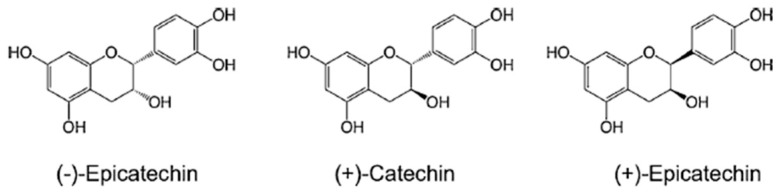 Figure 1
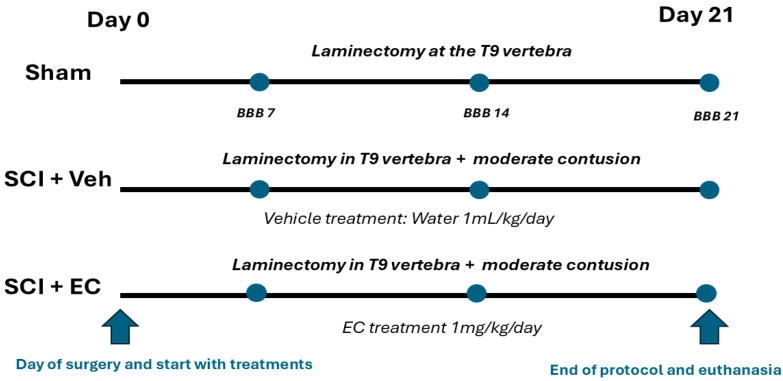 Figure 2
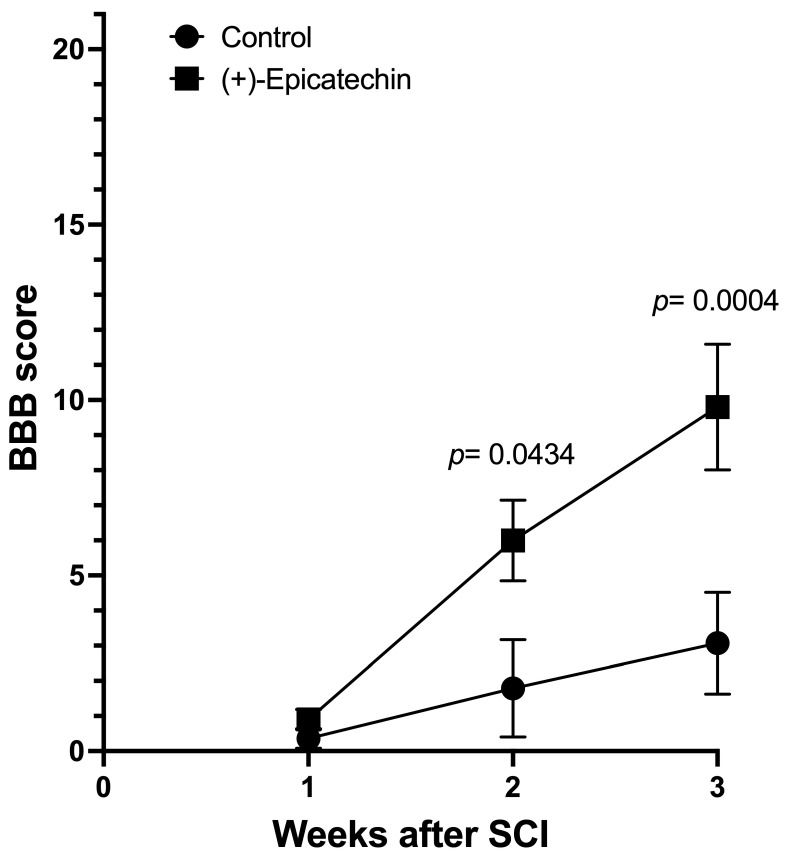 Figure 3
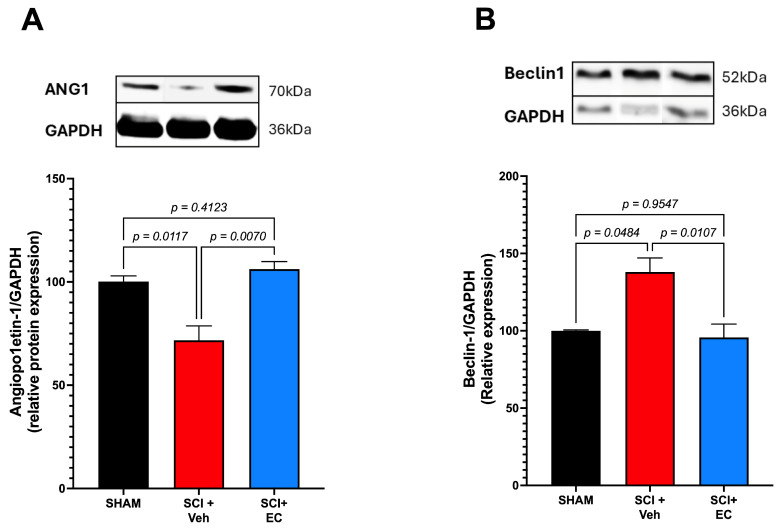 Figure 4
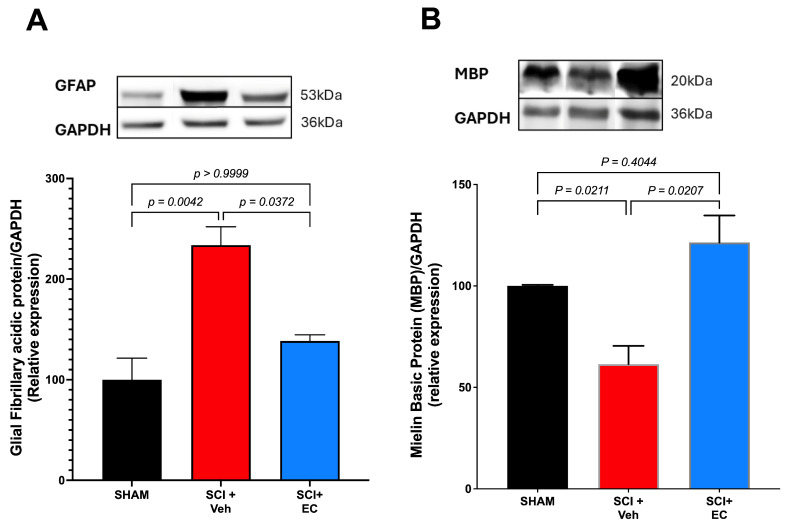 Figure 5
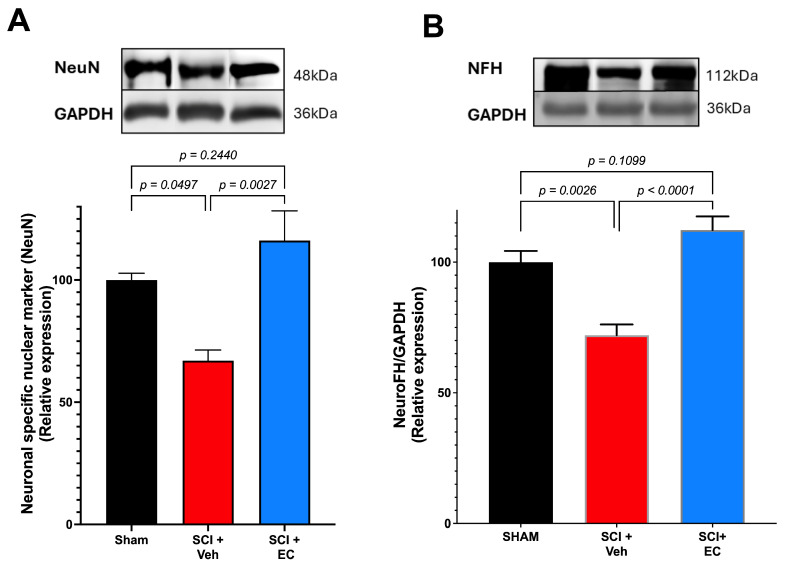 Figure 6
Peer Reviews
No public reviews on file for this paper yet. If you reviewed it on a platform where reviews are public (OpenReview, ICLR, NeurIPS, ICML), you can paste yours below so the community can read it here.
Videos
No videos yet. Explain this paper in a talk, walkthrough, or lecture? Add one.
Taxonomy
TopicsSpinal Cord Injury Research · Nerve injury and regeneration · Stroke Rehabilitation and Recovery