BRCA Screening and Identification of a Common Haplotype in the Jewish Community of Rome Reveal a Founder Effect for the c.7007G>C, p. (Arg2336Pro) BRCA2 Variant
Laura De Marchis, Alain Jonathan Gelibter, Giulia Mammone, Raffaele Angelo Madaio, Paolo Aretini, Maria De Bonis, Stefania Zampatti, Cristina Peconi, Daniele Guadagnolo, Annarita Vestri, Antonio Pizzuti, Emiliano Giardina, Ettore Domenico Capoluongo, Angelo Minucci

TL;DR
This study identifies a common BRCA2 mutation in the Jewish community of Rome, suggesting a founder effect and highlighting the need for targeted genetic screening.
Contribution
The study is the first to identify a founder effect for the BRCA2 c.7007G>C variant in the Jewish community of Rome.
Findings
26.5% of probands from the Jewish community of Rome carried the BRCA2 c.7007G>C pathogenic variant.
Haplotype analysis revealed a shared genetic segment among carriers, indicating a founder effect.
The haplotype length suggests the Roman Jewish community may be the oldest in Europe.
Abstract
Ethnical minorities can present higher rates of cancer susceptibility variants with a founder effect. This is the first study on BRCA1/2 analysis in breast and ovarian cancer cases in the Jewish community of Rome. A significant portion of probands with breast/ovarian cancer from the Jewish community of Rome harbored the heterozygous BRCA2 c.7007G>C pathogenic variant. Haplotype analysis suggested a founder effect with remote origin. Background/Objectives: Cancer risk-reducing strategies in Ashkenazi women carrying founder variants have a cost-effective effect on reducing cancer morbidity and mortality. The British and US guidelines recommend BRCA1/2 (BRCA) screening among Ashkenazi Jewish people to identify high-risk individuals. BRCA status has not been investigated yet in the Jewish community of Rome. Methods: Patients were selected from the Family Cancer Clinic of the Umberto I…
Genes, proteins, chemicals, diseases, species, mutations and cell lines named across the full text — each resolved to its canonical identifier and authoritative record.
Click any figure to enlarge with its caption.
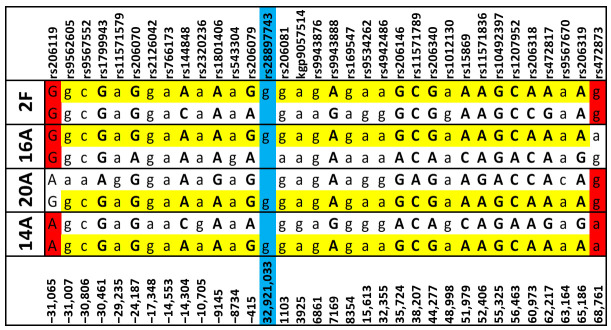 Figure 1
Peer Reviews
No public reviews on file for this paper yet. If you reviewed it on a platform where reviews are public (OpenReview, ICLR, NeurIPS, ICML), you can paste yours below so the community can read it here.
Videos
No videos yet. Explain this paper in a talk, walkthrough, or lecture? Add one.
Taxonomy
TopicsBRCA gene mutations in cancer · CRISPR and Genetic Engineering · Genomics and Rare Diseases