Quality of Life of Adolescents and Young Adults After Testicular Prosthesis Surgery During Childhood: A Qualitative Study and Literature Review
Zoi Chantzi, Sotirios Fouzas, Alexandros Drivalos, Athanasia Stamati, Agapios Gkentzis, Maria Athanasopoulou, Katerina Kambouri, Despoina Gkentzi, Eirini Kostopoulou, Anastasia Vareli, Evangelos Blevrakis, Konstantinos Zachos, Vasileios Alexopoulos, Antonios Panagidis

TL;DR
This study explores how testicular prosthesis surgery in childhood affects the quality of life and emotional well-being of adolescent and young adult males.
Contribution
This is the first qualitative study to integrate personal and parental perspectives on the long-term quality of life after pediatric testicular prosthesis surgery.
Findings
Most participants expressed satisfaction with the prosthesis, though some had negative perceptions.
The prosthesis improved self-image and self-confidence over time but caused anxiety around sexual intimacy.
Participants emphasized the importance of privacy and highlighted the need for expert pre-surgery discussions.
Abstract
Background/Objectives: To evaluate the quality of life (QoL) of adolescent and young adult males who had testicular prosthesis surgery during their childhood, as well as their own and their parents’ inner perceptions and feelings. To our knowledge, this is the first qualitative study and one of few with an integrated approach on the QoL of pediatric testicular prosthesis recipients. Methods: Recipients and their parents were interviewed regarding their life with the testicular prosthesis. Major QoL domains (i.e., physical and mental health, interpersonal relationships, sexuality) were assessed. Results: Although there were participants who viewed the outcomes with negativity, most expressed satisfaction. Daily routine returned to normal after a postoperative period with precautions, such as fear of damaging either the implant or the healthy testis. Prosthesis feeling was acceptable and…
Genes, proteins, chemicals, diseases, species, mutations and cell lines named across the full text — each resolved to its canonical identifier and authoritative record.
Click any figure to enlarge with its caption.
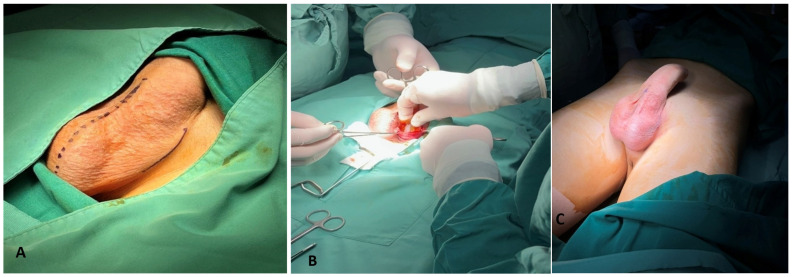 Figure 1
Peer Reviews
No public reviews on file for this paper yet. If you reviewed it on a platform where reviews are public (OpenReview, ICLR, NeurIPS, ICML), you can paste yours below so the community can read it here.
Videos
No videos yet. Explain this paper in a talk, walkthrough, or lecture? Add one.
Taxonomy
TopicsMale Reproductive Health Studies · Sexual Differentiation and Disorders · Reproductive Health and Technologies