Pain Hypersensitivity and Increased Urinary Tetrahydrobiopterin Levels in Mice Submitted to High-Fat Diet
Tuany Eichwald, Débora da Luz Scheffer, Leonardo Barros, Alexandre Solano, Vivian De Souza Menegassi, Ananda Christina Staats Pires, Camila Sartor Spivakoski, Rodrigo A. Da Silva, Joana M. Gaspar, Marcelo Fernando Ronsoni, Alexandra Latini

TL;DR
A high-fat diet in mice causes weight gain, worsened glucose tolerance, and increased pain sensitivity, which can be reduced by exercise and is linked to higher levels of a compound called BH4 in urine.
Contribution
This study identifies urinary BH4 as a potential biomarker for pain hypersensitivity in obesity.
Findings
High-fat diet increased weight gain and epididymal fat in mice.
High-fat diet caused impaired glucose tolerance and increased pain sensitivity.
Physical exercise reduced pain scores and locomotor deficits in high-fat diet-fed mice.
Abstract
Objective: This study aimed to examine the impact of high-fat-diet(HFD)-induced obesity on pain sensitivity and tetrahydrobiopterin (BH4) levels. The effect of moderate-intensity physical exercise, an anti-inflammatory non-pharmacological intervention, on pain scores was also investigated. Methods: Adult male C57BL/J6 mice were fed standard or an HFD for eight weeks. Their total body weight, food intake, locomotor and motivational behavior, and pain reflexes were measured. A subgroup of animals underwent physical exercise for five days per week over six weeks. Blood was collected for glucose tolerance testing and levels of lactate. Urine samples were collected to measure BH4 levels. Results: We showed that the HFD increased weight gain, epididymal white adipose tissue, and the percentage of body weight as epididymal fat. These anthropometric alterations were characterized by impaired…
Genes, proteins, chemicals, diseases, species, mutations and cell lines named across the full text — each resolved to its canonical identifier and authoritative record.
Click any figure to enlarge with its caption.
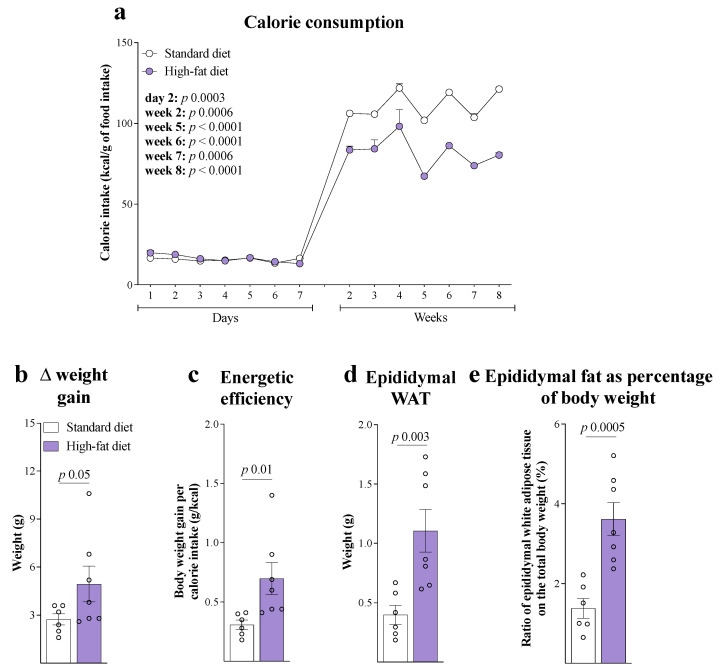 Figure 1
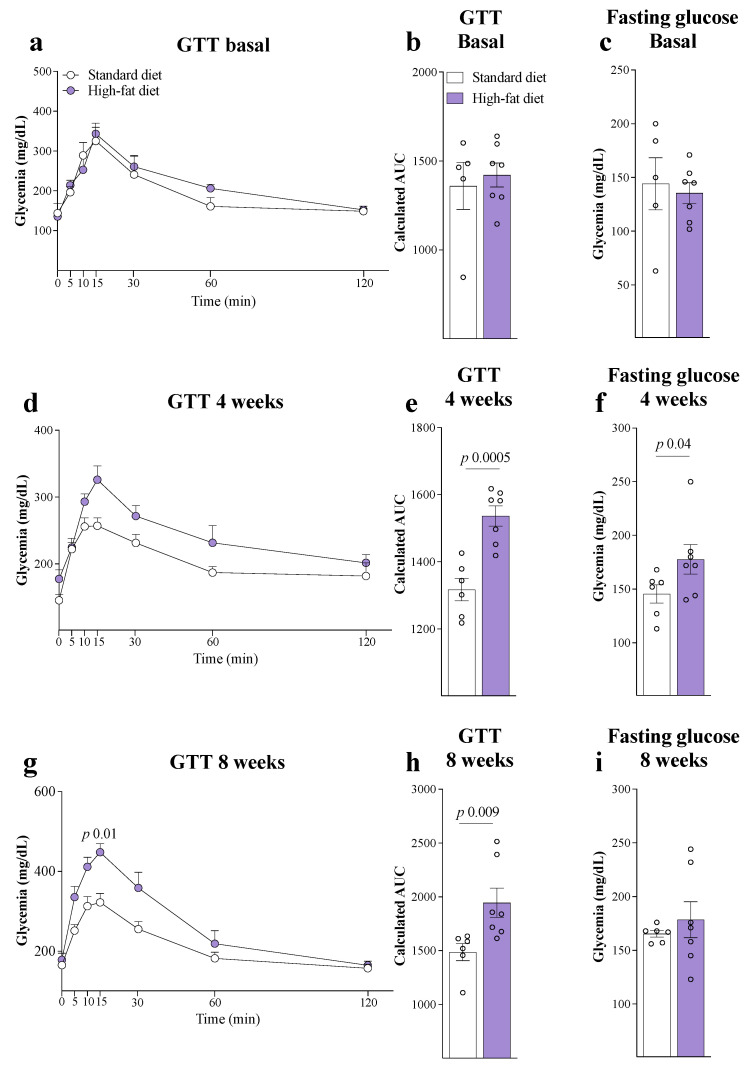 Figure 2
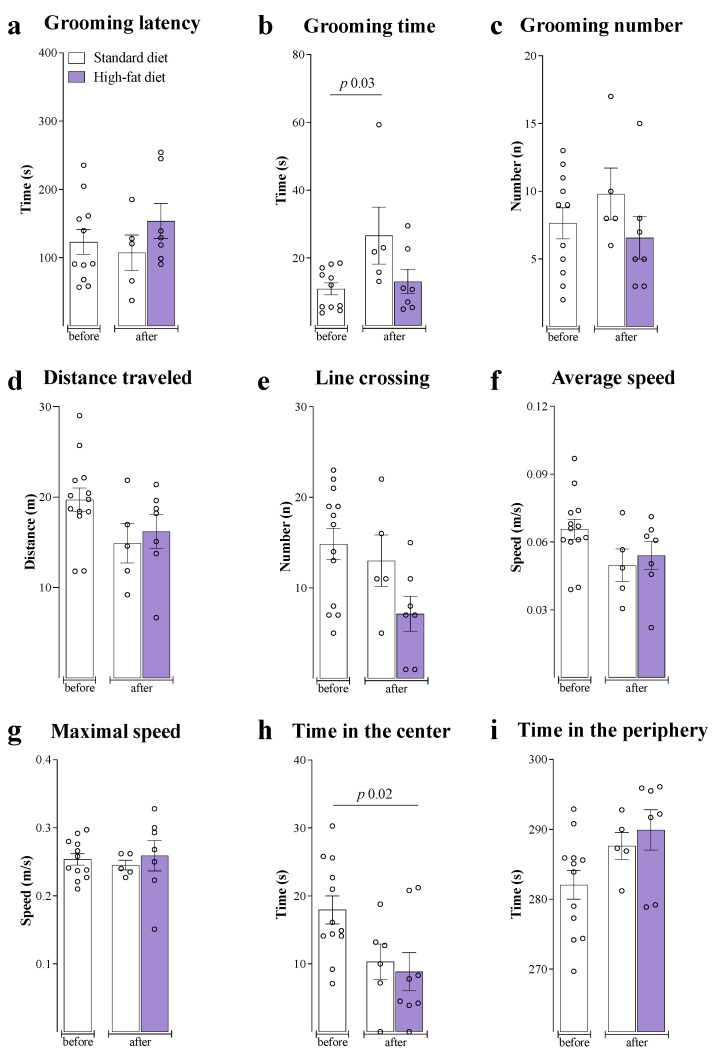 Figure 3
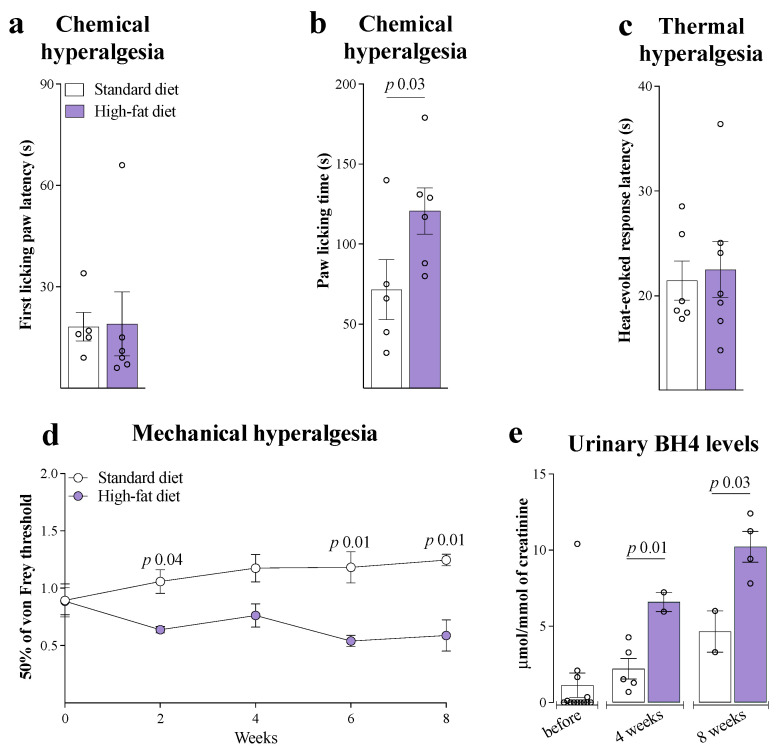 Figure 4
 Figure 5
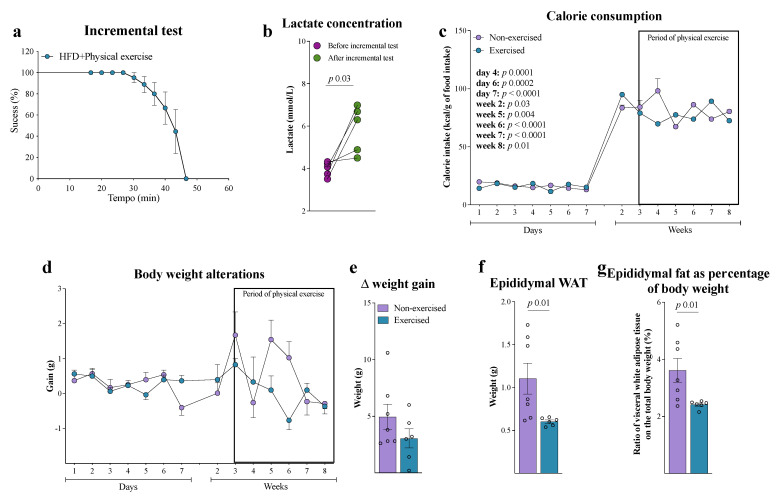 Figure 6
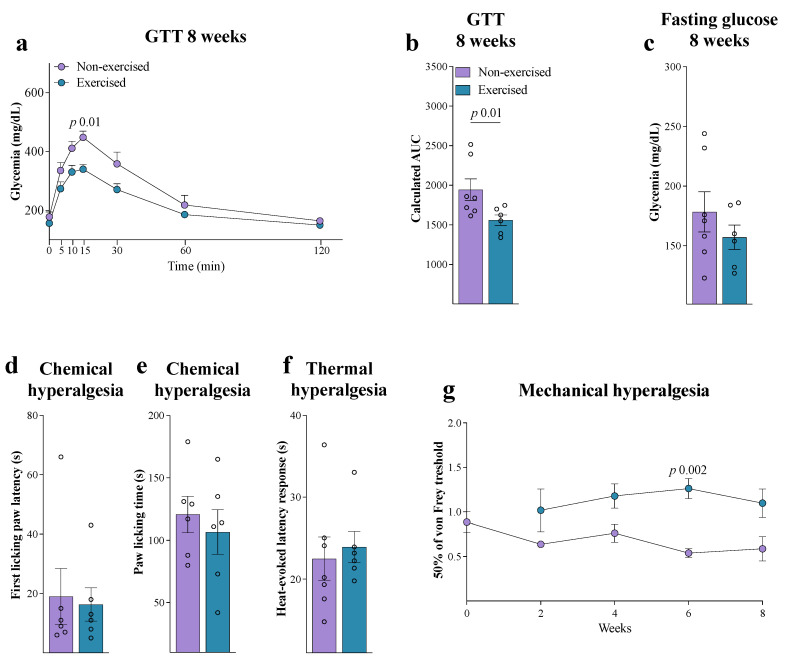 Figure 7
 Figure 8
Peer Reviews
No public reviews on file for this paper yet. If you reviewed it on a platform where reviews are public (OpenReview, ICLR, NeurIPS, ICML), you can paste yours below so the community can read it here.
Videos
No videos yet. Explain this paper in a talk, walkthrough, or lecture? Add one.
Taxonomy
TopicsAdipose Tissue and Metabolism · Pain Mechanisms and Treatments · Exercise and Physiological Responses