A Retrospective Assessment of Computed Tomography-Based Body Composition and Toxicity in Ovarian Cancer Patients Treated with PARP Inhibitors
Marta Nerone, Giorgio Raia, Maria Del Grande, Lucia Manganaro, Giordano Moscatelli, Clelia Di Serio, Andrea Papadia, Esteban Ciliberti, Elena Trevisi, Cristiana Sessa, Filippo Del Grande, Ilaria Colombo, Stefania Rizzo

TL;DR
This study explores how body composition, measured via CT scans, relates to toxicity in ovarian cancer patients taking PARP inhibitors, finding a link between skeletal muscle volume and dose reductions.
Contribution
The study is the first to explore the association between CT-based body composition and PARP inhibitor toxicity in ovarian cancer patients.
Findings
Skeletal muscle volume (SKM) was the only body composition variable significantly associated with dose reduction.
Patients with SKM values between 7506 cm³ and 8650 cm³ had a higher risk of dose reduction.
No other body composition variables showed a statistically significant effect on dose reduction.
Abstract
Poly ADP-ribose polymerase (PARP) inhibitors (PARPi) are a well-established maintenance therapy in stage III and IV ovarian cancer, with evidence of efficacy, especially in patients with germline and/or somatic pathogenic variants (PVs) in the BRCA1/2 genes and in patients with homologous recombination deficiency. While the toxicity profile of PARPi—often leading to dose reductions—is well characterized in both clinical trials and real-world settings, the potential link between drug toxicity and body composition parameters remains unexplored. This exploratory study aims to investigate that potential association, with the goal of identifying a specific patient profile more susceptible to treatment-related toxicity. Objectives: The objective of this single-site retrospective study was to assess the association between Computed Tomography (CT)-based whole-body composition values with dose…
Genes, proteins, chemicals, diseases, species, mutations and cell lines named across the full text — each resolved to its canonical identifier and authoritative record.
Click any figure to enlarge with its caption.
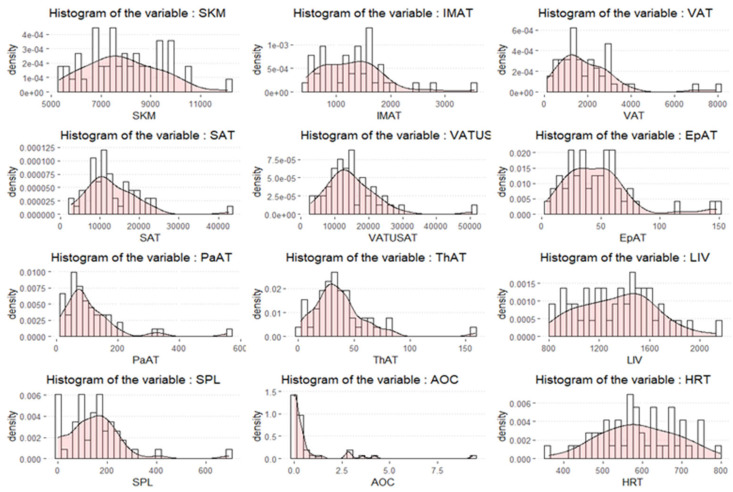 Figure 1
Peer Reviews
No public reviews on file for this paper yet. If you reviewed it on a platform where reviews are public (OpenReview, ICLR, NeurIPS, ICML), you can paste yours below so the community can read it here.
Videos
No videos yet. Explain this paper in a talk, walkthrough, or lecture? Add one.
Taxonomy
TopicsPARP inhibition in cancer therapy · Ovarian cancer diagnosis and treatment