Adaptation to Arginine Deprivation Leads to a More Aggressive, Therapy-Resistant Phenotype in HNSCC Cells
Oleg Chen, Olena Vovk, Nikita Polishchuk, Oksana Mayevska, Galyna Shuvayeva, Melike Demir, Vasyl Lukiyanchuk, Leoni A. Kunz-Schughart, Anna Dubrovska, Oleh Stasyk

TL;DR
Repeated arginine deprivation therapy makes HNSCC cancer cells more aggressive and resistant to treatment.
Contribution
The study reveals that long-term arginine deprivation leads to therapy resistance and increased tumor aggressiveness in HNSCC cells.
Findings
SAS-R9 cells showed higher survival under arginine deprivation and radiotherapy.
These cells exhibited increased clonogenic growth, adhesion, and EMT markers.
They also demonstrated enhanced DNA repair capabilities.
Abstract
Purpose: The development of acquired resistance to arginine deprivation therapy (ADT) is a major barrier to its efficacy. This study aimed to elucidate the possible mechanisms underlying the resistance to ADT. Methods: We applied repeated ADT and established a subline SAS-R9 of the human head and neck squamous cell carcinoma (HNSCC) cells semi-resistant to arginine (Arg) deprivation in vitro. This subline was compared to the parental SAS cell lines for its relative clonogenic proliferation, aggregation, adhesion, and migration capacities. The transcriptomic changes were assessed by RNA sequencing. Signaling pathway alterations were confirmed by RT-PCR and Western blotting. Relative cell radioresistance was analyzed by radiobiological clonogenic survival assay. DNA double-strand break (DSB) repair was assessed by γH2A.X foci analysis. Results: SAS-R9 cells showed higher survival in…
Genes, proteins, chemicals, diseases, species, mutations and cell lines named across the full text — each resolved to its canonical identifier and authoritative record.
Click any figure to enlarge with its caption.
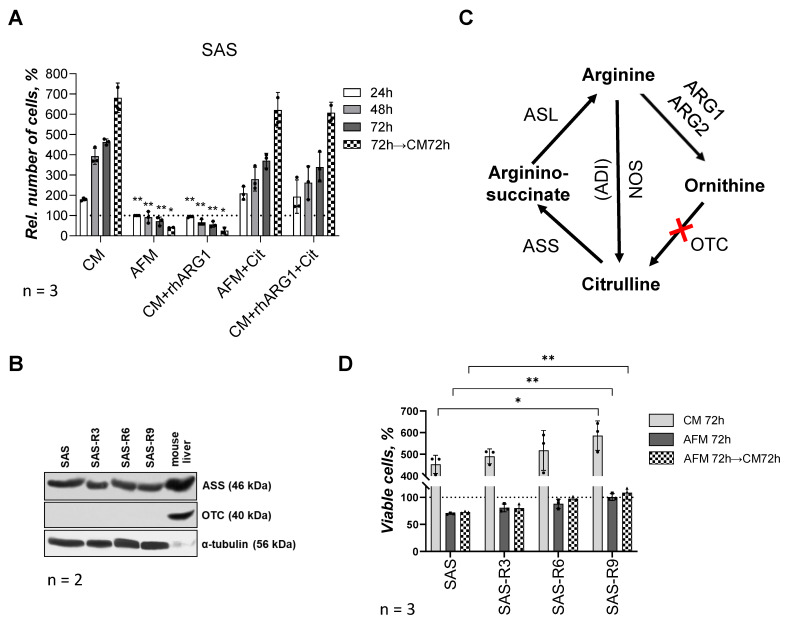 Figure 1
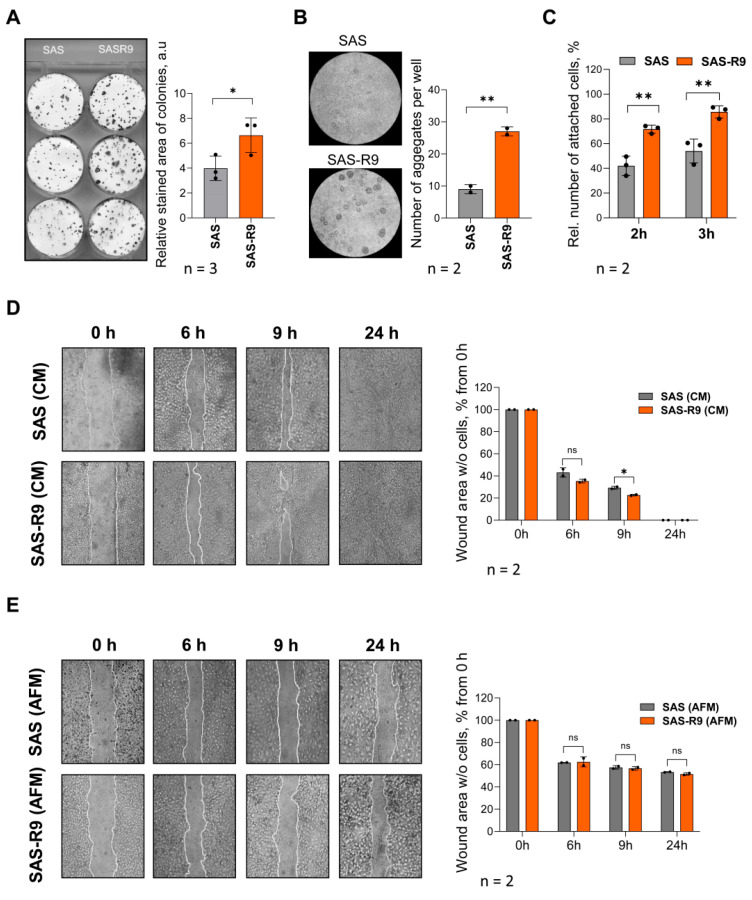 Figure 2
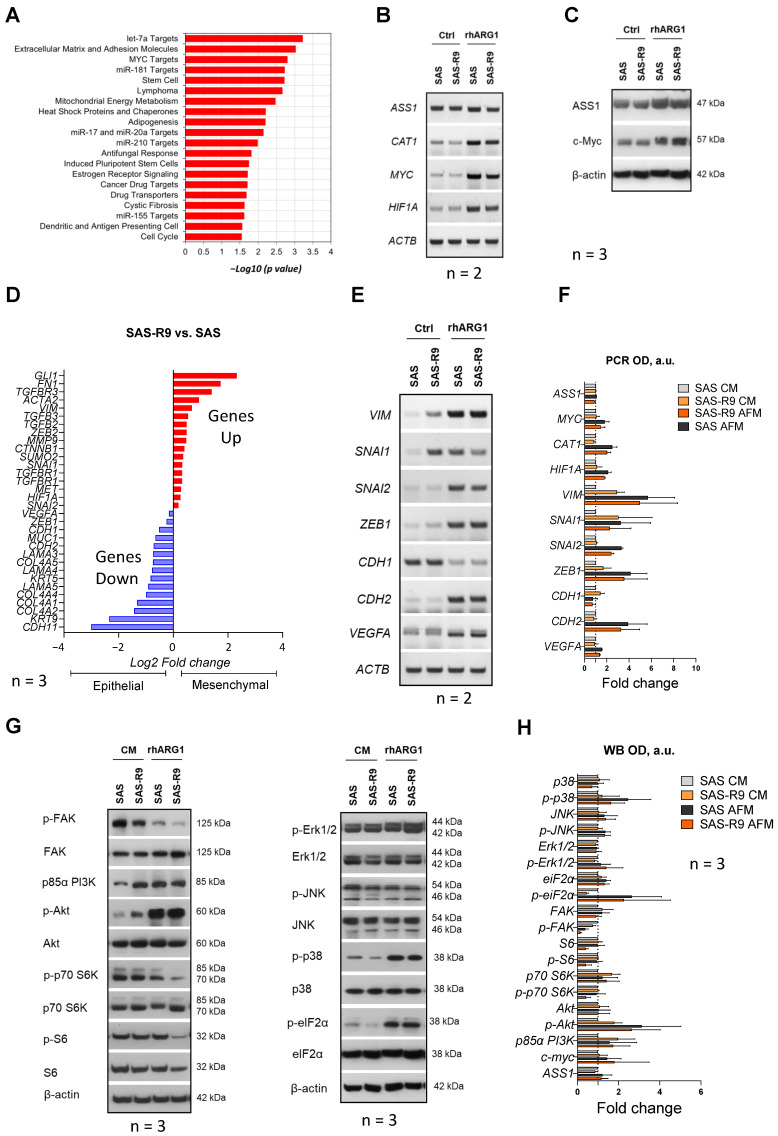 Figure 3
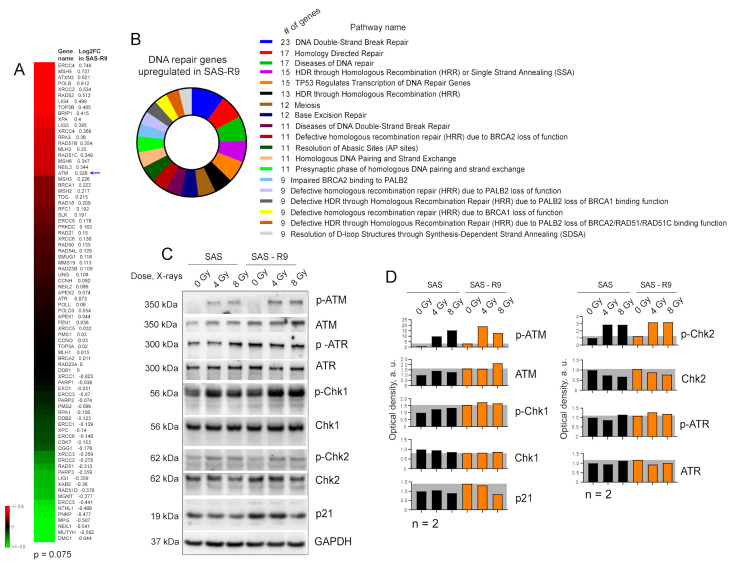 Figure 4
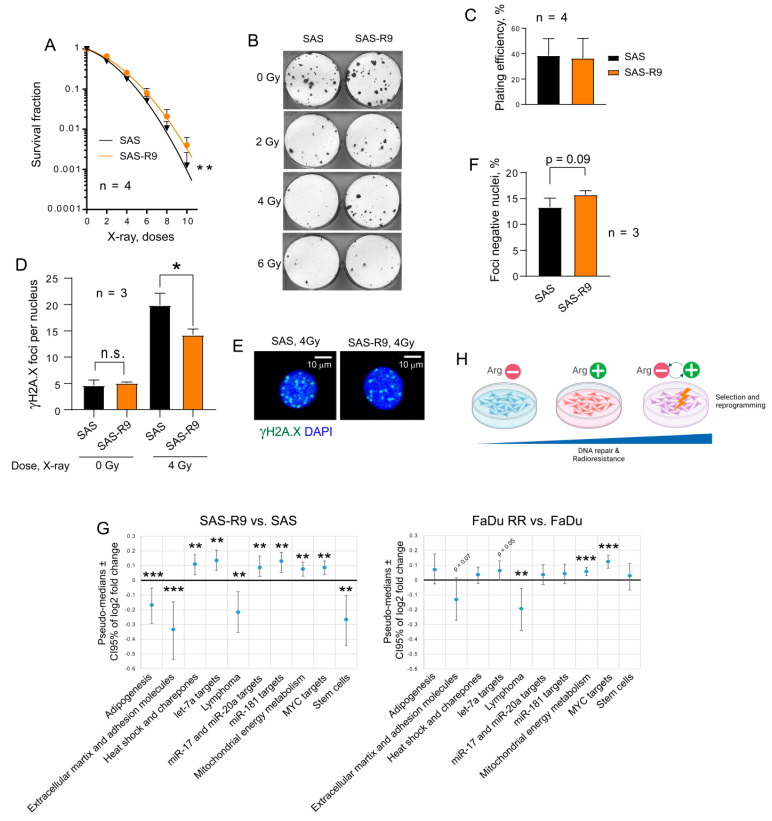 Figure 5
Peer Reviews
No public reviews on file for this paper yet. If you reviewed it on a platform where reviews are public (OpenReview, ICLR, NeurIPS, ICML), you can paste yours below so the community can read it here.
Videos
No videos yet. Explain this paper in a talk, walkthrough, or lecture? Add one.
Taxonomy
TopicsCancer Research and Treatments · Virus-based gene therapy research · Cancer, Hypoxia, and Metabolism