Investigation of Droplet Spreading and Rebound Dynamics on Superhydrophobic Surfaces Using Machine Learning
Samo Jereb, Jure Berce, Robert Lovšin, Matevž Zupančič, Matic Može, Iztok Golobič

TL;DR
This paper uses machine learning to study how droplets spread and bounce on superhydrophobic surfaces, revealing new insights into the factors that influence these behaviors.
Contribution
The novel contribution is the use of machine learning to analyze droplet impact dynamics and derive empirical correlations that outperform existing models.
Findings
Droplet impact velocity is the dominant factor in spreading and rebound dynamics.
Droplet spreading is independent of surface microtopography but rebound efficiency is influenced by the unwetted area fraction.
New empirical correlations for maximum spreading coefficient and rebound efficiency were developed and shown to outperform existing models.
Abstract
The spreading and rebound of impacting droplets on superhydrophobic interfaces is a complex phenomenon governed by the interconnected contributions of surface, fluid and environmental factors. In this work, we employed a collection of 1498 water–glycerin droplet impact experiments on monolayer-functionalized laser-structured aluminum samples to train, validate and optimize a machine learning regression model. To elucidate the role of each influential parameter, we analyzed the model-predicted individual parameter contributions on key descriptors of the phenomenon, such as contact time, maximum spreading coefficient and rebound efficiency. Our results confirm the dominant contribution of droplet impact velocity while highlighting that the droplet spreading phase appears to be independent of surface microtopography, i.e., the depth and width of laser-made features. Interestingly, once the…
Genes, proteins, chemicals, diseases, species, mutations and cell lines named across the full text — each resolved to its canonical identifier and authoritative record.
Click any figure to enlarge with its caption.
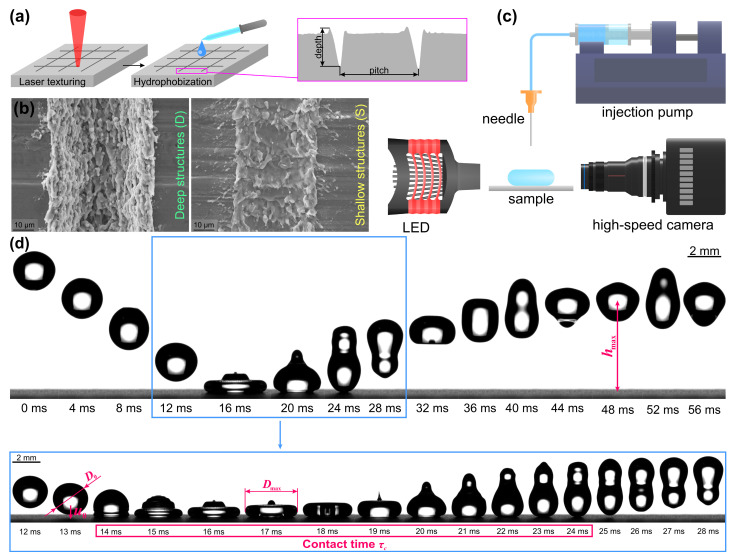 Figure 1
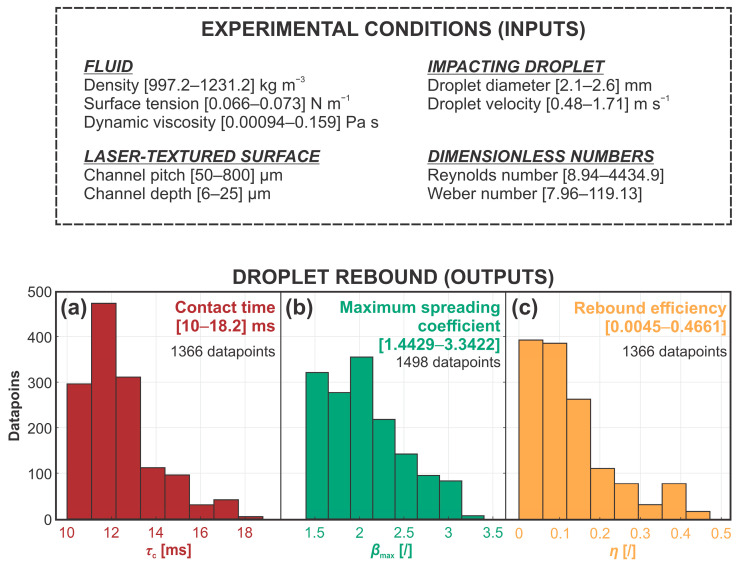 Figure 2
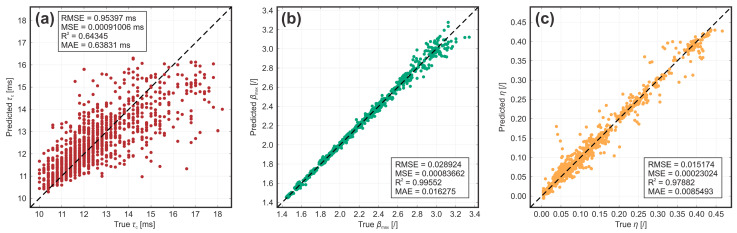 Figure 3
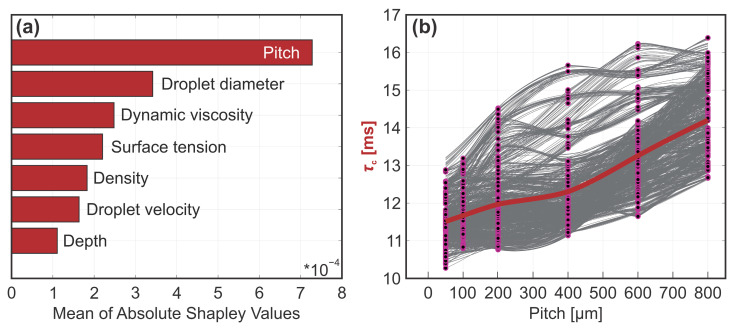 Figure 4
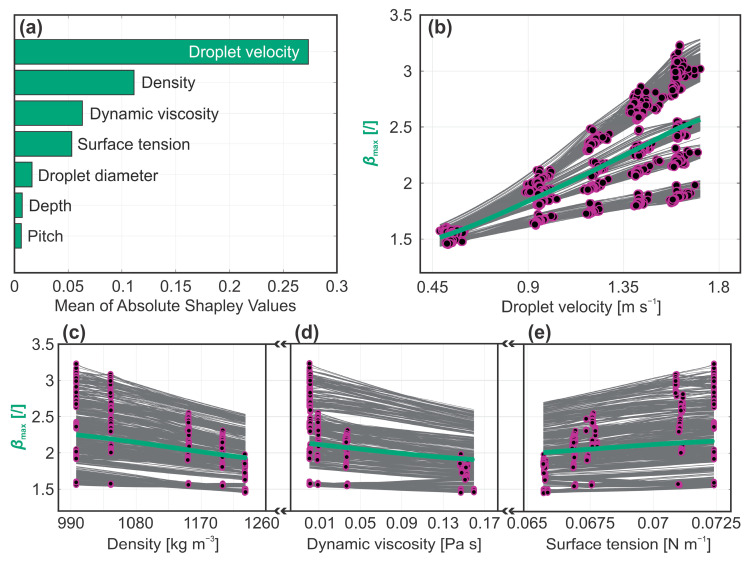 Figure 5
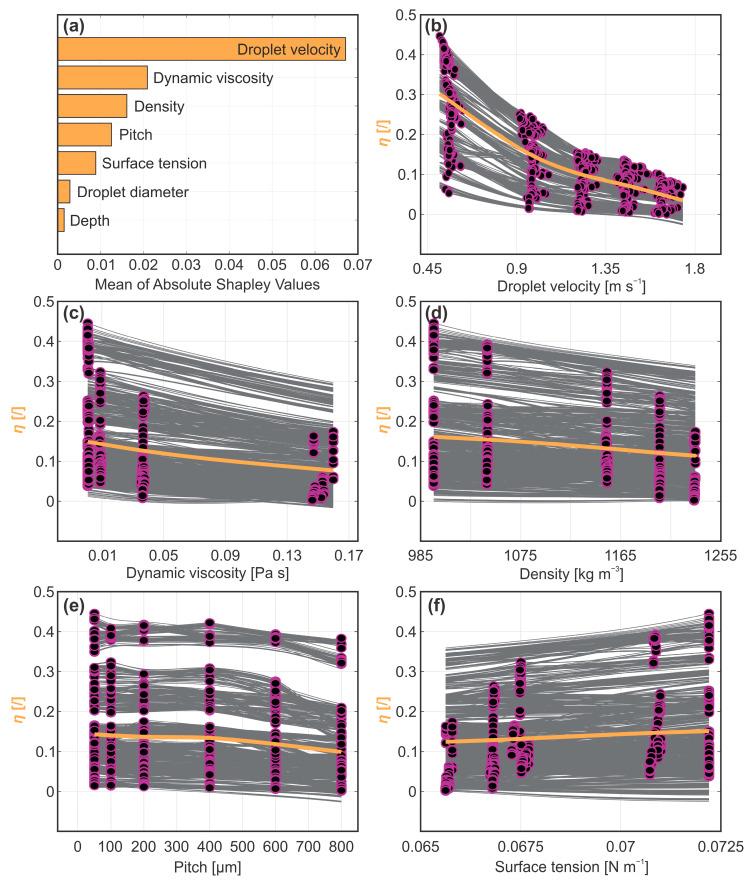 Figure 6
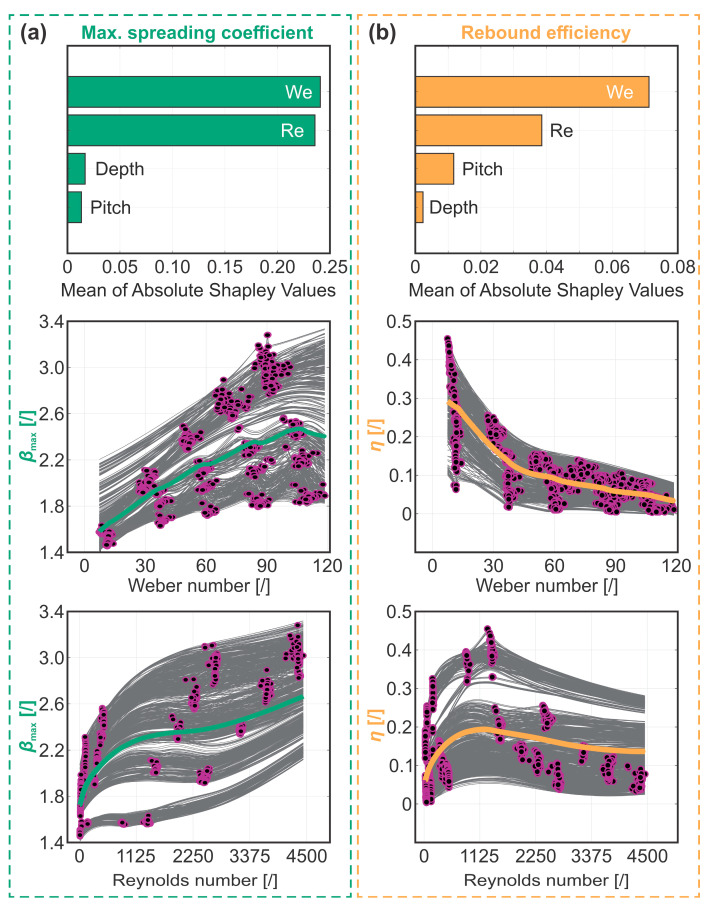 Figure 7
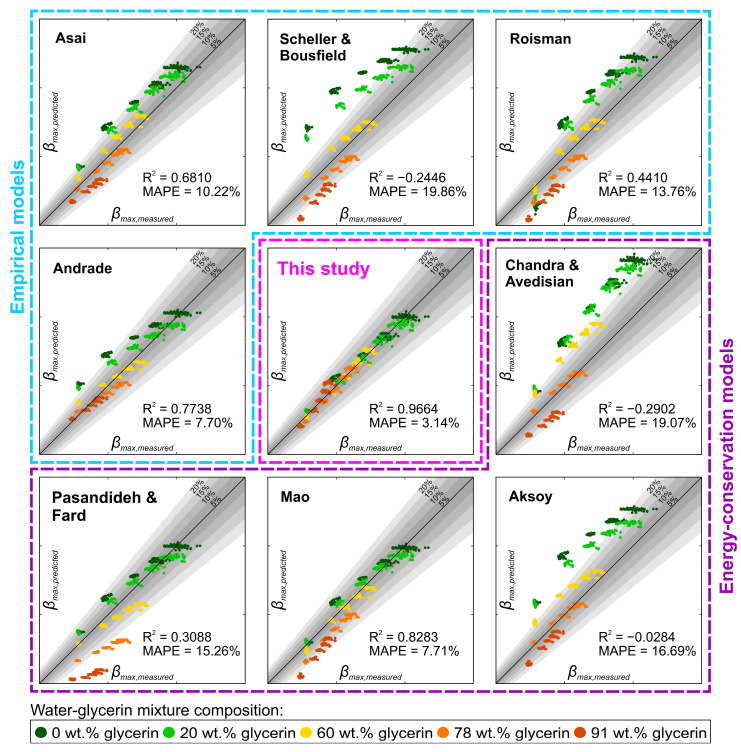 Figure 8
Peer Reviews
No public reviews on file for this paper yet. If you reviewed it on a platform where reviews are public (OpenReview, ICLR, NeurIPS, ICML), you can paste yours below so the community can read it here.
Videos
No videos yet. Explain this paper in a talk, walkthrough, or lecture? Add one.
Taxonomy
TopicsSurface Modification and Superhydrophobicity · Fluid Dynamics and Heat Transfer · Plant Surface Properties and Treatments