Neural Correlates of Cognitive Disengagement Syndrome Symptoms in Children: A Magnetoencephalography Study
Xiaoqian Yu, Jing Xiang, Jeffery N. Epstein, Leanne Tamm, Josalyn A. Foster, Stephen P. Becker

TL;DR
This study explores brain activity in children with cognitive disengagement syndrome using MEG, finding links to attentional processing challenges.
Contribution
The study identifies neural correlates of cognitive disengagement syndrome in children using MEG, focusing on attentional processing.
Findings
Higher CDS symptoms correlate with increased ΔRMS in M2 and M3 during incongruent trials.
Self-reported CDS symptoms initially correlate with reduced ΔM2 power in the medial prefrontal cortex.
No significant correlation was found between CDS symptoms and alerting or orienting networks.
Abstract
Background/Objectives: Despite the growing recognition of cognitive disengagement syndrome (CDS), previously termed sluggish cognitive tempo, as a distinct dimension of psychopathology, the neural correlates of CDS remain largely unknown. We investigated the neural correlates of CDS in children using whole-head magnetoencephalography (MEG). Methods: A community-based sample of children (N = 43, ages 8–12 years) was recruited and completed self-report ratings of CDS. MEG was recorded while the children completed an adapted version of the attention network test (ANT). Results: The results indicated that higher levels of self-reported CDS symptoms were associated with larger changes in the root-mean square (ΔRMS) (incongruent—congruent trials) in M2 and M3, suggesting children with higher levels of CDS symptoms might require greater mental effort to overcome distractors during incongruent…
Genes, proteins, chemicals, diseases, species, mutations and cell lines named across the full text — each resolved to its canonical identifier and authoritative record.
Click any figure to enlarge with its caption.
 Figure 1
 Figure 2
 Figure 3
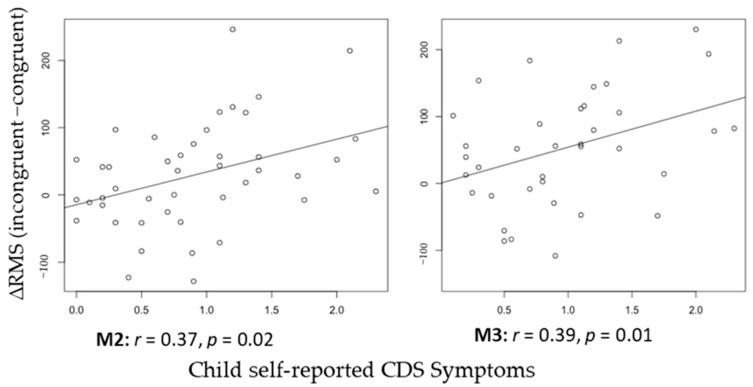 Figure 4
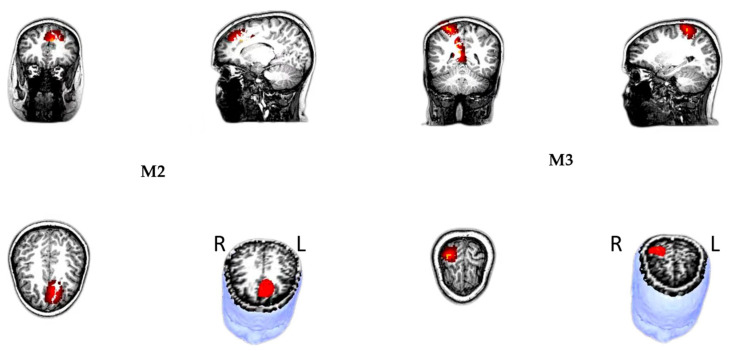 Figure 5
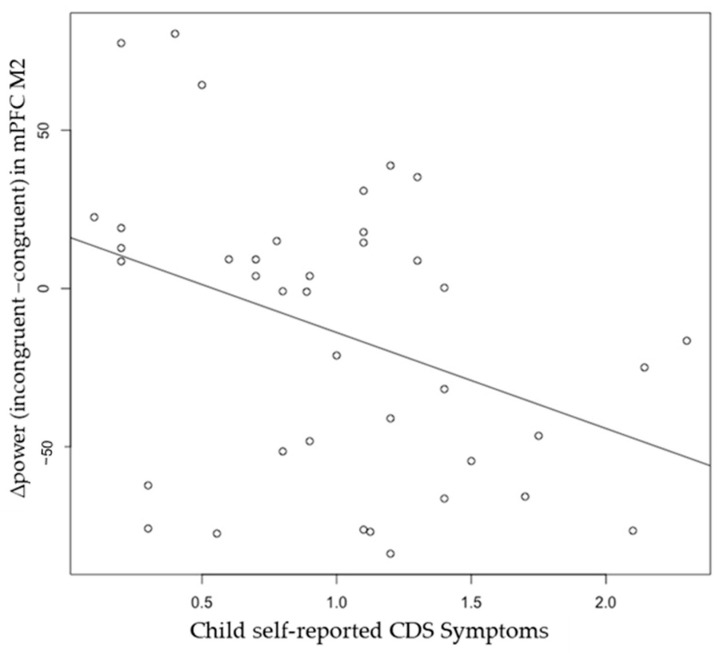 Figure 6
Peer Reviews
No public reviews on file for this paper yet. If you reviewed it on a platform where reviews are public (OpenReview, ICLR, NeurIPS, ICML), you can paste yours below so the community can read it here.
Videos
No videos yet. Explain this paper in a talk, walkthrough, or lecture? Add one.
Taxonomy
TopicsNeural and Behavioral Psychology Studies · Mind wandering and attention · Attention Deficit Hyperactivity Disorder