Rapid Eye Movements in Sleep Furnish a Unique Probe into the Ontogenetic and Phylogenetic Development of the Visual Brain: Implications for Autism Research
Charles Chong-Hwa Hong

TL;DR
REM sleep eye movements can reveal how the visual brain develops and may help understand autism.
Contribution
Using REMs as a task-free probe to study visual brain development and autism.
Findings
REMs in sleep activate the oculomotor circuit and visual attention systems similarly to when awake.
REMs reflect multisensory integration and endogenous visual processing during dreaming.
REM-probe studies may improve early autism detection and help compare human and animal models.
Abstract
With positron emission tomography followed by functional magnetic resonance imaging (fMRI), we demonstrated that rapid eye movements (REMs) in sleep are saccades that scan dream imagery. The brain “sees” essentially the same way while awake and while dreaming in REM sleep. As expected, an event-related fMRI study (events = REMs) showed activation time-locked to REMs in sleep (“REM-locked” activation) in the oculomotor circuit that controls saccadic eye movements and visual attention. More crucially, the fMRI study provided a series of unexpected findings, including REM-locked multisensory integration. REMs in sleep index the processing of endogenous visual information and the hierarchical generation of dream imagery through multisensory integration. The neural processes concurrent with REMs overlap extensively with those reported to be atypical in autism spectrum disorder (ASD). Studies…
Genes, proteins, chemicals, diseases, species, mutations and cell lines named across the full text — each resolved to its canonical identifier and authoritative record.
Click any figure to enlarge with its caption.
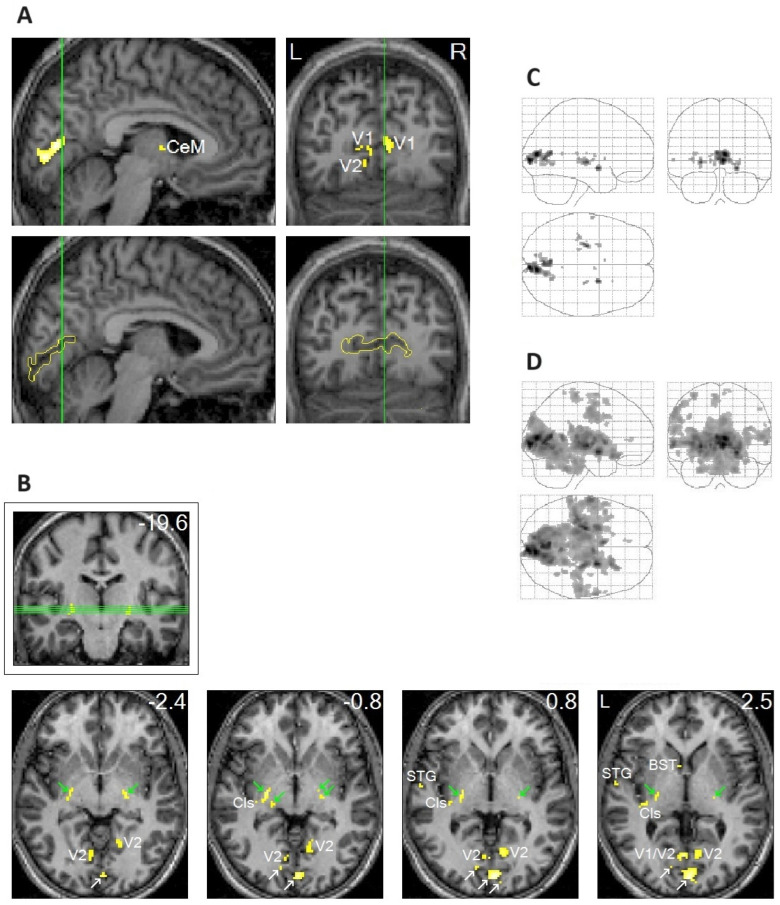 Figure 1
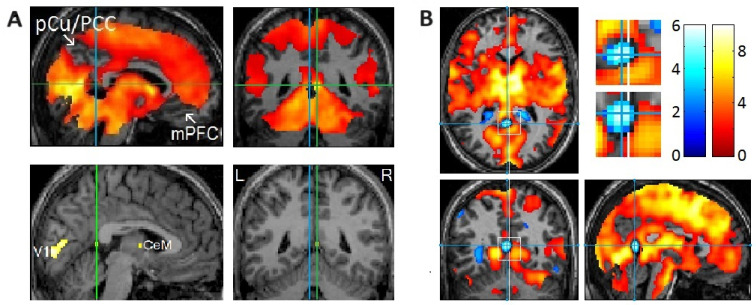 Figure 2
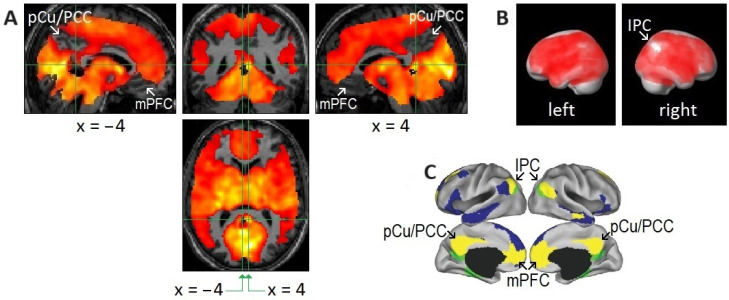 Figure 3
Peer Reviews
No public reviews on file for this paper yet. If you reviewed it on a platform where reviews are public (OpenReview, ICLR, NeurIPS, ICML), you can paste yours below so the community can read it here.
Videos
No videos yet. Explain this paper in a talk, walkthrough, or lecture? Add one.
Taxonomy
TopicsSleep and Wakefulness Research · Memory and Neural Mechanisms · Photoreceptor and optogenetics research