Deletions of LPL and NKX3.1 in Prostate Cancer Progression: Game Changers or By-Standers in Tumor Evolution
Tereza Vodičková, Mária Wozniaková, Vladimír Židlík, Jana Žmolíková, Jana Dvořáčková, Adéla Kondé, Jana Schwarzerová, Michal Grepl, Jan Bouchal

TL;DR
This study explores whether LPL gene deletion in prostate cancer is a significant event or a by-stander to the loss of the tumor suppressor gene NKX3.1.
Contribution
The study clarifies the biological relevance of LPL deletion in prostate cancer by distinguishing it from NKX3.1 loss.
Findings
LPL protein expression was not significantly different between cancerous and benign prostate tissue.
NKX3.1 loss occurred independently of LPL deletion in some cases, indicating LPL deletion is likely a passenger event.
Deletion of the 8p21.3 region was associated with higher Gleason grade groups, suggesting clinical relevance.
Abstract
The tumor suppressor gene NKX3.1 and the LPL gene are located in close proximity on chromosome 8, and their deletion has been reported in multiple studies. However, the significance of LPL loss may be misinterpreted due to its co-deletion with NKX3.1, a well-established event in prostate carcinogenesis. This study investigates whether LPL deletion represents a biologically relevant event or occurs merely as a bystander to NKX3.1 loss. We analyzed 28 formalin-fixed paraffin-embedded prostate cancer samples with confirmed LPL deletion and 28 without. Immunohistochemical staining was performed, and previously published whole-genome sequencing data from 103 prostate cancer patients were reanalyzed. Deletion of the 8p21.3 region was associated with higher Gleason grade groups. While NKX3.1 expression was significantly reduced in prostate cancer compared to benign prostatic hyperplasia, LPL…
Genes, proteins, chemicals, diseases, species, mutations and cell lines named across the full text — each resolved to its canonical identifier and authoritative record.
Click any figure to enlarge with its caption.
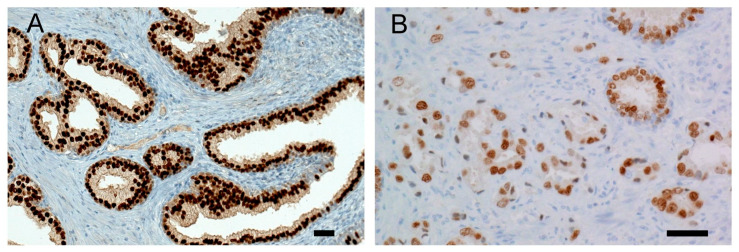 Figure 1
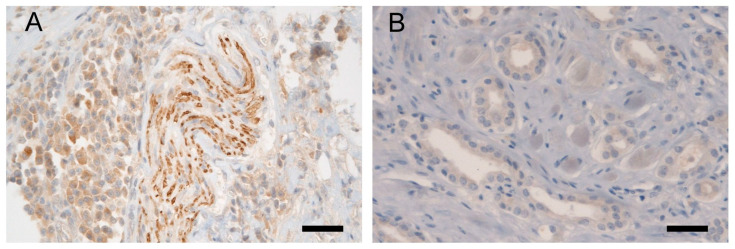 Figure 2
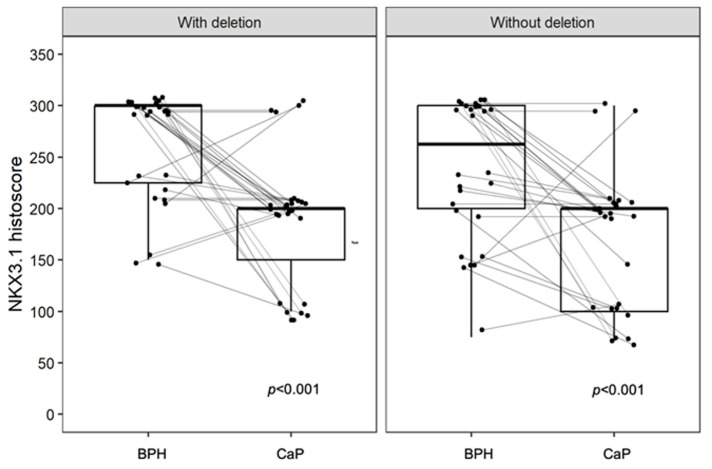 Figure 3
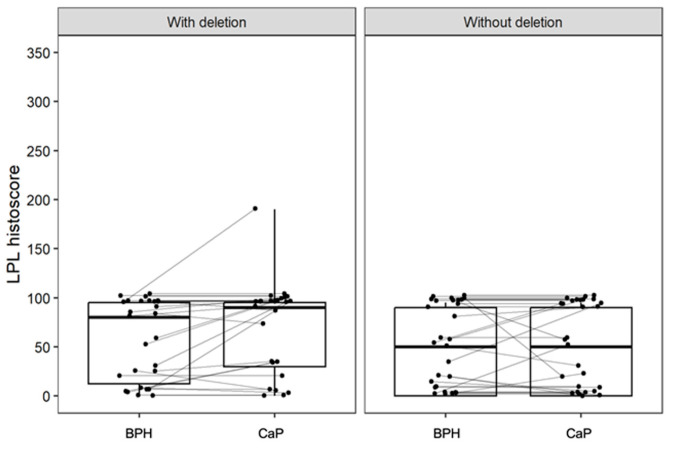 Figure 4
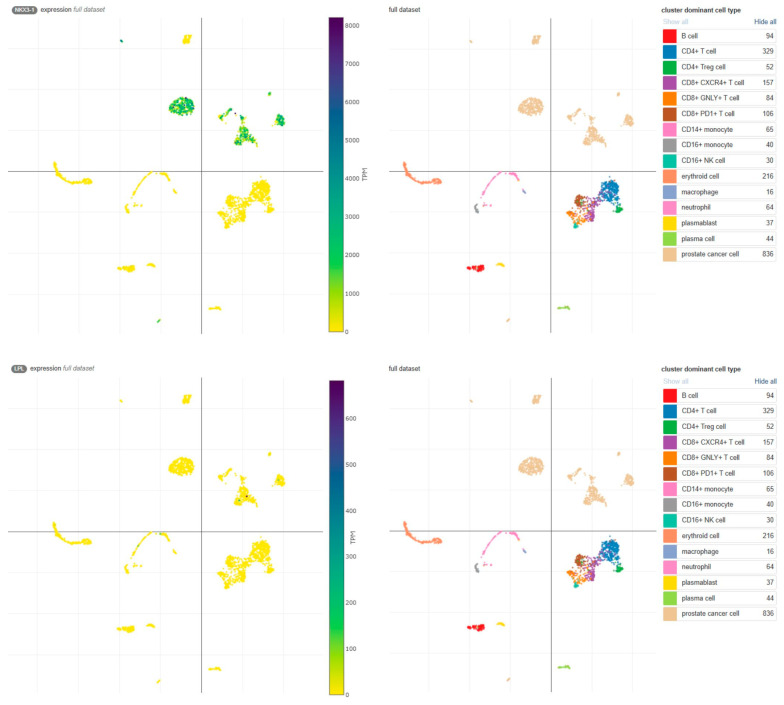 Figure 5
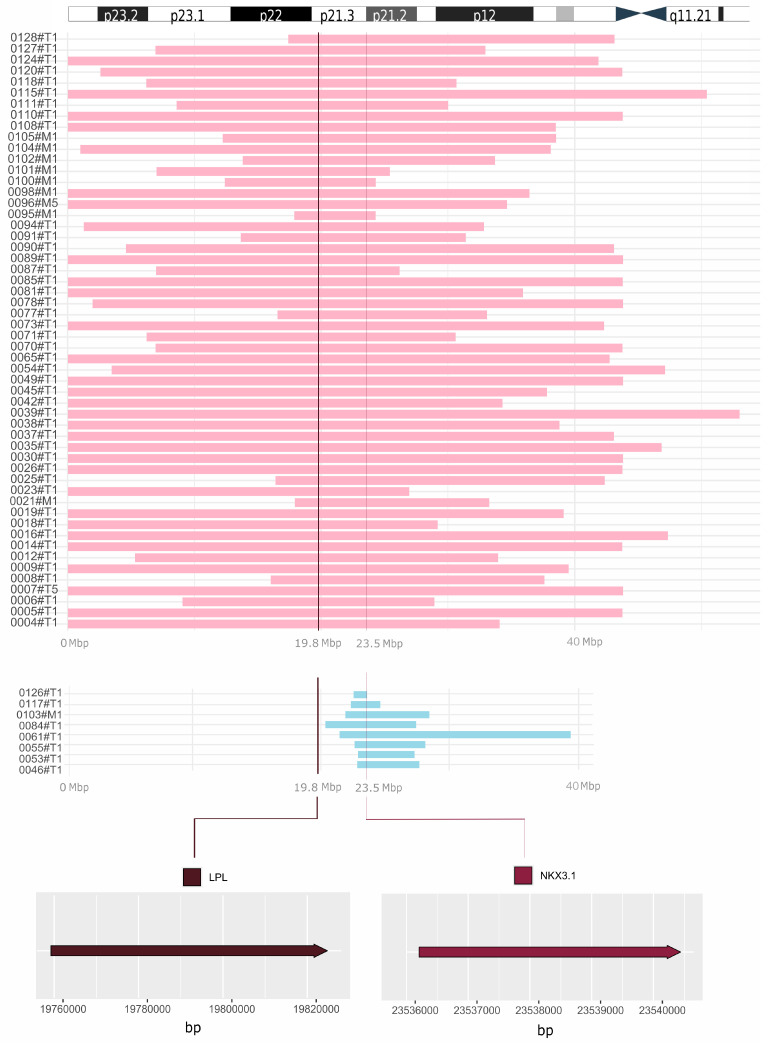 Figure 6
Peer Reviews
No public reviews on file for this paper yet. If you reviewed it on a platform where reviews are public (OpenReview, ICLR, NeurIPS, ICML), you can paste yours below so the community can read it here.
Videos
No videos yet. Explain this paper in a talk, walkthrough, or lecture? Add one.
Taxonomy
TopicsProstate Cancer Treatment and Research · Cancer, Lipids, and Metabolism · Genetic factors in colorectal cancer