iPro-CSAF: identification of promoters based on convolutional spiking neural networks and spiking attention mechanism
Qian Zhou, Jie Meng, Hao Luo

TL;DR
This paper introduces iPro-CSAF, a new computational method using spiking neural networks to accurately identify DNA promoters across multiple species.
Contribution
The novel contribution is the development of iPro-CSAF, a convolutional spiking neural network with spiking attention mechanism for promoter recognition.
Findings
iPro-CSAF outperforms existing methods in promoter recognition with fewer network parameters.
The method achieves good performance on both prokaryotic and eukaryotic promoters from seven species.
iPro-CSAF demonstrates low complexity and strong generalization for promoter identification.
Abstract
A promoter is a DNA segment which plays a key role in regulating gene expression. Accurate identification of promoters is significant for understanding the regulatory mechanisms involved in gene expression and genetic disease treatment. Therefore, it is an urgent challenge to develop computational methods for identifying promoters. Most current methods were designed for promoter recognition on few species and required complex feature extraction methods in order to attain high recognition accuracy. Spiking neural networks have inherent recurrence and use spike-based sparse coding. Therefore, they have good property of processing spatio-temporal information and are well suited for learning sequence information. In this study, iPro-CSAF, a convolutional spiking neural network combined with spiking attention mechanism is designed for promoter recognition. The method extracts promoter…
Genes, proteins, chemicals, diseases, species, mutations and cell lines named across the full text — each resolved to its canonical identifier and authoritative record.
Click any figure to enlarge with its caption.
 Figure 1
 Figure 2
 Figure 3
 Figure 4
 Figure 5
 Figure 6
 Figure 7
 Figure 8
 Figure 9
 Figure 10
 Figure 11
 Figure 12
 Figure 13
 Figure 14
 Figure 15
 Figure 16
 Figure 17
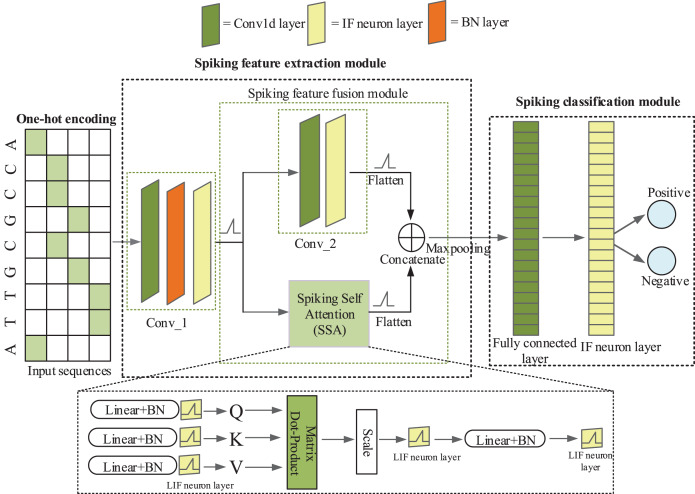 Figure 18
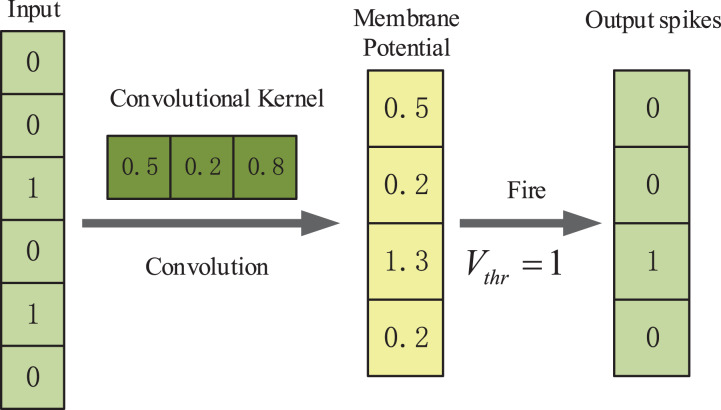 Figure 19
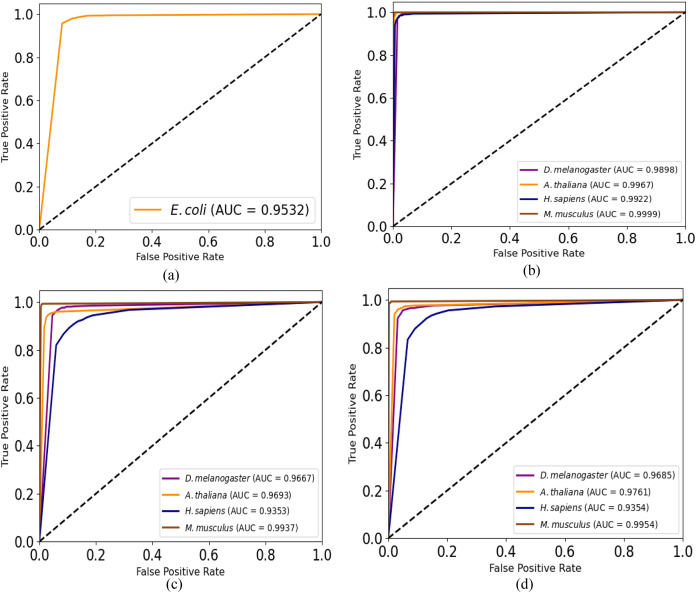 Figure 20
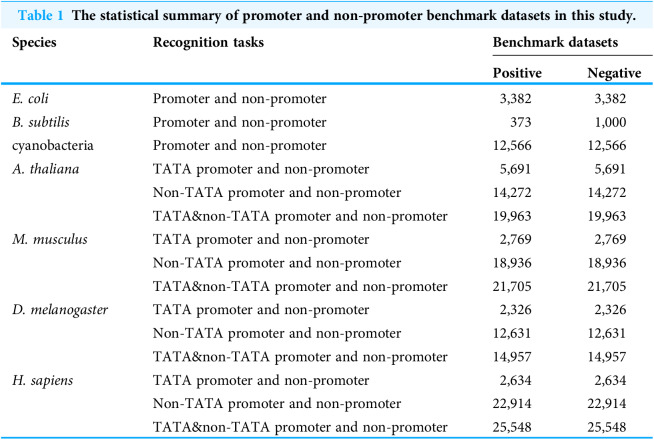 Figure 21
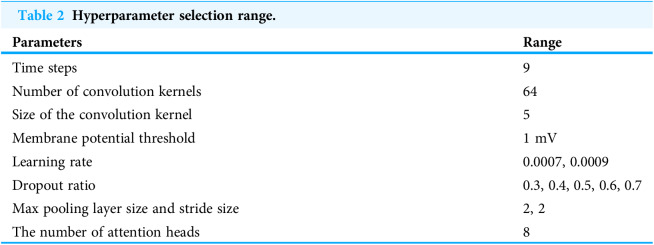 Figure 22
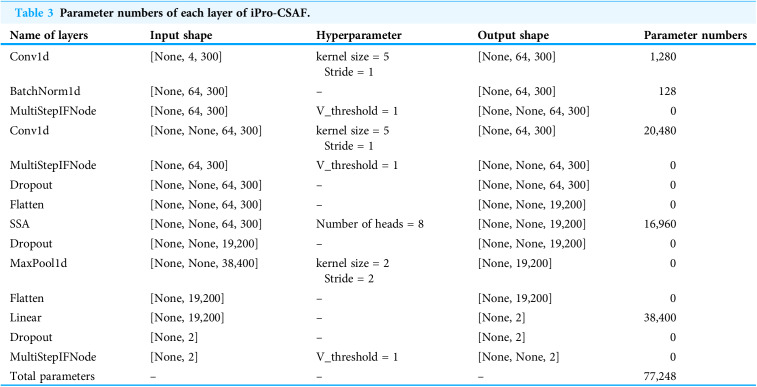 Figure 23
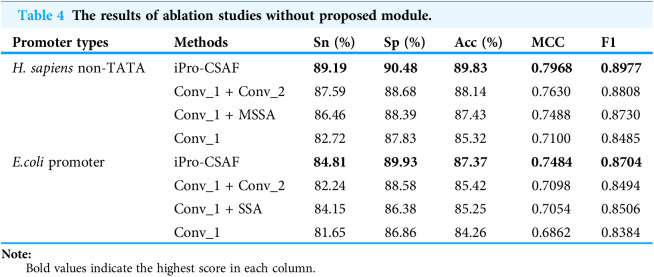 Figure 24
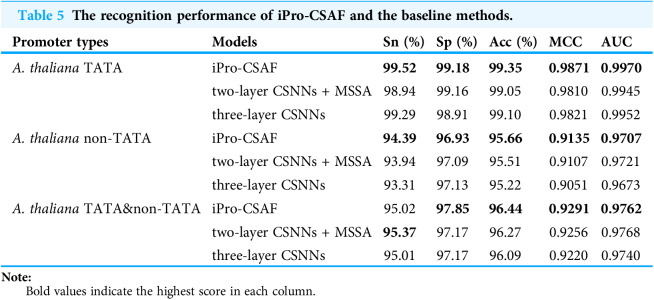 Figure 25
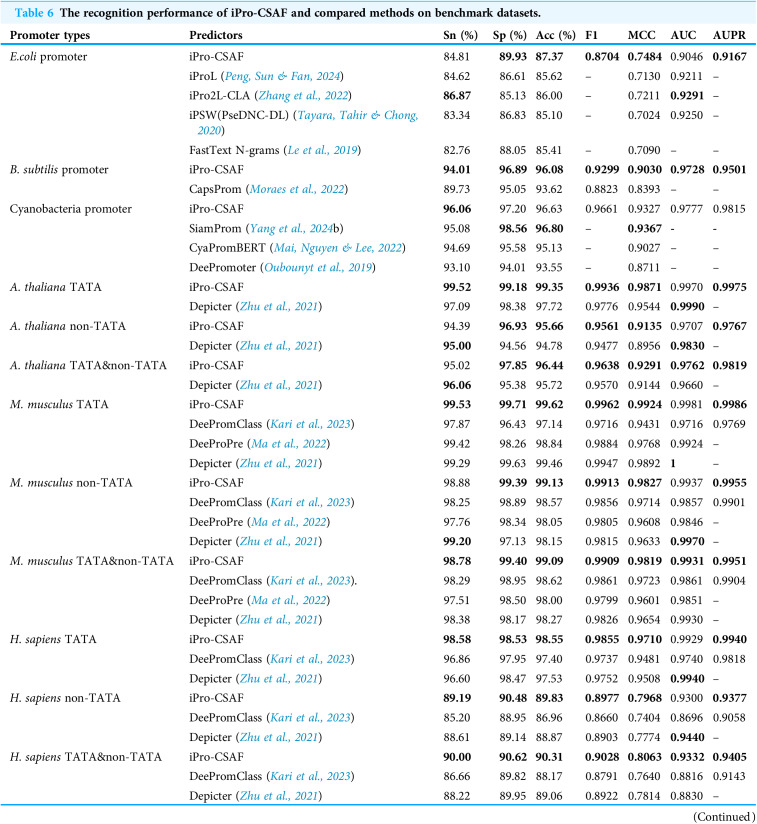 Figure 26
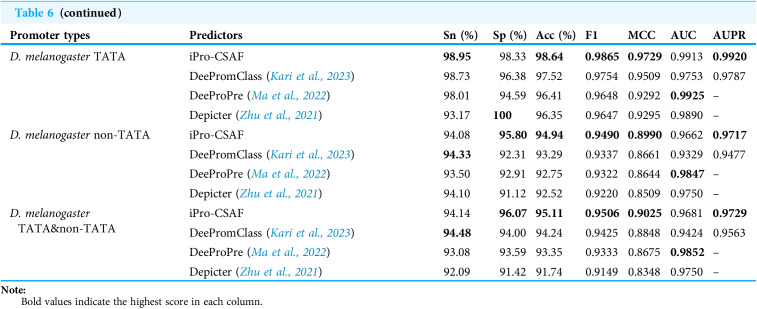 Figure 27
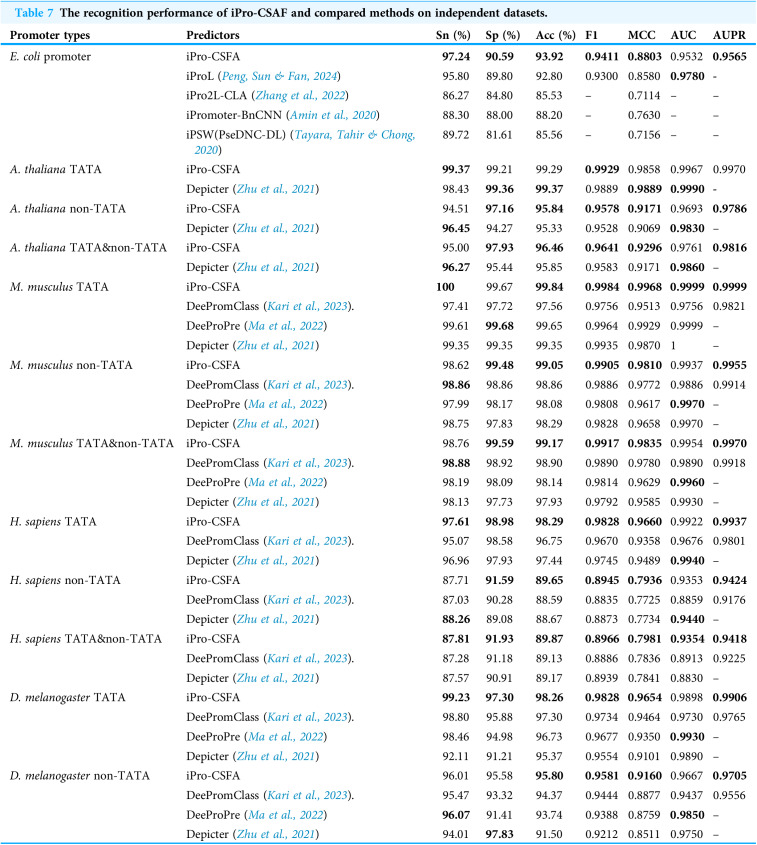 Figure 28
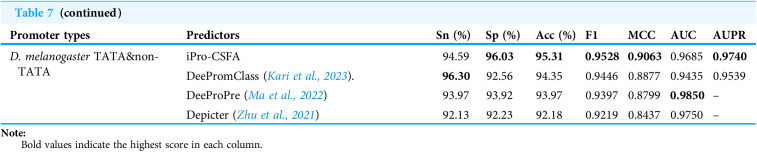 Figure 29
 Figure 30
 Figure 31
 Figure 32
 Figure 33
 Figure 34
 Figure 35
 Figure 36
 Figure 37
 Figure 38
 Figure 39
 Figure 40
 Figure 41
 Figure 42
 Figure 43
 Figure 44
 Figure 45
 Figure 46
 Figure 47
 Figure 48
 Figure 49
 Figure 50
Peer Reviews
No public reviews on file for this paper yet. If you reviewed it on a platform where reviews are public (OpenReview, ICLR, NeurIPS, ICML), you can paste yours below so the community can read it here.
Videos
No videos yet. Explain this paper in a talk, walkthrough, or lecture? Add one.
Taxonomy
TopicsMachine Learning in Bioinformatics · Genomics and Phylogenetic Studies · Advanced biosensing and bioanalysis techniques