Not Just PA28γ: What We Know About the Role of PA28αβ in Carcinogenesis
Paolo Cascio

TL;DR
This review explores the role of PA28αβ in cancer, highlighting its impact on immune responses and tumor growth.
Contribution
The paper provides a comprehensive summary of PA28αβ's molecular mechanisms in carcinogenesis.
Findings
PA28αβ influences class I cell-mediated immune responses.
PA28αβ promotes cell duplication and tumor growth.
PA28αβ's role in oncogenesis is increasingly supported by experimental evidence.
Abstract
The ubiquitin-proteasome pathway performs a strictly controlled degradation of specific protein substrates within the eukaryotic cell. This catabolic mechanism allows the rapid removal of proteins damaged in any way, and therefore potentially capable of compromising cellular homeostasis, as well as the constant turnover of all cellular proteins, in order to balance their synthesis and thus maintain the correct levels of proteins required by the cell at any given time. Consequently, the ubiquitin-proteasome system plays a fundamental role in regulating essential cellular processes, such as the cell cycle, apoptosis, immune responses, and inflammation, whose dysregulation or malfunction can lead to neoplastic transformation. Not surprisingly, therefore, alterations in the activity and regulatory mechanisms of the proteasome are common not only in various types of tumors, but often…
Genes, proteins, chemicals, diseases, species, mutations and cell lines named across the full text — each resolved to its canonical identifier and authoritative record.
Click any figure to enlarge with its caption.
 Figure 1
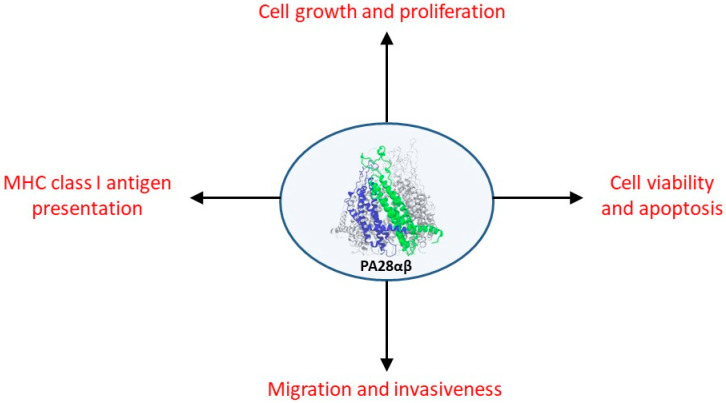 Figure 2
Peer Reviews
No public reviews on file for this paper yet. If you reviewed it on a platform where reviews are public (OpenReview, ICLR, NeurIPS, ICML), you can paste yours below so the community can read it here.
Videos
No videos yet. Explain this paper in a talk, walkthrough, or lecture? Add one.
Taxonomy
TopicsUbiquitin and proteasome pathways · Autophagy in Disease and Therapy · Immunotherapy and Immune Responses