Facile construction of mechanically robust and highly osteogenic materials for bone regeneration
Song Chen, Dachuan Liu, Qianping Guo, Li Dong, Huan Wang, Jiaxu Shi, Weicheng Chen, Caihong Zhu, Weishan Wang, Wei Xia, Miodrag J. Lukic, Helmut Cölfen, Bin Li

TL;DR
This study introduces a new method to create strong, bone-generating hydrogels that could improve load-bearing bone repair.
Contribution
A novel mineralization approach to fabricate hydrogels with mechanical strength and osteogenic properties surpassing natural bone.
Findings
Mineralized hydrogels achieved compressive strength and modulus exceeding trabecular bone.
In vivo tests showed enhanced angiogenesis and accelerated fracture healing.
Transcriptome analysis revealed regulation of extracellular matrix and biomineralization.
Abstract
Hydrogel-based materials exhibit great potential in tissue engineering. However, their mechanical weakness limits applications in hard tissue regeneration, especially under load-bearing conditions. Although various strengthening strategies have been applied, the achieved mechanical response of hydrogels still lags behind the mechanics of natural bone. In this study, we present a novel mineralization approach to fabricate mechanically robust and highly osteogenic mineralized hydrogels. Cross-linking between deprotonated chains of poly(acrylic acid) (PAA) and divalent cations has led to formation of hydrogels with a compressive strength and elastic modulus of 0.3 ± 0.1 kPa and 1.3 ± 0.2 kPa, respectively. Subsequent in situ formation of nano-calcium hydroxide crystals remarkably increased the compressive strength and modulus to 7.9 ± 0.6 MPa and 339.3 ± 31.4 MPa, respectively, surpassing…
Genes, proteins, chemicals, diseases, species, mutations and cell lines named across the full text — each resolved to its canonical identifier and authoritative record.
Click any figure to enlarge with its caption.
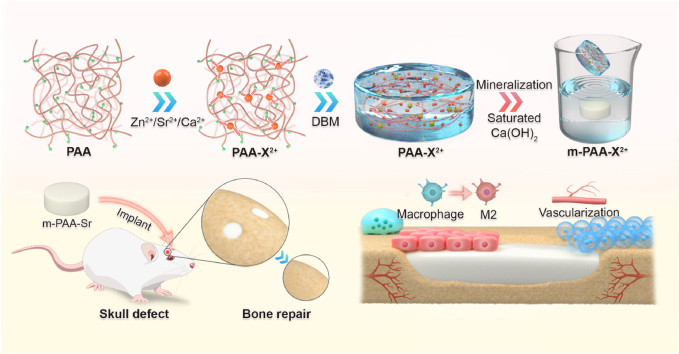 Figure 1
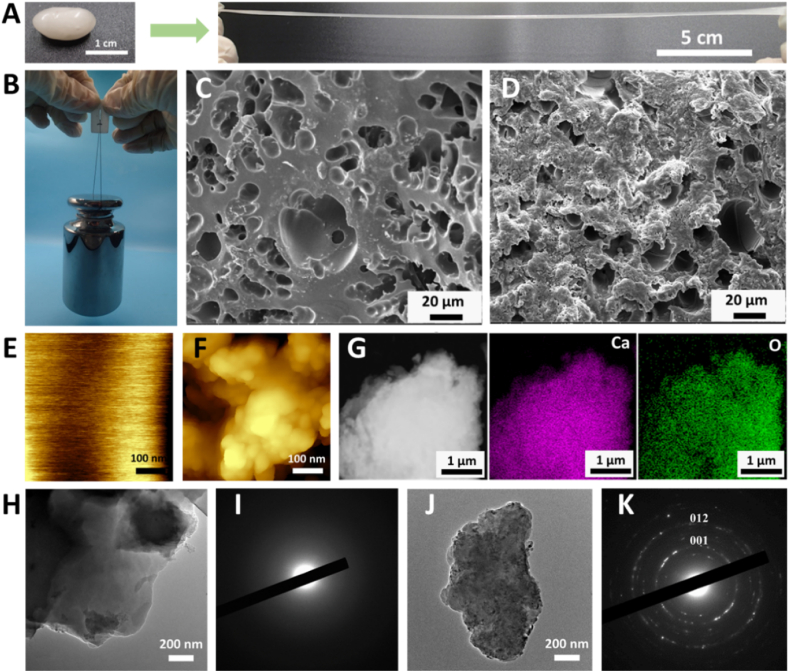 Figure 2
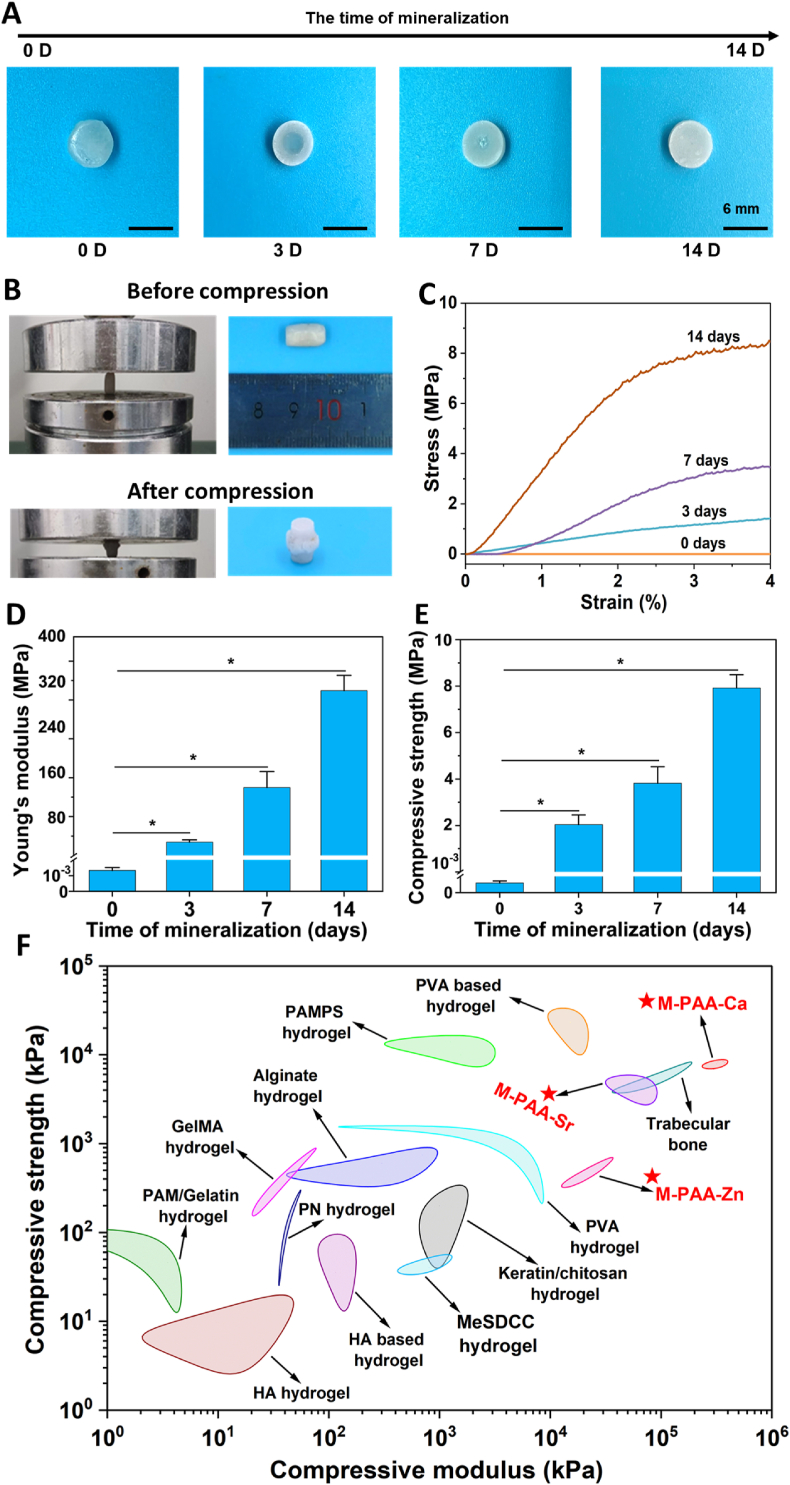 Figure 3
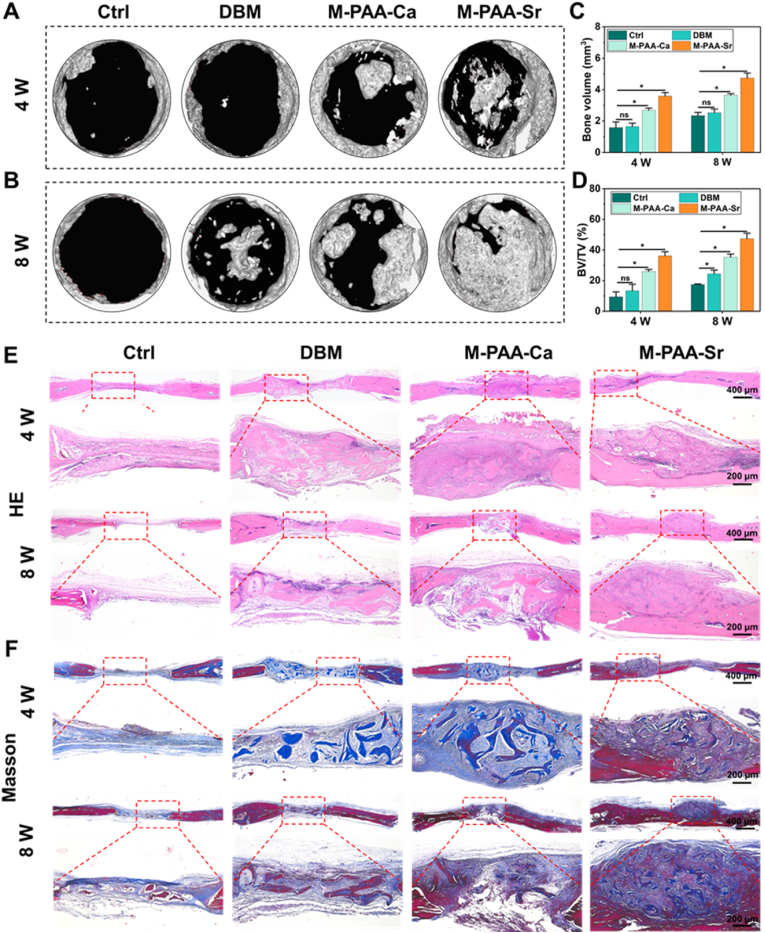 Figure 4
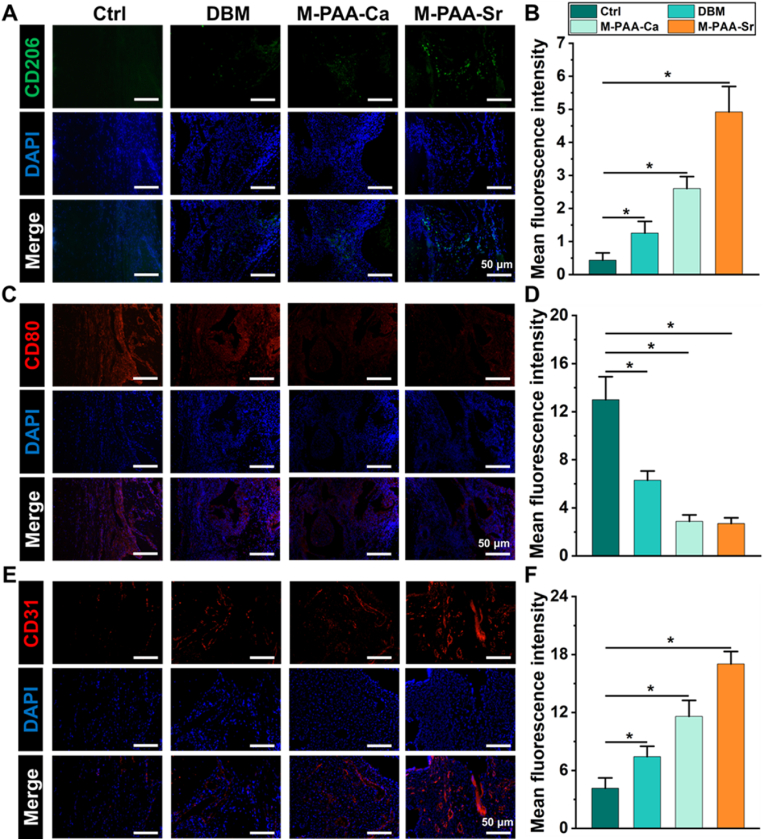 Figure 5
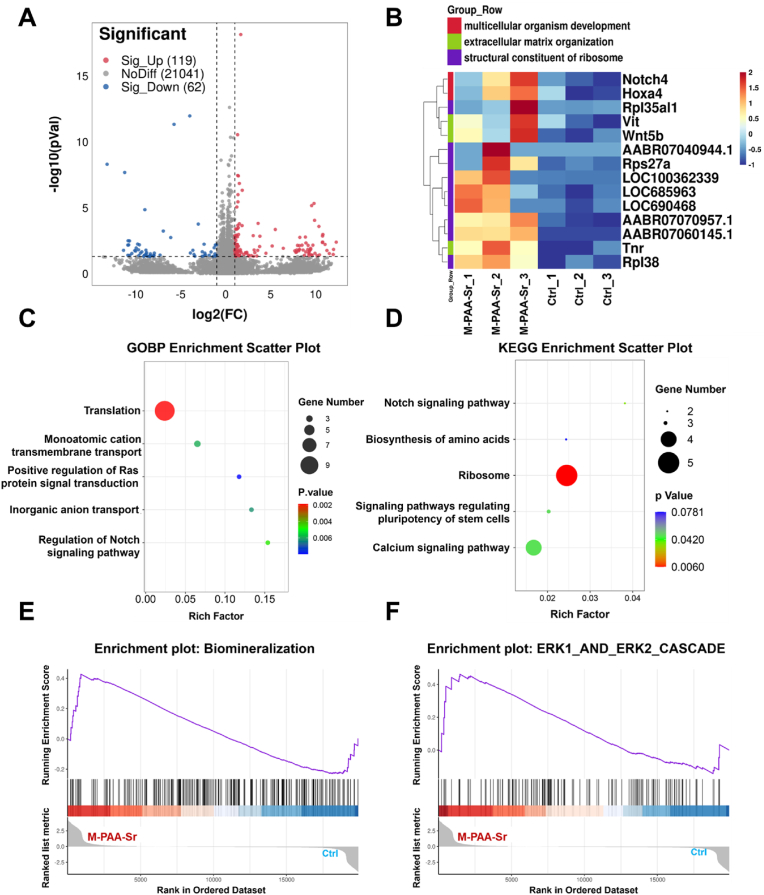 Figure 6
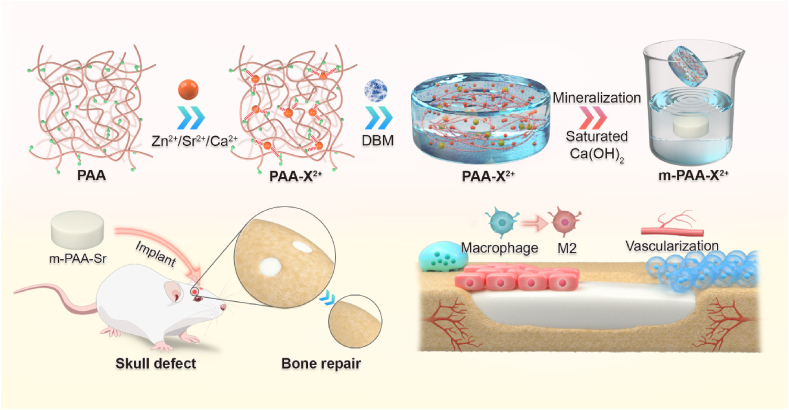 Figure 7
Peer Reviews
No public reviews on file for this paper yet. If you reviewed it on a platform where reviews are public (OpenReview, ICLR, NeurIPS, ICML), you can paste yours below so the community can read it here.
Videos
No videos yet. Explain this paper in a talk, walkthrough, or lecture? Add one.
Taxonomy
TopicsBone Tissue Engineering Materials · 3D Printing in Biomedical Research · Graphene and Nanomaterials Applications