TAK-653 Reverses Core Depressive Symptoms in Chronic Stress-Induced Monkey Model
Ling Li, Zhiting Zhang, Xinhe Liu, Mengni Zhou, Shenglin Wen, Ji Dai

TL;DR
TAK-653, a new drug, reduces depression-like symptoms in stressed monkeys, suggesting potential for treating depression in humans.
Contribution
Demonstrates TAK-653's antidepressant effects in a nonhuman primate model of depression.
Findings
TAK-653 improved motivation, movement, and enclosure positioning in stressed monkeys.
TAK-653 reduced cortisol, IL-6, and increased BDNF levels in plasma.
Stress-induced monkeys showed depression-like behaviors confirmed by behavioral and plasma markers.
Abstract
Background: Major Depressive Disorder represents a prevalent and critical mental health issue that highlights the pressing need for innovative therapeutic solutions. Recent research has identified dysfunction within the glutamate system as a crucial element influencing both the onset and management of depressive symptoms. Although TAK-653 is a new positive allosteric modulator of AMPA receptors, its effects have not been rigorously examined in models of depression in primates. Methods: To assess its potential antidepressant properties, a chronic unpredictable mild stress protocol was implemented over 12 weeks to create a monkey model of depression, followed by a two-week treatment period with TAK-653. Results: Behavioral evaluations showed that following stress exposure, the monkeys exhibited reduced motivation for food, increased huddling, diminished movement, and a tendency to remain…
Genes, proteins, chemicals, diseases, species, mutations and cell lines named across the full text — each resolved to its canonical identifier and authoritative record.
Click any figure to enlarge with its caption.
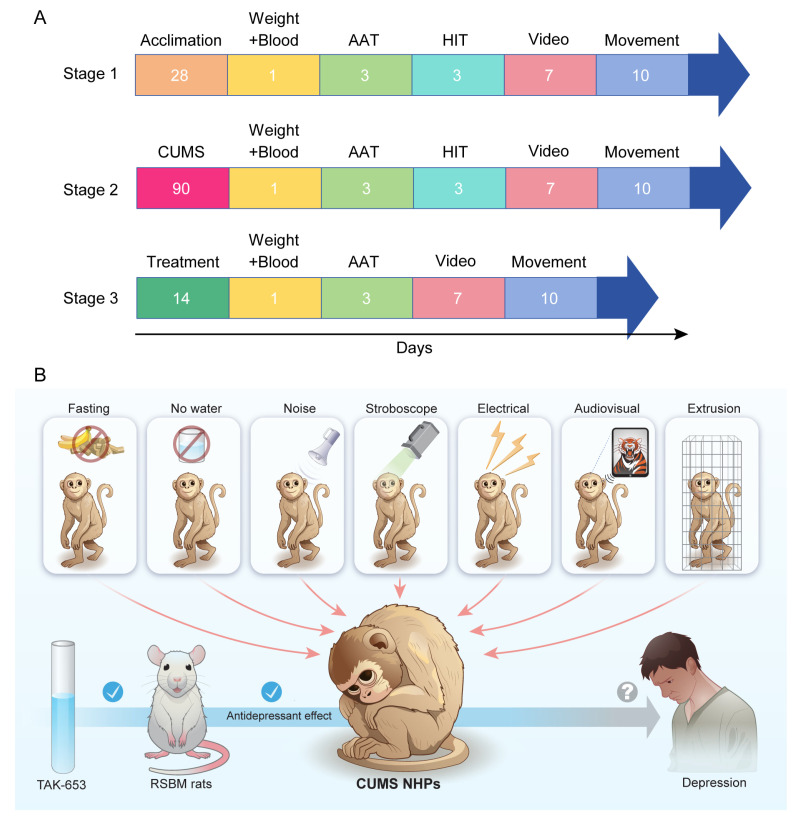 Figure 1
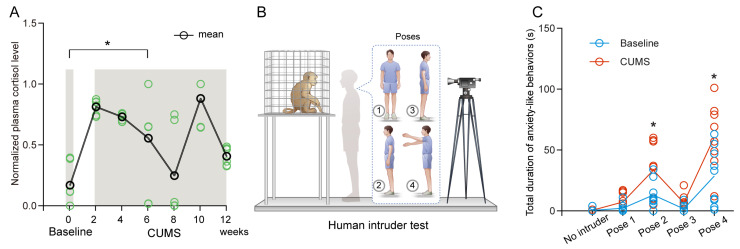 Figure 2
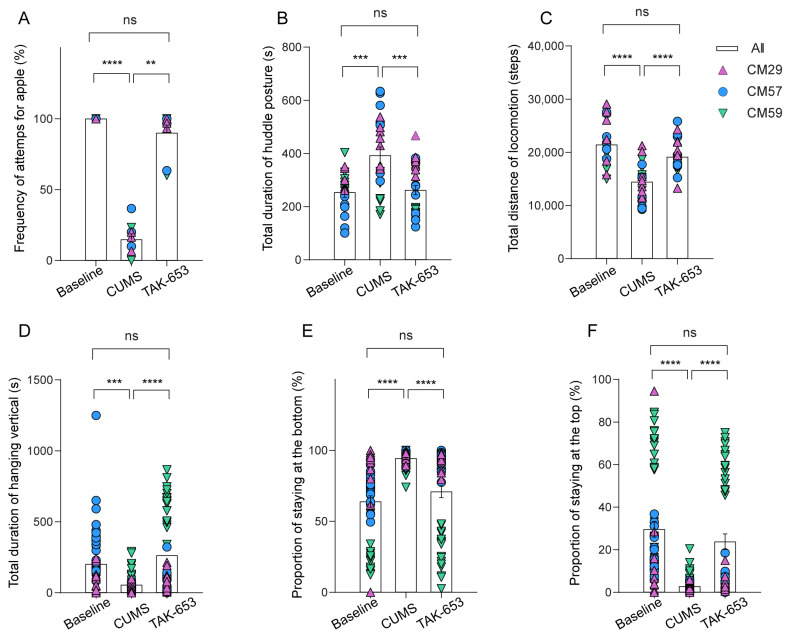 Figure 3
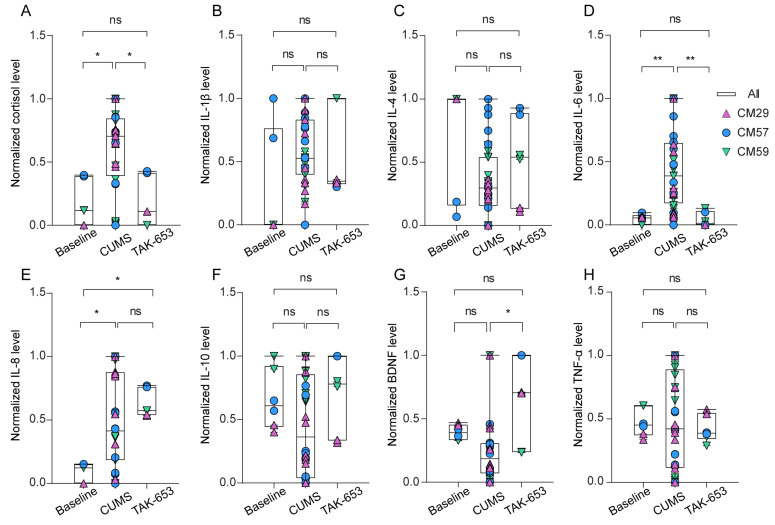 Figure 4
Peer Reviews
No public reviews on file for this paper yet. If you reviewed it on a platform where reviews are public (OpenReview, ICLR, NeurIPS, ICML), you can paste yours below so the community can read it here.
Videos
No videos yet. Explain this paper in a talk, walkthrough, or lecture? Add one.
Taxonomy
TopicsTryptophan and brain disorders · Stress Responses and Cortisol · Neuroscience and Neuropharmacology Research