Regulation of Steroidal Alkaloid Biosynthesis in Bulbs of Fritillaria thunbergii Miq. By Shading and Potassium Application: Integrating Transcriptomics and Metabolomics Analyses
Jia Liu, Zixuan Zhu, Leran Wang, Qiang Yuan, Honghai Zhu, Xiaoxiao Sheng, Kejie Zhang, Bingbing Liang, Huizhen Jin, Shumin Wang, Wenjun Weng, Hui Wang, Ning Sui

TL;DR
This study shows how shading and potassium application affect steroidal alkaloid production in Fritillaria thunbergii bulbs, using transcriptomics and metabolomics to identify key genes and compounds.
Contribution
The study identifies FtFPS as a hub gene in steroidal alkaloid biosynthesis and reveals how potassium and shading influence biosynthetic pathways.
Findings
K2S treatment increased steroidal alkaloid accumulation and improved pharmacological properties in F. thunbergii bulbs.
FtFPS was identified as a key gene in steroidal alkaloid biosynthesis and interacts with FtAP2/ERF.
Transcriptome and metabolome analyses revealed major steroidal alkaloids and biosynthetic pathways under K2S treatment.
Abstract
Fritillaria thunbergii Miq., a medicinal plant rich in steroidal alkaloids, produces bulbs that clear heat, resolve phlegm, and detoxify. However, excessive yield-oriented cultivation has reduced the number of F. thunbergii plants that meet commercial standards. This study explored fertilization with different potassium concentrations under shading. K2S treatment alleviated shading-induced biomass reduction, increased active ingredient accumulation, and pharmacological properties. Metabolome analysis showed peiminine, peimine, imperialine, solasodine, and cyclopamine were the most abundant steroidal alkaloids under K2S treatment. Transcriptome analysis identified key genes and biosynthetic pathways for major steroidal alkaloids. FtFPS was identified as a hub gene in the co-expression network and was verified to catalyze the biosynthesis of farnesyl pyrophosphate. The interaction between…
Genes, proteins, chemicals, diseases, species, mutations and cell lines named across the full text — each resolved to its canonical identifier and authoritative record.
Click any figure to enlarge with its caption.
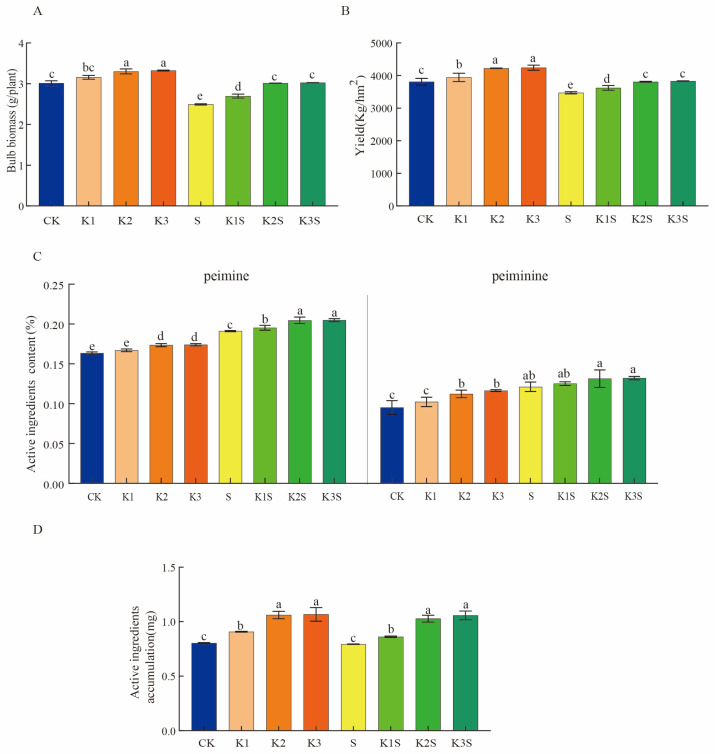 Figure 1
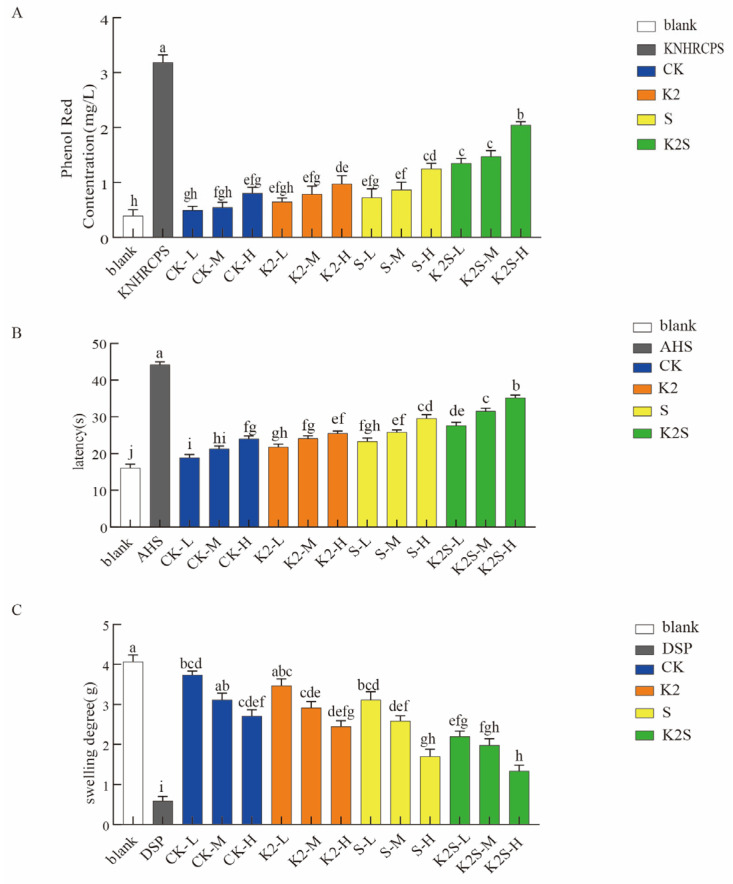 Figure 2
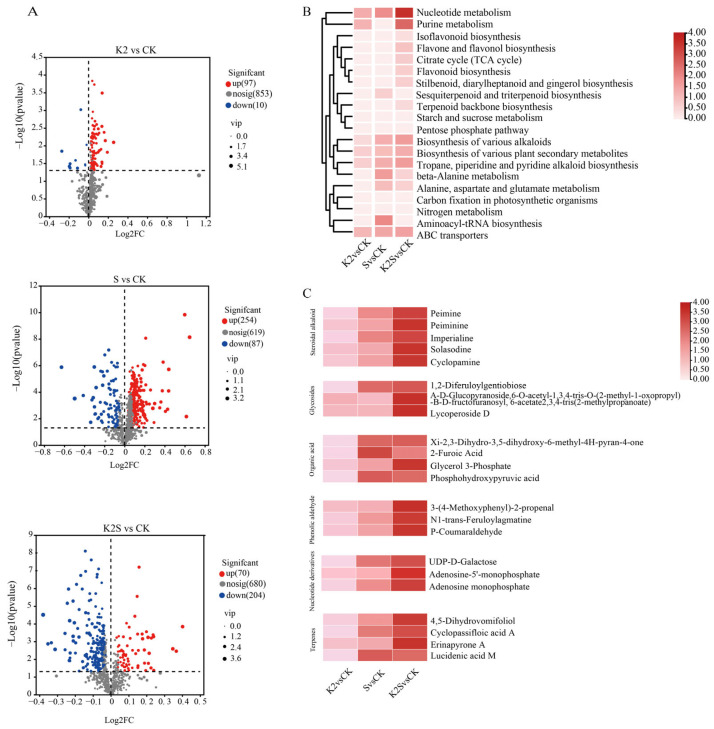 Figure 3
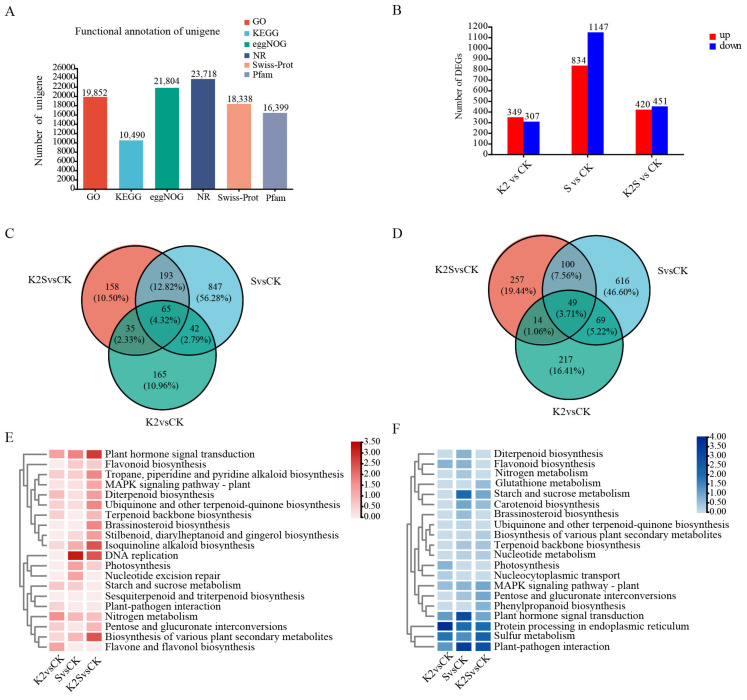 Figure 4
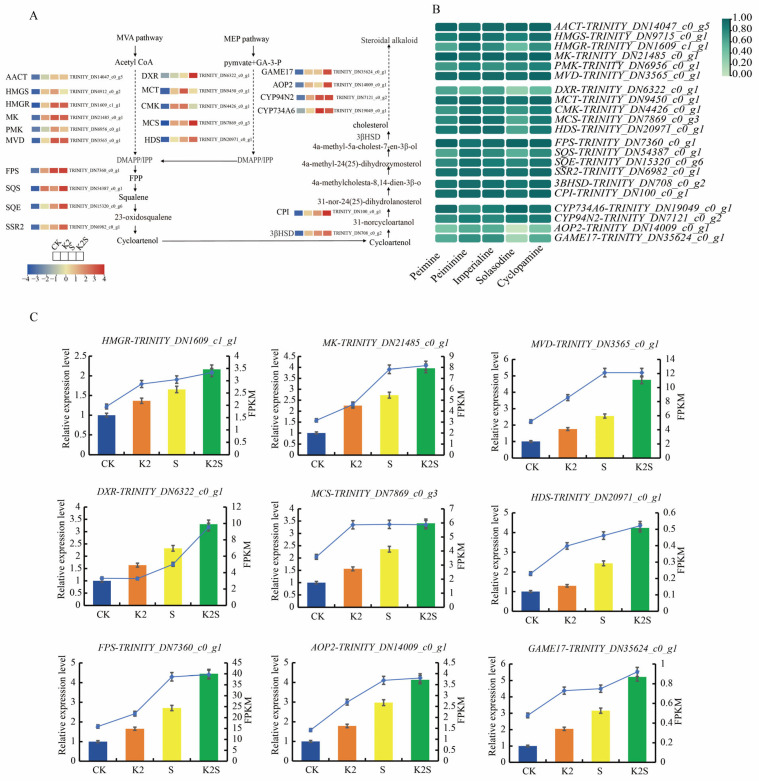 Figure 5
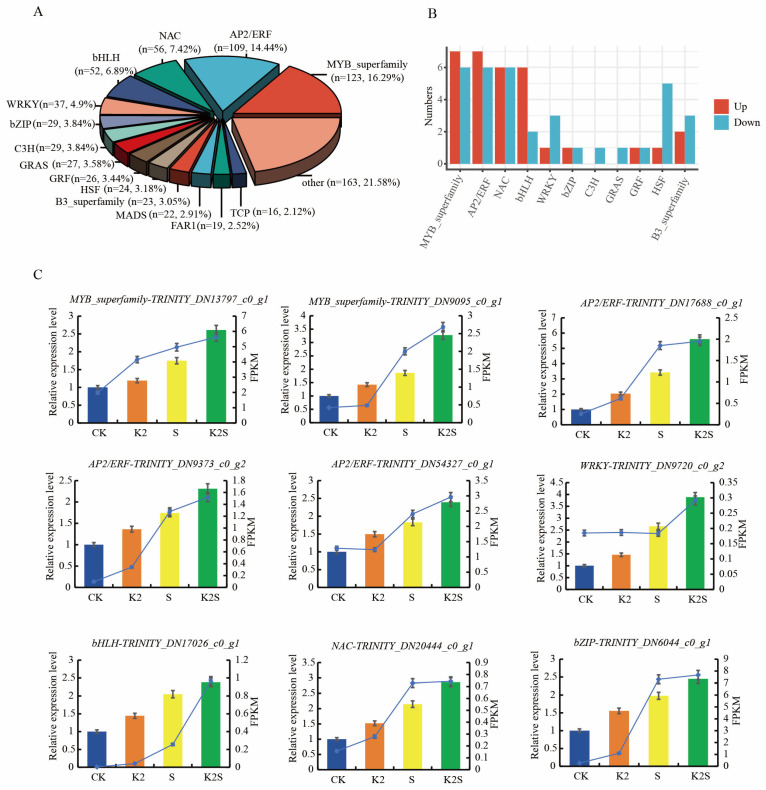 Figure 6
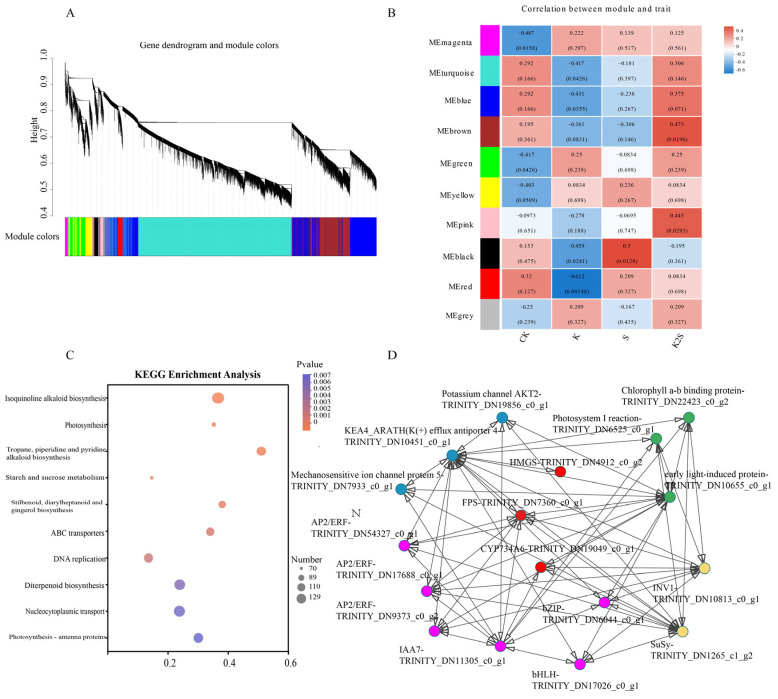 Figure 7
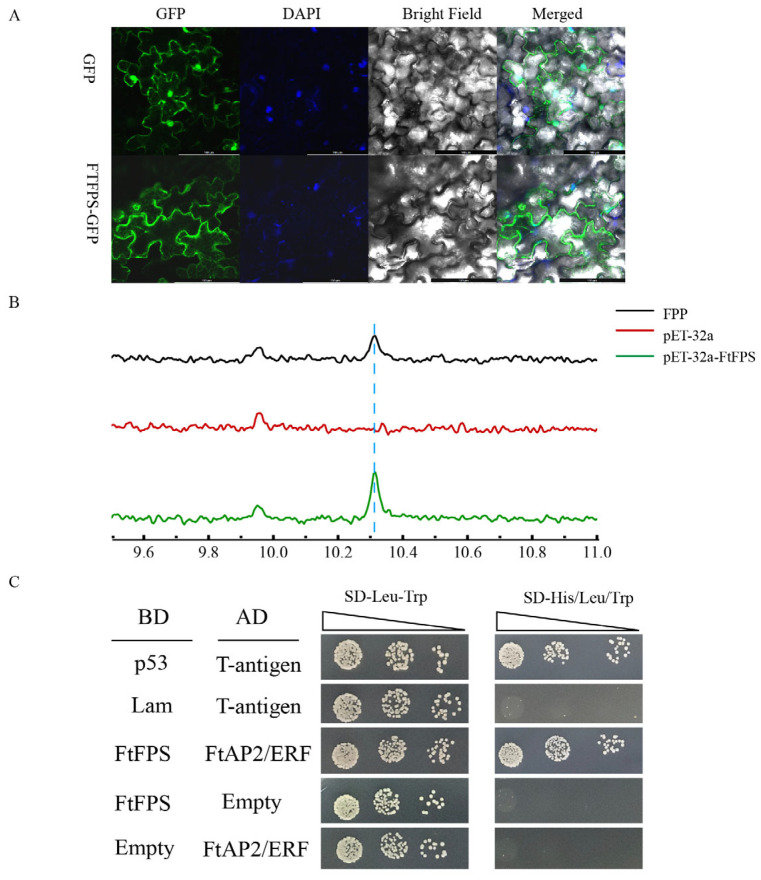 Figure 8
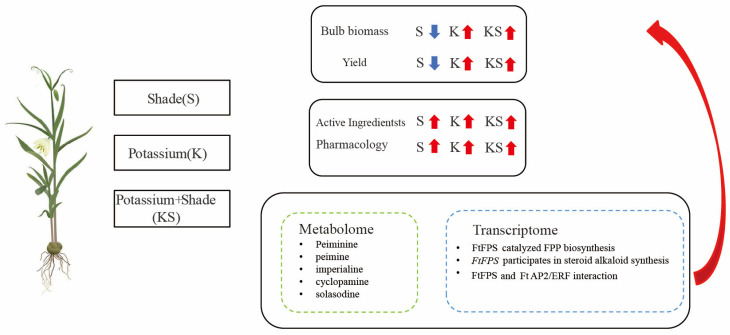 Figure 9
Peer Reviews
No public reviews on file for this paper yet. If you reviewed it on a platform where reviews are public (OpenReview, ICLR, NeurIPS, ICML), you can paste yours below so the community can read it here.
Videos
No videos yet. Explain this paper in a talk, walkthrough, or lecture? Add one.
Taxonomy
TopicsPhytochemical Studies and Bioactivities · Plant Gene Expression Analysis · Plant biochemistry and biosynthesis