Does Memory Accessibility Affect How Much We Learn from Studying?
Nate Kornell

TL;DR
This study investigates whether how easily information is recalled affects how well we learn from studying.
Contribution
The study experimentally tests the causal relationship between memory accessibility and learning efficiency.
Findings
Differences in memory accessibility did not impact learning.
Retrieval difficulty and success also failed to influence learning.
The study suggests forgetting, not accessibility changes, may affect learning.
Abstract
Two experiments were used to test the hypothesis that studying has a greater impact on learning when the information being studied is currently less accessible in memory. This hypothesis aligns with well-established findings like the spacing effect, but it is inconsistent with other evidence. Prior research has not directly tested the causal relationship between accessibility and learning. Two experiments were used to manipulate memory accessibility using semantic priming. The results indicated that differences in accessibility had no impact on learning. Retrieval difficulty and retrieval success also failed to influence learning. It is speculated that changes in accessibility that are specifically due to forgetting, rather than changes in accessibility per se, may have a causal impact on learning efficiency.
Genes, proteins, chemicals, diseases, species, mutations and cell lines named across the full text — each resolved to its canonical identifier and authoritative record.
Click any figure to enlarge with its caption.
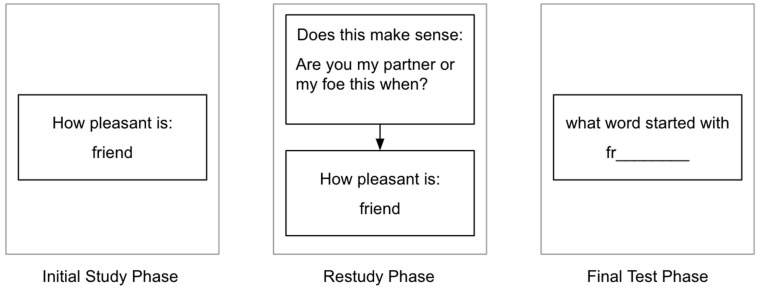 Figure 1
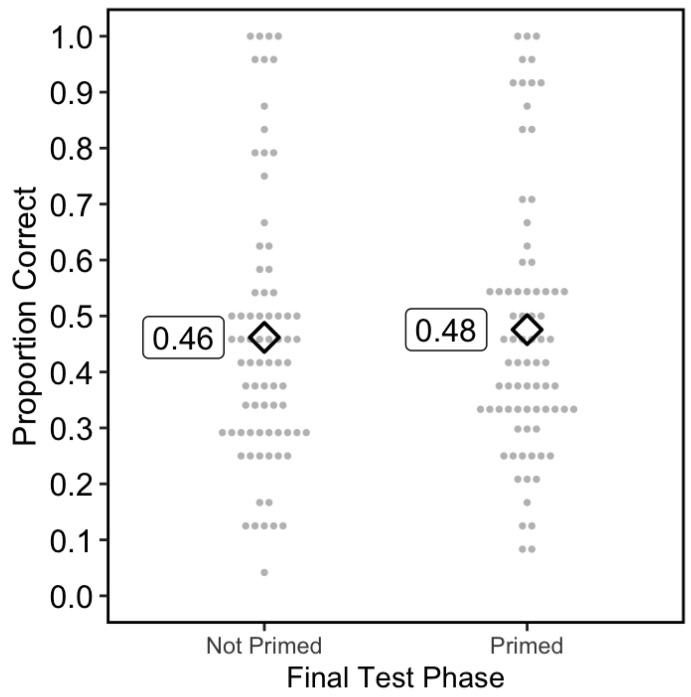 Figure 2
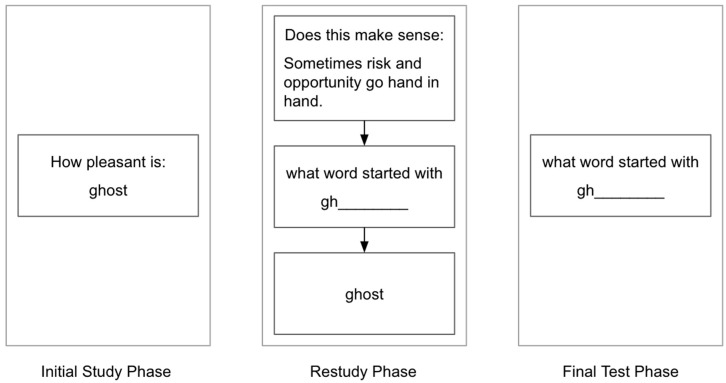 Figure 3
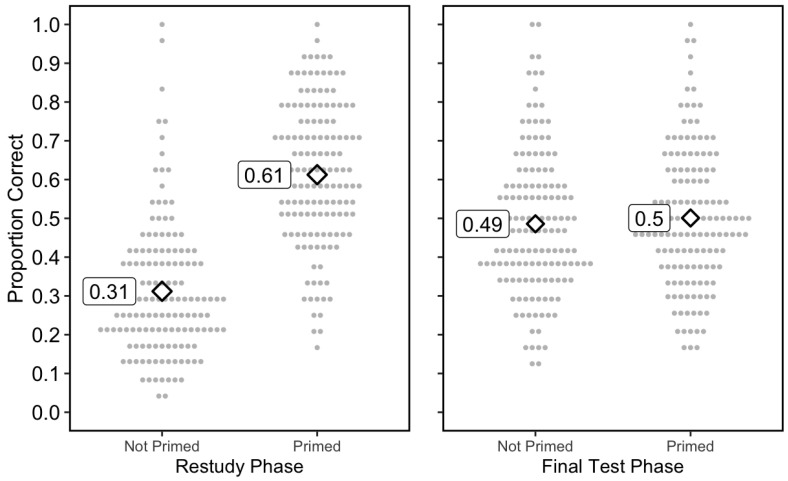 Figure 4
Peer Reviews
No public reviews on file for this paper yet. If you reviewed it on a platform where reviews are public (OpenReview, ICLR, NeurIPS, ICML), you can paste yours below so the community can read it here.
Videos
No videos yet. Explain this paper in a talk, walkthrough, or lecture? Add one.
Taxonomy
TopicsMemory Processes and Influences · Visual and Cognitive Learning Processes · Educational Strategies and Epistemologies