Halfway Through Ex Situ Population Genetic Lifespan: The Case of Cochlearia polonica
Anna Rucińska, Katarzyna Joanna Chwedorzewska, Piotr Tomasz Bednarek, Maja Boczkowska, Jerzy Puchalski, Piotr Androsiuk, Ewa Czaplicka

TL;DR
A study on the endangered plant Cochlearia polonica shows that cultivating it outside its natural habitat led to a rapid loss of genetic diversity, increasing its risk of extinction.
Contribution
The study highlights the genetic risks of ex situ conservation in a critically endangered plant species.
Findings
The ex situ population of C. polonica lost about half its genetic diversity compared to the wild source population.
The cultivated population became genetically homogenized and went extinct within 5–6 generations.
The remaining wild population is now more threatened than previously thought.
Abstract
Cochlearia polonica is a critically endangered plant species naturally occurring in a limited area of Poland. After its original habitat was destroyed, conservationists established a cultivated population in a PAS Botanical Garden CBDC. This study compares the genetic profile of the last remaining wild population and the now extinct cultivated population. Although the cultivated group initially increased in number, it experienced a significant loss of genetic variation over a short time. The analysis reveals a divergence in genetic structure between the two populations, despite their shared origin. These results demonstrate the risks associated with cultivating endangered species outside their natural environment, especially when the starting population is small. Reduced genetic diversity can limit a species’ ability to adapt and survive. The findings emphasise the importance of…
Genes, proteins, chemicals, diseases, species, mutations and cell lines named across the full text — each resolved to its canonical identifier and authoritative record.
Click any figure to enlarge with its caption.
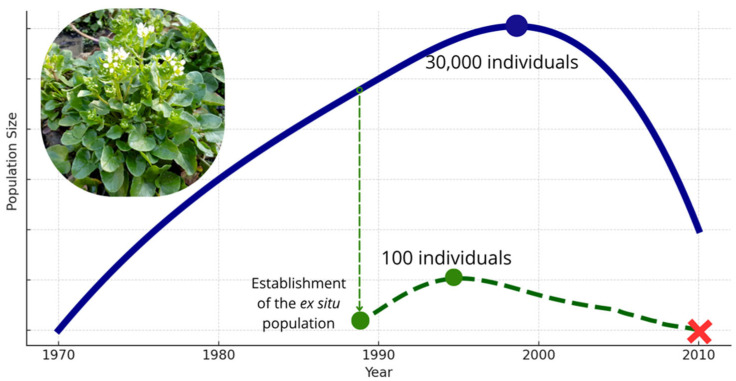 Figure 1
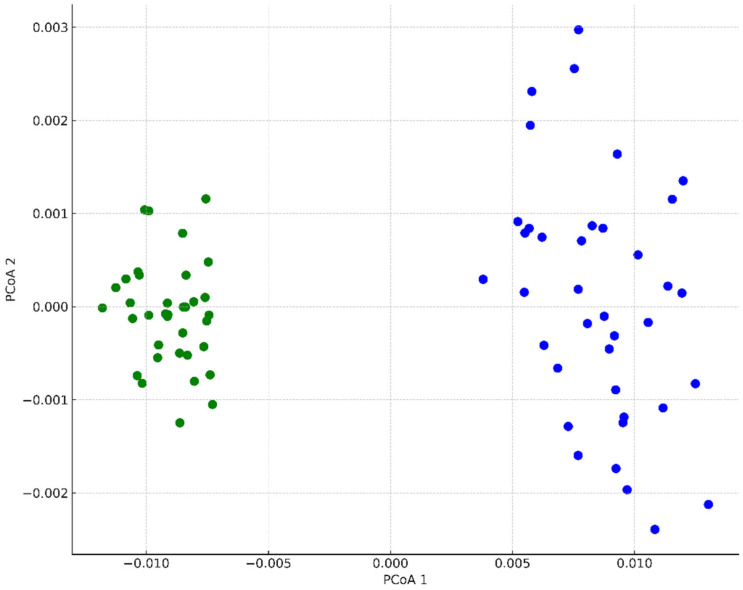 Figure 2
Peer Reviews
No public reviews on file for this paper yet. If you reviewed it on a platform where reviews are public (OpenReview, ICLR, NeurIPS, ICML), you can paste yours below so the community can read it here.
Videos
No videos yet. Explain this paper in a talk, walkthrough, or lecture? Add one.
Taxonomy
TopicsGenetic diversity and population structure · Plant Reproductive Biology · Genetic and Environmental Crop Studies