Decreased proliferation of HepG2 liver cancer cells in vitro and exhibited proteomic changes in vivo in subjects with metabolic syndrome and metabolic dysfunction-associated steatotic liver disease who performed four-week dawn-to-dusk dry fasting
Ayse L. Mindikoglu, Kristin Eckel-Mahan, Antone R. Opekun, Mustafa M. Alzubaidi, Zoe R. Crochet, Prasun K. Jalal, Sung Yun Jung

TL;DR
A four-week dry fasting regimen in people with metabolic syndrome and liver disease reduced liver cancer cell growth in the lab and caused changes in blood proteins.
Contribution
This study shows that serum from fasting individuals with metabolic syndrome reduces liver cancer cell proliferation and induces proteomic changes.
Findings
Serum from 3 out of 4 fasting individuals with metabolic syndrome significantly reduced HepG2 cell proliferation.
Proteomic analysis revealed significant changes in circulating gene protein products after four-week dry fasting.
No significant anti-tumorigenic effect was observed in serum from healthy fasting individuals.
Abstract
Four-week dawn-to-dusk dry fasting (DDDF) was previously shown to have a potent anti-inflammatory effect and induce an anti-tumorigenic proteome in the serum and peripheral blood mononuclear cells in subjects without cancer. The study goal was to determine if serum obtained from these subjects without cancer who underwent 4-week DDDF has an anti-tumorigenic effect. HepG2 cells were treated with serum collected from four individuals with metabolic syndrome and metabolic dysfunction-associated steatotic liver disease (MASLD) and four healthy individuals who performed 4-week DDDF. The objective was to assess cell proliferation/viability in HepG2 cells treated with non-fasted and dry-fasted serum and determine proteomic changes in human serum. We comparatively performed 3-[4,5-dimethylthiazol-2-yl]-2,5-diphenyltetrazolium bromide (MTT) cell proliferation assay and untargeted proteomic…
Genes, proteins, chemicals, diseases, species, mutations and cell lines named across the full text — each resolved to its canonical identifier and authoritative record.
Click any figure to enlarge with its caption.
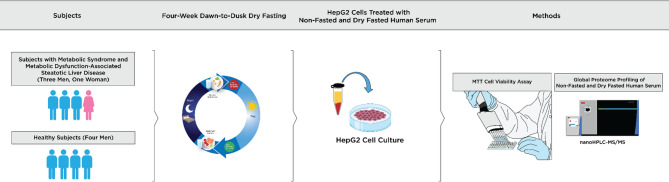 Figure 1
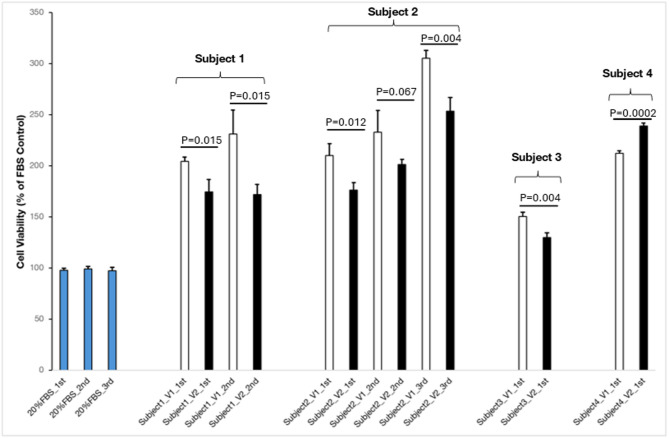 Figure 2
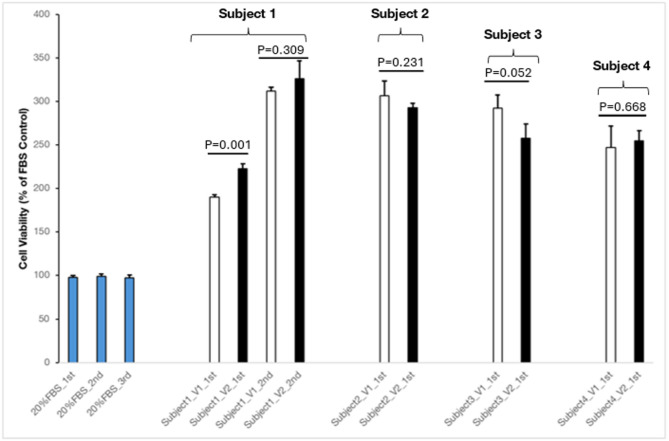 Figure 3
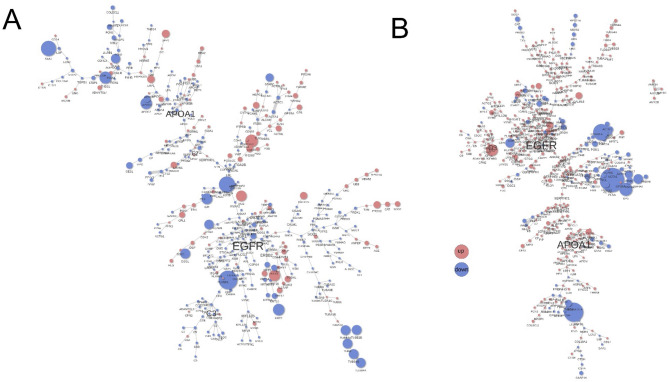 Figure 4
Peer Reviews
No public reviews on file for this paper yet. If you reviewed it on a platform where reviews are public (OpenReview, ICLR, NeurIPS, ICML), you can paste yours below so the community can read it here.
Videos
No videos yet. Explain this paper in a talk, walkthrough, or lecture? Add one.
Taxonomy
TopicsDietary Effects on Health · Diet and metabolism studies · Liver Disease Diagnosis and Treatment