Variation of the encoding hyaluronic receptors Hyaluronan-mediated motility receptor (rs299295) and Stabilin-2 (rs2271637) genes with prostate neoplasms risk: A case-control and in silico study
Hayder Abdulhadi Saleh Albdairi, Abasalt Hosseinzadeh Colagar

TL;DR
This study finds that specific genetic variations in HMMR and STAB2 genes are linked to a higher risk of prostate neoplasms in the Mazandaran population.
Contribution
The study identifies novel associations between HMMR-rs299295 and STAB2-rs2271637 gene variants and prostate neoplasm risk in a specific population.
Findings
The T allele in HMMR-rs299295 and G allele in STAB2-rs2271637 are associated with increased prostate neoplasm risk (p < 0.001).
Bioinformatics analysis suggests structural changes and potential protein interaction disruptions from these variants.
The HMMR-A485V and STAB2-L2401V variants may affect interactions with FAM83D and FAS1 domain 7, respectively.
Abstract
Hyaluronan-mediated motility receptor (HMMR) and Stabilin-2 (STAB2), known as extracellular matrix cell surface protein's receptors, bind to hyaluronic acid and lead to various cell functions. The study aims to investigate the relationship between the HMMR-rs299295 (C > T/ A485V) and STAB2-rs2271637 (C > G/ L2401V) gene variants and the risk of prostate neoplasms in the Mazandaran population, North of Iran. This study was conducted based on a case-control and in silico approach. Genomic DNA was extracted from 598 intravenous blood samples, collected from 250 benign prostatic hyperplasia (case group I) and 250 malignant prostate (case group II) neoplasms as cases, and 98 healthy men as control. The HMMR-rs299295 and STAB2-rs2271637 genotypes were identified using the polymerase chain reaction-restriction fragment length polymorphism method. Bioinformatics analyses were conducted using…
Genes, proteins, chemicals, diseases, species, mutations and cell lines named across the full text — each resolved to its canonical identifier and authoritative record.
Click any figure to enlarge with its caption.
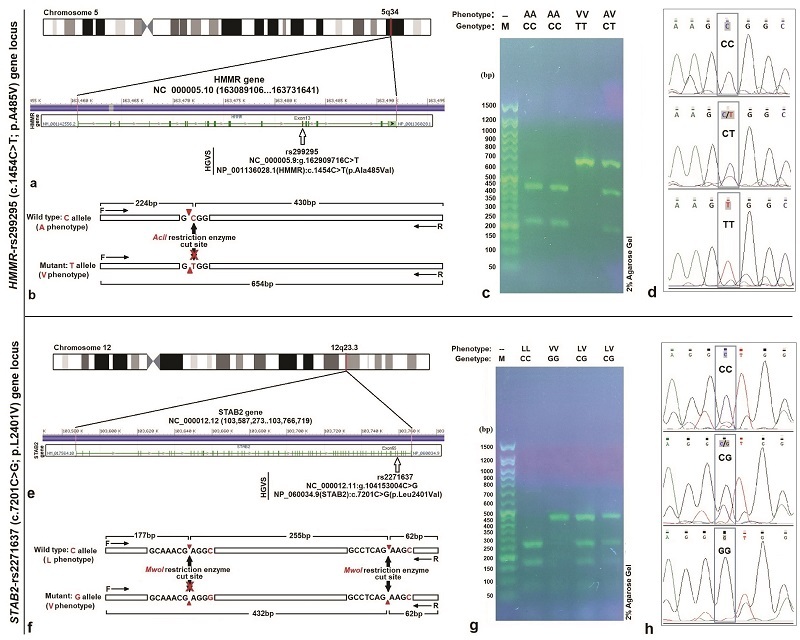 Figure 1
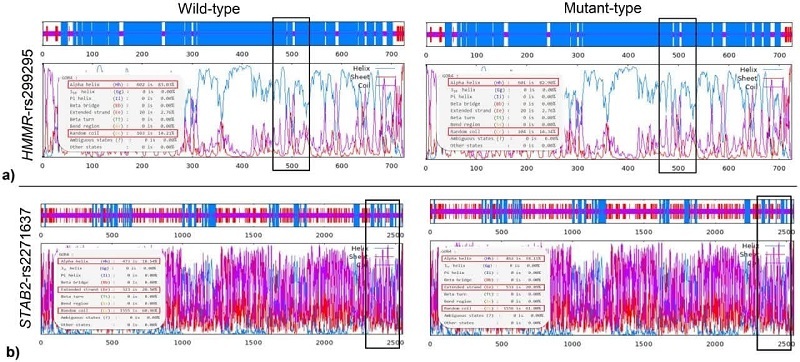 Figure 2
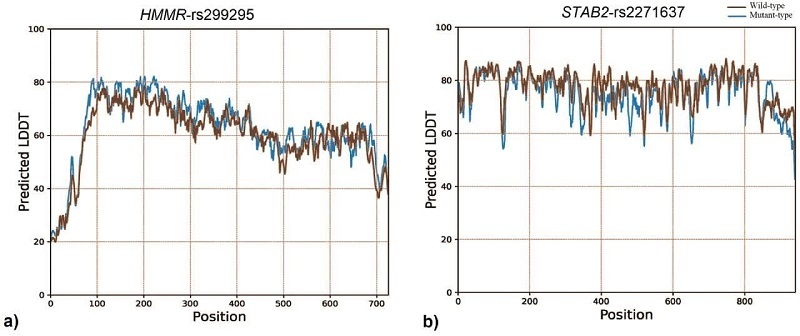 Figure 3
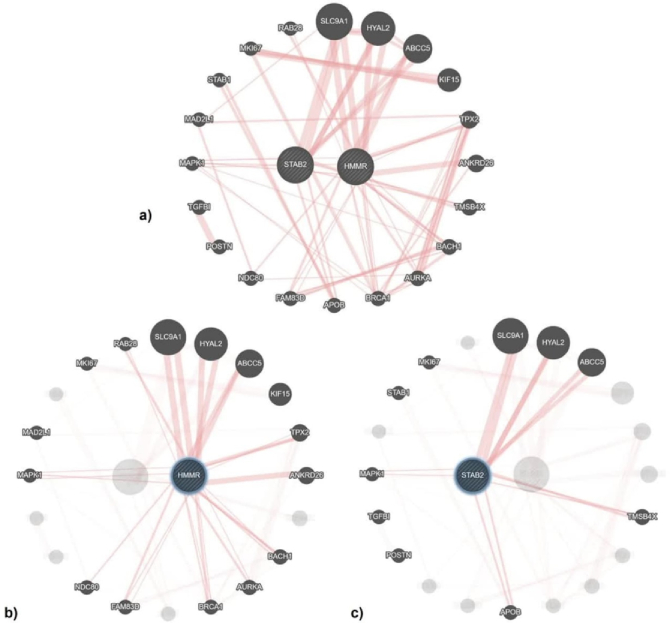 Figure 4
Peer Reviews
No public reviews on file for this paper yet. If you reviewed it on a platform where reviews are public (OpenReview, ICLR, NeurIPS, ICML), you can paste yours below so the community can read it here.
Videos
No videos yet. Explain this paper in a talk, walkthrough, or lecture? Add one.
Taxonomy
TopicsProteoglycans and glycosaminoglycans research · Prostate Cancer Treatment and Research · Angiogenesis and VEGF in Cancer