Automating updates for scoping reviews on the environmental drivers of human and animal diseases: a comparative analysis of AI methods
Rémy Decoupes, Claudia Cataldo, Luca Busani, Mathieu Roche, Maguelonne Teisseire

TL;DR
This paper explores how AI can help update literature reviews on environmental factors affecting disease spread in animals.
Contribution
The study evaluates AI methods for automatically updating scoping reviews on environmental disease drivers.
Findings
AI methods were compared for identifying risk factors in scientific articles.
Generative large language models and lighter models were used for this task.
The goal is to automate updates as pathogens evolve and change disease dynamics.
Abstract
Understanding the environmental factors that facilitate the occurrence and spread of infectious diseases in animals is crucial for risk prediction. As part of the H2020 Monitoring Outbreaks for Disease Surveillance in a Data Science Context (MOOD) project, scoping literature reviews have been conducted for various diseases. However, pathogens continuously mutate and generate variants with different sensitivities to these factors, necessitating regular updates to these reviews. In this paper, we propose to evaluate the potential benefits of artificial intelligence (AI) for updating such scoping reviews. We thus compare different combinations of AI methods for solving this task. These methods utilize generative large language models (LLMs) and lighter language models to automatically identify risk factors in scientific articles.
Genes, proteins, chemicals, diseases, species, mutations and cell lines named across the full text — each resolved to its canonical identifier and authoritative record.
Click any figure to enlarge with its caption.
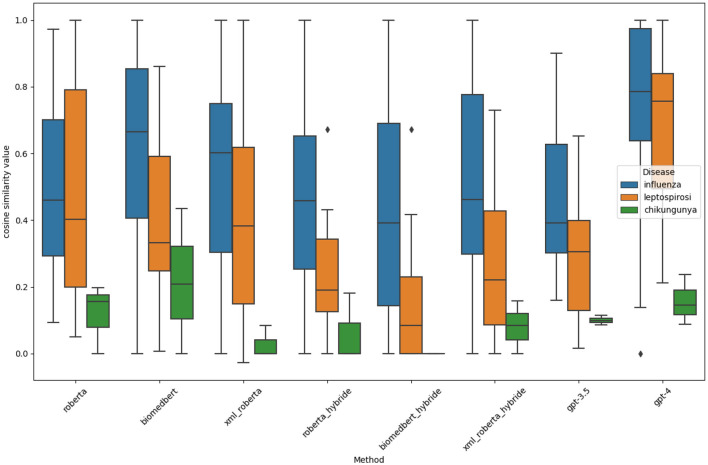 Figure 1
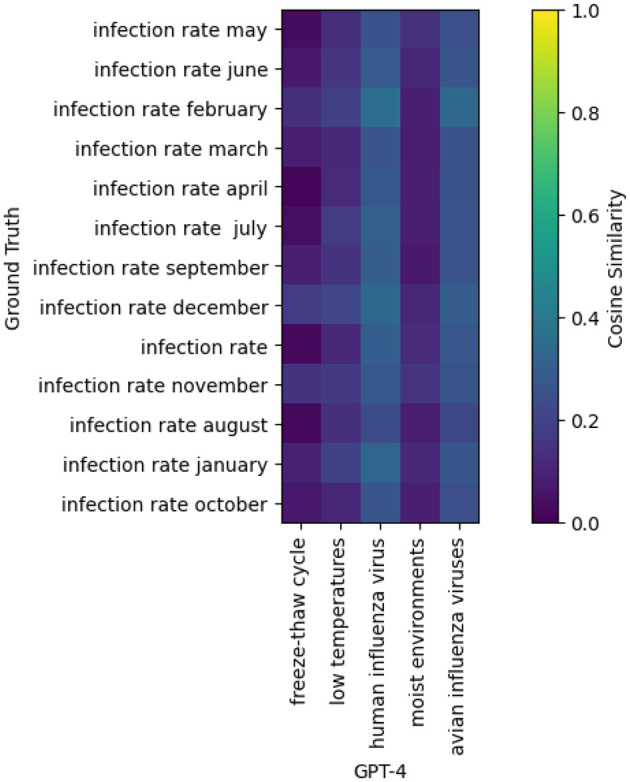 Figure 2
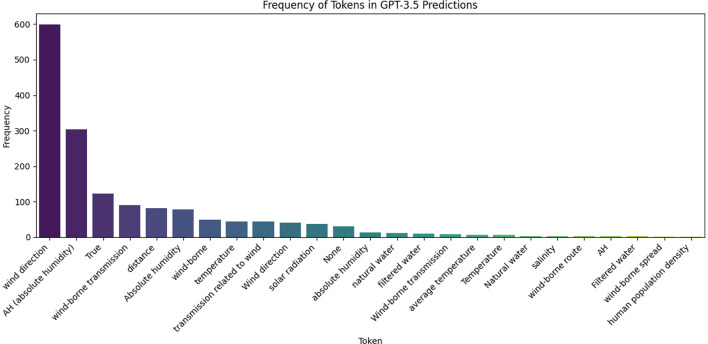 Figure 3
Peer Reviews
No public reviews on file for this paper yet. If you reviewed it on a platform where reviews are public (OpenReview, ICLR, NeurIPS, ICML), you can paste yours below so the community can read it here.
Videos
No videos yet. Explain this paper in a talk, walkthrough, or lecture? Add one.
Taxonomy
TopicsTopic Modeling · Computational and Text Analysis Methods · Advanced Text Analysis Techniques