Dressed for the Weather: Tawny Owl Feather Adaptations Across a Climatic Gradient
Charlotte Perrault, Miguel Baltazar‐Soares, Chiara Morosinotto, Patrik Karell, Karel Poprach, Lars‐Ove Nilsson, Daniel Eriksson, Peter Ericsson, Gintarė Grašytė, Saulius Rumbutis, Daniele Baroni, Katy Anderson, Ingar Øien, Maria Casero, Jon E. Brommer

TL;DR
Tawny owls in colder regions have feathers that may help them stay warm, suggesting local adaptation to climate.
Contribution
The study shows that feather properties, not coloration, may reflect local adaptation in tawny owls across Europe.
Findings
Feather structures showed more phenotypic divergence than expected from genetic drift.
Colder populations had larger plumulaceous parts in dorsal feathers, suggesting better insulation.
Plumage color variation showed little divergence, indicating limited role of natural selection in coloration.
Abstract
Populations are presumed to be adapted to local environmental conditions via natural selection, with gene flow breaking up local adaptations. In birds, various aspects of feathers may reflect local adaptation. For example, the insulation capacity of feathers could be greater in colder regions, while colour variation may also play a role in adapting to local environmental conditions since darker feathers are known to absorb more heat than lighter ones. We studied feather properties (plumulaceous part of the feather, density of barbs and barbules) of tawny owl, Strix aluco , across nine populations covering a large part of the species' European range (9–52 individuals per population) as well as their plumage colour, scored as dark (brown) versus light (grey) morphs. We compared these traits' phenotypic divergence (PST) with the divergence expected based on genetic drift (FST) inferred…
Genes, proteins, chemicals, diseases, species, mutations and cell lines named across the full text — each resolved to its canonical identifier and authoritative record.
Click any figure to enlarge with its caption.
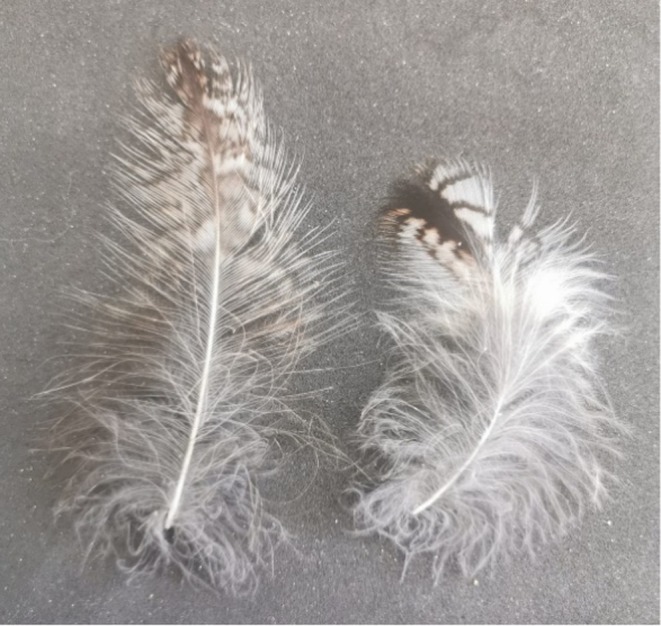 Figure 1
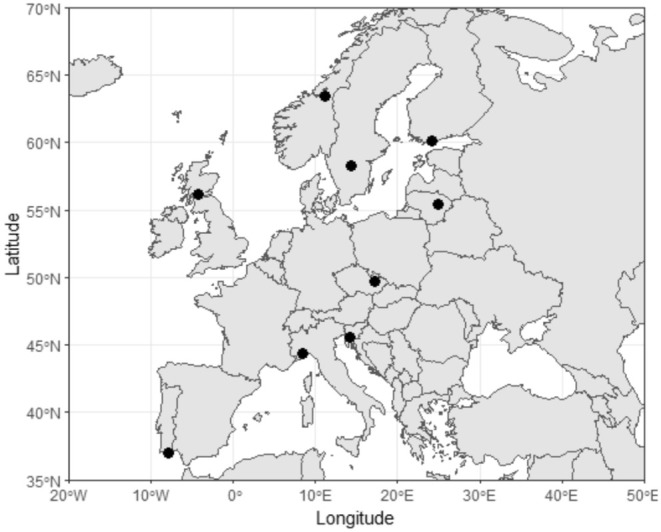 Figure 2
 Figure 3
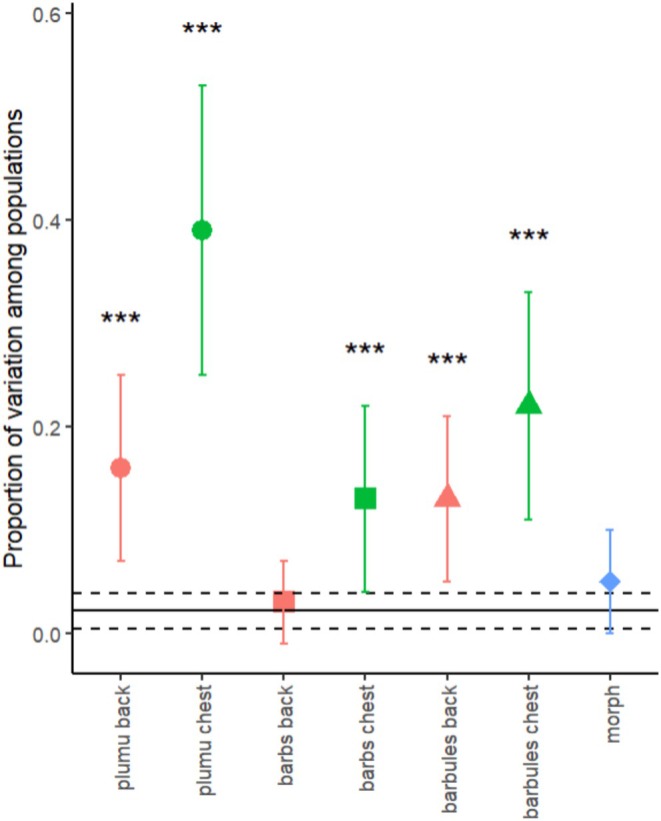 Figure 4
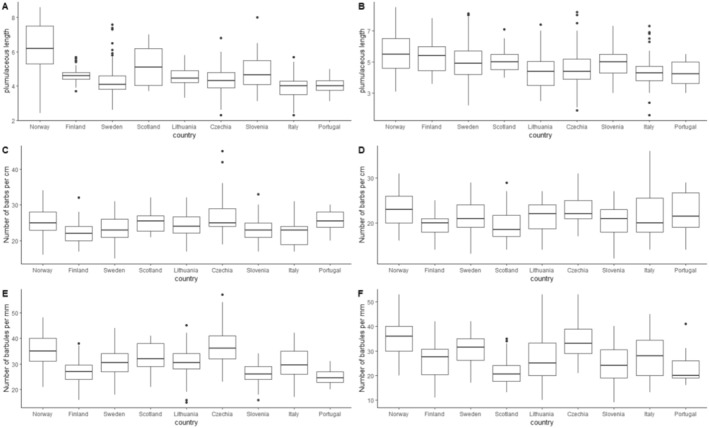 Figure 5
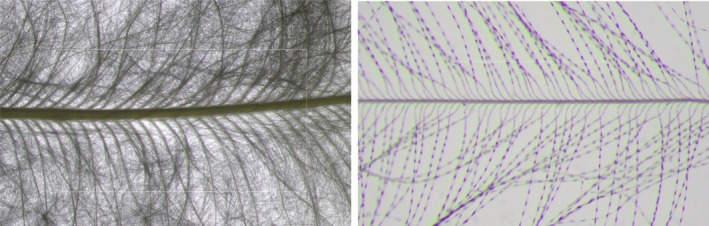 Figure 6
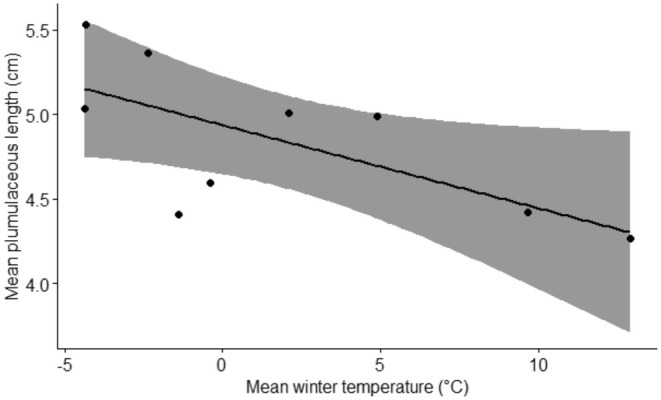 Figure 7
Peer Reviews
No public reviews on file for this paper yet. If you reviewed it on a platform where reviews are public (OpenReview, ICLR, NeurIPS, ICML), you can paste yours below so the community can read it here.
Videos
No videos yet. Explain this paper in a talk, walkthrough, or lecture? Add one.
Taxonomy
TopicsWildlife Ecology and Conservation · Avian ecology and behavior · Species Distribution and Climate Change