Molecular characterisation of KRAS mutations in non-small cell lung cancer across all stages
Carla Climent, Sandra Soriano, Natalia Lopez, Julia Giner, Mari Carmen Blazquez, Ruben Carrera, Marina Sierra, Pablo Cobo, Monica Fragio, Mireia Busquets, Ona Cano I Cano, Alicia Carrasco, Miguel Ángel Seguí, Laia Vila

TL;DR
This study explores KRAS mutations in non-small cell lung cancer, revealing subtype differences in disease stages and patient characteristics.
Contribution
The study provides insights into KRAS mutation subtypes and their clinical relevance across all stages of NSCLC.
Findings
KRAS mutations are common in NSCLC, with G12C, G12V, and G12D being the most prevalent subtypes.
G12C and G12V subtypes are more frequently associated with metastatic disease compared to early-stage disease.
PD-L1 expression and co-mutations may influence prognosis, though results were not statistically significant.
Abstract
Kirsten rat sarcoma virus (KRAS) mutations (KRASms) are detected in approximately 25% of non-small cell lung cancer (NSCLC) patients with adenocarcinoma. Next-generation sequencing (NGS) has enabled the identification of diverse KRASm subtypes with distinct prognoses, co-mutation patterns and clinical characteristics. This study aimed to investigate the clinical and pathological characteristics of KRASm patients across all stages of NSCLC. We analysed NSCLC patients from 2019 to 2021 using the Illumina Focus 52-gene targeted NGS panel, which detects DNA and RNA alterations. PD-L1 expression was assessed using the SP263 antibody. We examined the clinical and pathological characteristics of KRASm patients, including KRASm subtypes and co-mutations. Of the 123 patients, 62 (50.4%) had KRASm, with a median age of 67 years (range 49–92). Of these, 79% were male, 87.1% had adenocarcinomas…
Genes, proteins, chemicals, diseases, species, mutations and cell lines named across the full text — each resolved to its canonical identifier and authoritative record.
Click any figure to enlarge with its caption.
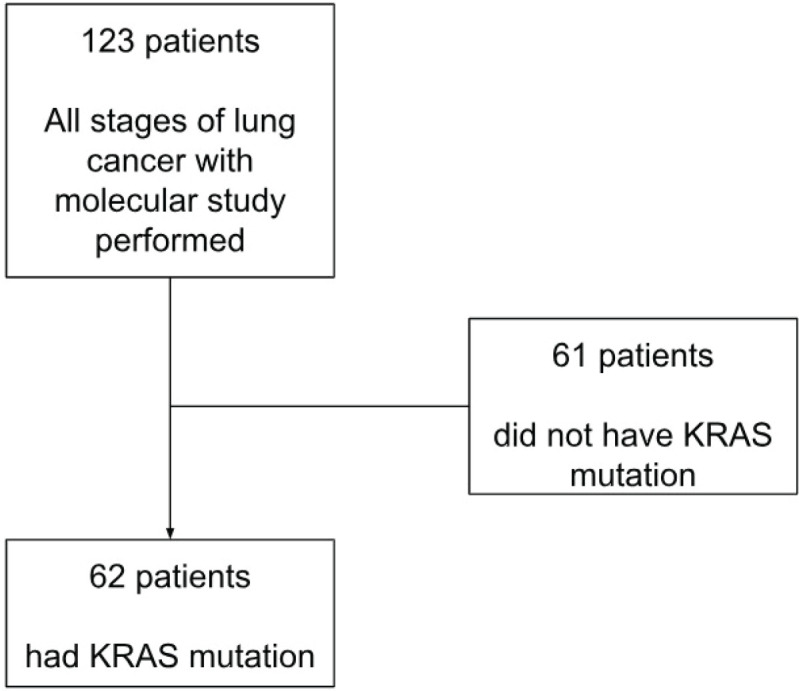 Figure 1
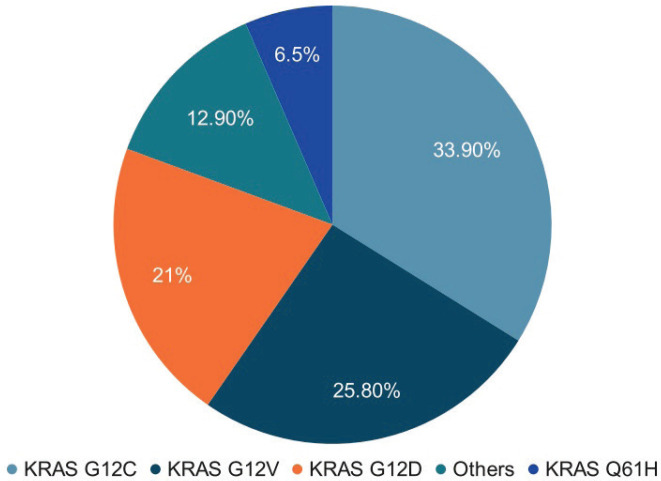 Figure 2
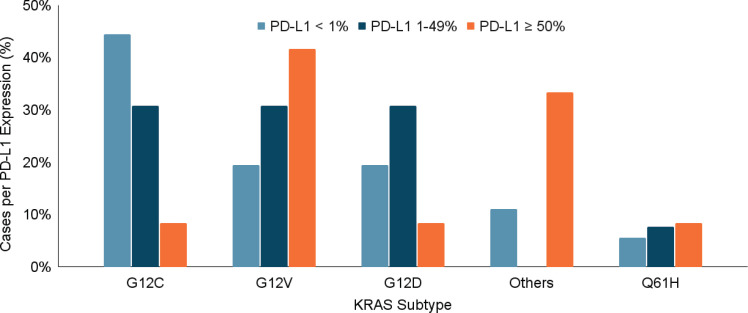 Figure 3
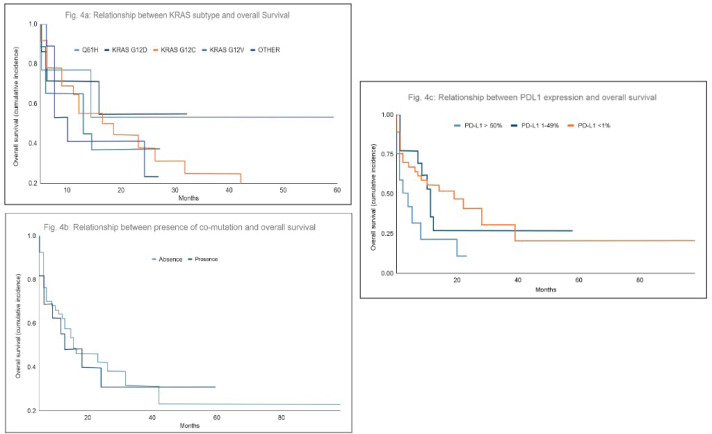 Figure 4
Peer Reviews
No public reviews on file for this paper yet. If you reviewed it on a platform where reviews are public (OpenReview, ICLR, NeurIPS, ICML), you can paste yours below so the community can read it here.
Videos
No videos yet. Explain this paper in a talk, walkthrough, or lecture? Add one.
Taxonomy
TopicsLung Cancer Treatments and Mutations · Cancer therapeutics and mechanisms