Internal consistency and structural validity of the parent-report preschool (2-4 years) Strengths and Difficulties Questionnaire in 1-year-old children
Sarah L. Blower, Kate E. Mooney, Nicole Gridley, Fionnuala Larkin, Tracey J. Bywater, G. J. Melendez-Torres

TL;DR
This study evaluated a questionnaire for assessing child mental health in 1-year-olds and found it unreliable and structurally invalid for this very young age group.
Contribution
The study is the first to examine the psychometric properties of the preschool Strengths and Difficulties Questionnaire in children younger than 2 years.
Findings
The two-factor model of the questionnaire showed poor fit (CFI = 0.612, RMSEA = 0.079) and low internal consistency for the internalising subscale (ω = 0.57).
The five-factor model also had poor fit (CFI = 0.676, RMSEA = 0.070) with three out of five subscales below acceptable internal consistency.
The study concludes that the questionnaire lacks validity for children younger than 2 years and requires adaptation for this age group.
Abstract
Prevention and early intervention are key to addressing poor child mental health. Systematic reviews have highlighted a lack of brief, valid and reliable outcome measures that can be implemented in both research and practice to assess social, emotional and behavioural outcomes in the early years. The Preschool Strengths and Difficulties Questionnaire (2–4 years) is a promising candidate to fill this gap, but the measurement properties of this tool are not yet known in very young children. A secondary data analysis of two clinical trial datasets was conducted to examine the internal consistency reliability and structural validity of the parent-report English preschool version of the Strengths and Difficulties Questionnaire in a sample of 505 infants with mean average age of 18 months (SD .81). The measure was designed for children aged 2–4 years and was not modified prior to use with…
Genes, proteins, chemicals, diseases, species, mutations and cell lines named across the full text — each resolved to its canonical identifier and authoritative record.
Click any figure to enlarge with its caption.
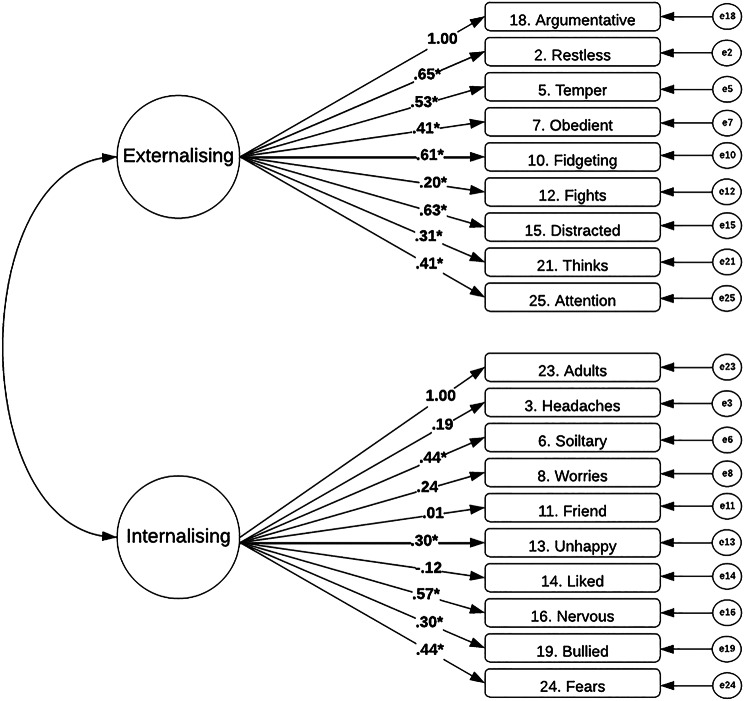 Figure 1
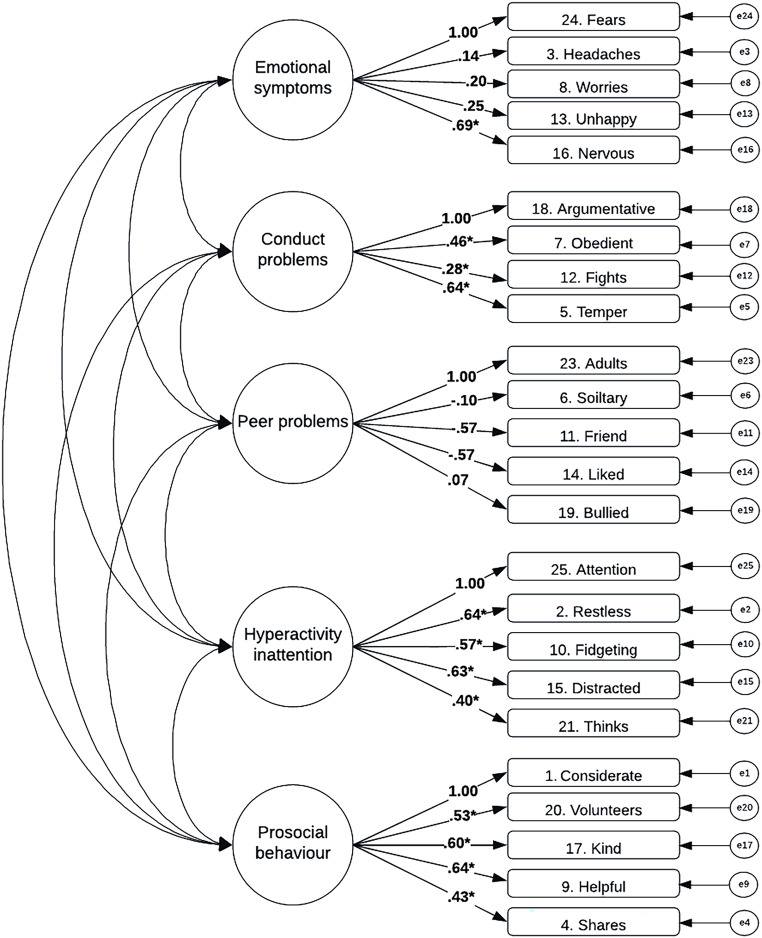 Figure 2
Peer Reviews
No public reviews on file for this paper yet. If you reviewed it on a platform where reviews are public (OpenReview, ICLR, NeurIPS, ICML), you can paste yours below so the community can read it here.
Videos
No videos yet. Explain this paper in a talk, walkthrough, or lecture? Add one.
Taxonomy
TopicsChild and Adolescent Psychosocial and Emotional Development · Psychosocial Factors Impacting Youth · Family and Disability Support Research