Evidence for a transgenerational mutational signature from ionizing radiation exposure in humans
Fabian Brand, Hannah Klinkhammer, Alexej Knaus, Manuel Holtgrewe, Leonie Weinhold, Dieter Beule, Kerstin Ludwig, Prachi Kothiyal, George Maxwell, Markus Noethen, Matthias Schmid, Karl Sperling, Peter Krawitz

TL;DR
The study found evidence that ionizing radiation exposure in fathers may lead to increased clustered mutations in their offspring, suggesting a possible transgenerational effect.
Contribution
This study identifies clustered de novo mutations as a potential transgenerational biomarker of paternal ionizing radiation exposure in humans.
Findings
Offspring of Chernobyl cleanup workers had significantly more clustered de novo mutations compared to unexposed families.
The number of clustered de novo mutations increased with higher paternal radiation exposure.
The findings suggest clustered de novo mutations could serve as a biomarker for transgenerational radiation effects.
Abstract
The existence of transgenerational effects of radiation exposure on the human germline remains controversial. Evidence for transgenerational biomarkers are of particular interest for populations, who have been exposed to higher than average levels of ionizing radiation (IR). This study investigated signatures of parental exposure to IR in offspring of former German radar operators and Chernobyl cleanup workers, focusing on clustered de novo mutations (cDNMs), defined as multiple de novo mutations (DNMs) within 20 bp. We recruited 110 offspring of former German radar operators, who were likely to have been exposed to IR (Radar cohort, exposure = 0–353 mGy), and reanalyzed sequencing data of 130 offspring of Chernobyl cleanup workers (CRU, exposure = 0–4080 mGy) from Yeager, et al. In addition, we analyzed whole genome trio data of 1275 offspring from unexposed families (Inova cohort). We…
Genes, proteins, chemicals, diseases, species, mutations and cell lines named across the full text — each resolved to its canonical identifier and authoritative record.
Click any figure to enlarge with its caption.
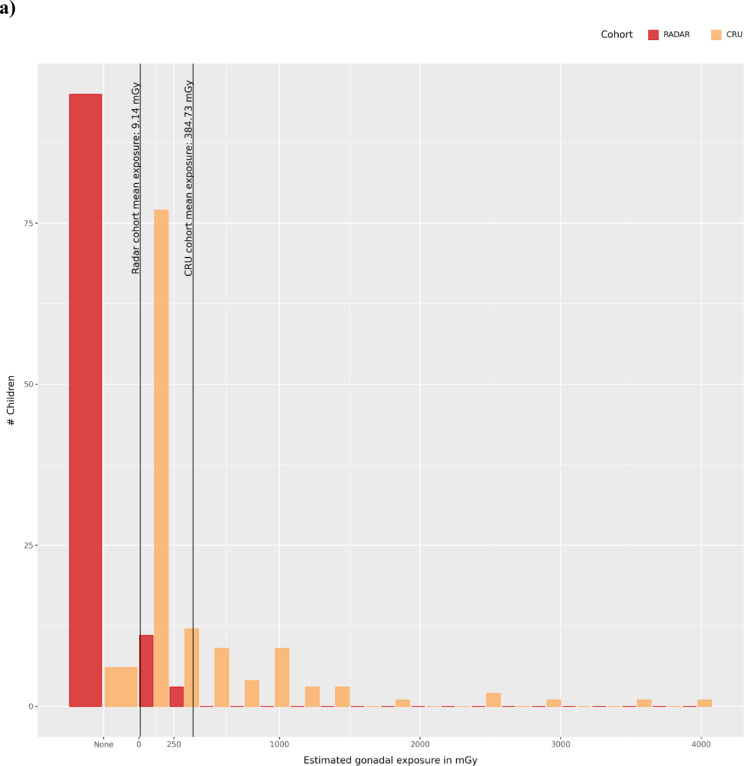 Figure 1
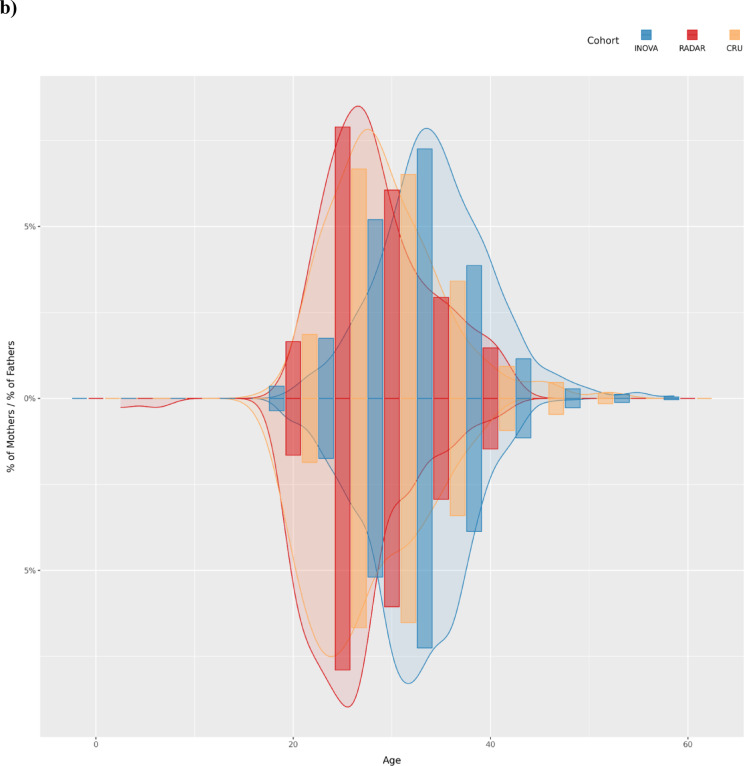 Figure 1
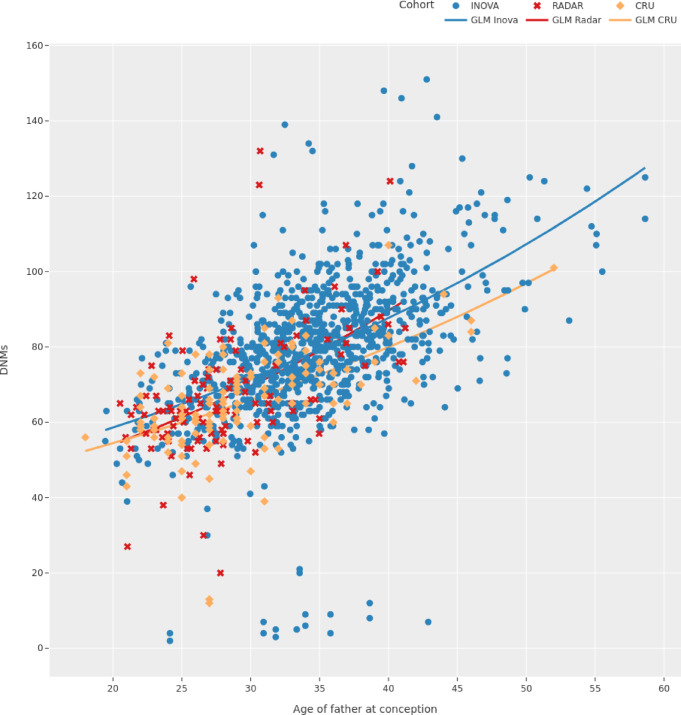 Figure 2
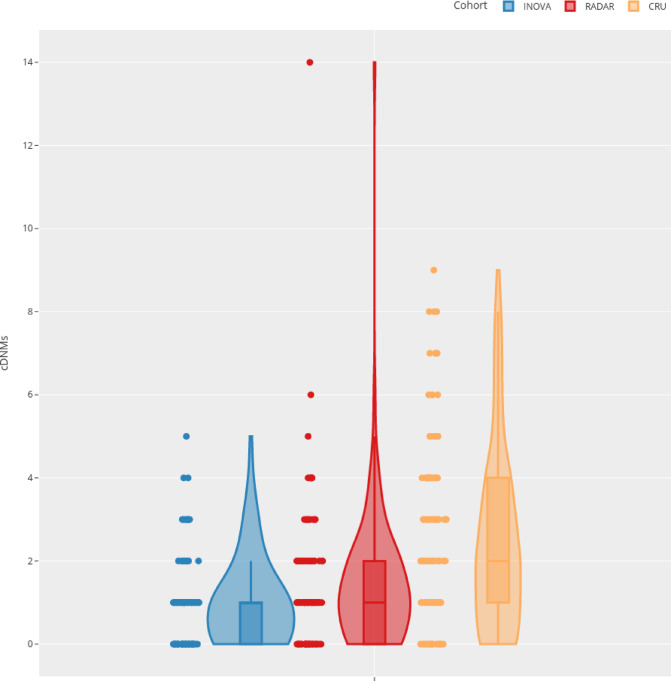 Figure 3
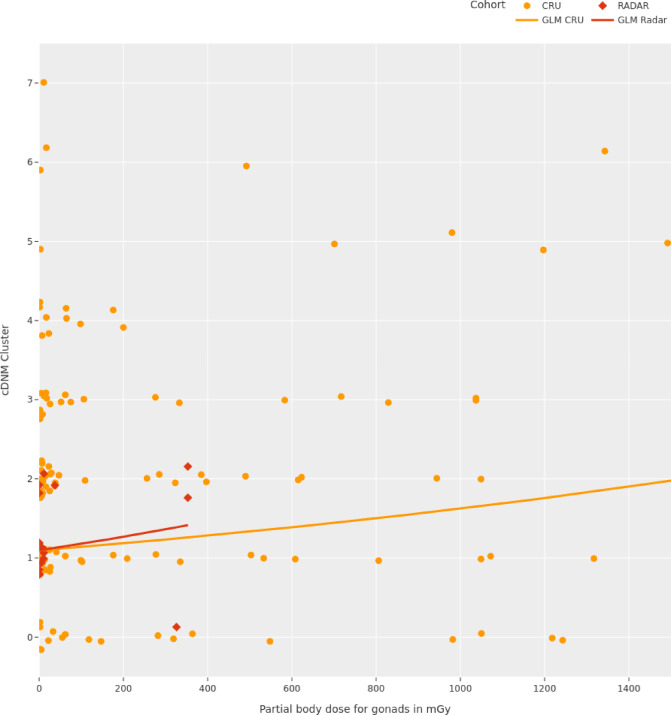 Figure 4
Peer Reviews
No public reviews on file for this paper yet. If you reviewed it on a platform where reviews are public (OpenReview, ICLR, NeurIPS, ICML), you can paste yours below so the community can read it here.
Videos
No videos yet. Explain this paper in a talk, walkthrough, or lecture? Add one.
Taxonomy
TopicsDNA Repair Mechanisms · Mitochondrial Function and Pathology · Radiation Therapy and Dosimetry