Mobilization of Readily Exchangeable Organic P – A Potential Driver of Enhanced P Acquisition Efficiency in Upland Rice
Eva Mundschenk, Rainer Remus, Matthias Wissuwa, Christiana Staudinger, Uxue Otxandorena-Ieregi, Eva Oburger, Maire Holz

TL;DR
This study explores how different rice genotypes affect phosphorus (P) availability in soil, identifying strategies to improve P acquisition efficiency in rice crops.
Contribution
The study reveals genotype-specific differences in mobilizing readily exchangeable organic P in the rhizosphere, contributing to enhanced phosphorus acquisition efficiency.
Findings
Fertilizer-P primarily accumulates in moderately labile and stable P fractions under both low- and high-P conditions.
DJ123 rice genotype shows superior access to readily exchangeable organic P in the rhizosphere compared to Nerica4.
Plant presence alters soil P fractions, decreasing labile fertilizer-P while increasing native soil and organic P in other fractions.
Abstract
High phosphorus (P) fixation in soils is a major constraint on crop production worldwide. To address this challenge, we investigated plant-induced changes in soil P pools, aiming to identify superior P uptake strategies by examining whether different upland rice genotypes access various P sources in the rhizosphere. Two genotypes (DJ123 and Nerica4) with varying P acquisition efficiencies (PAEs) were grown in an Andosol under low- and high-P fertilization. Fertilizer-P was labeled with 33P, and plants were harvested 34 days after emergence. Hedley fractionation was conducted on initial soil, as well as on bulk and rhizosphere soils after harvest, to analyze changes in fertilizer/native soil and inorganic/organic P in different fractions. Fertilizer-P entered all Hedley fractions, with the largest share being found in the moderately labile (NaOH-P, + 72%) and stable (H2SO4-P, + 19.8%) P…
Genes, proteins, chemicals, diseases, species, mutations and cell lines named across the full text — each resolved to its canonical identifier and authoritative record.
Click any figure to enlarge with its caption.
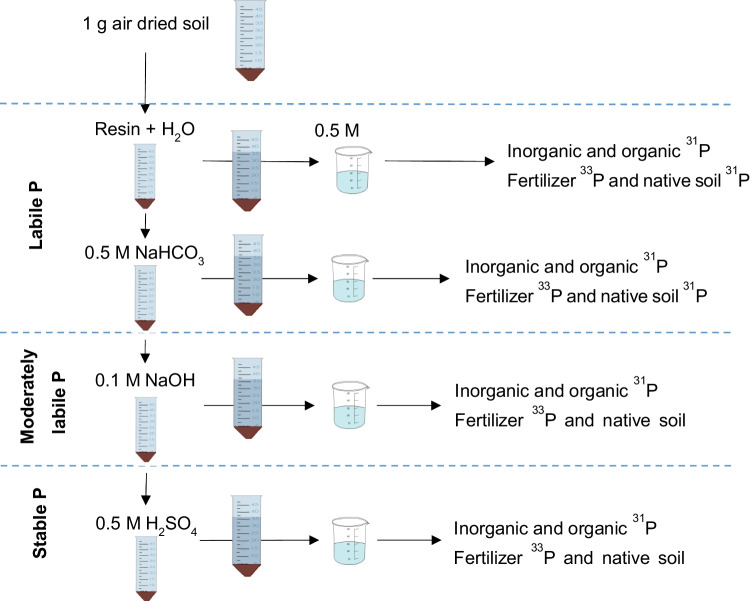 Figure 1
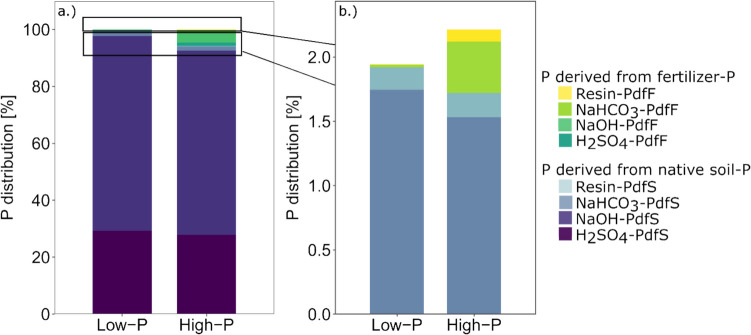 Figure 2
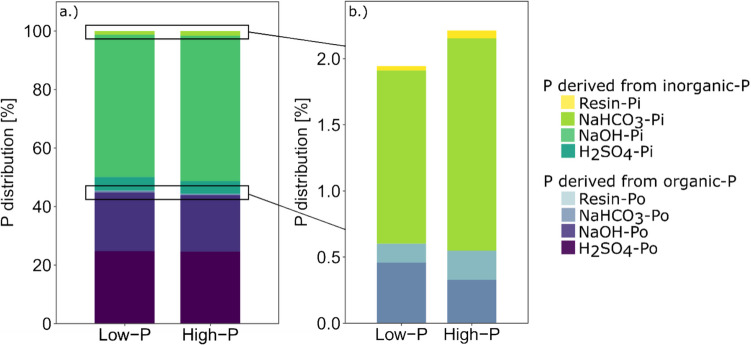 Figure 3
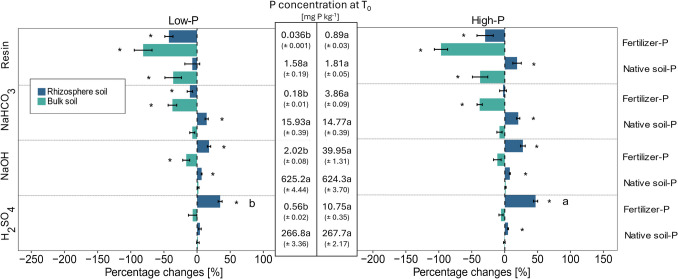 Figure 4
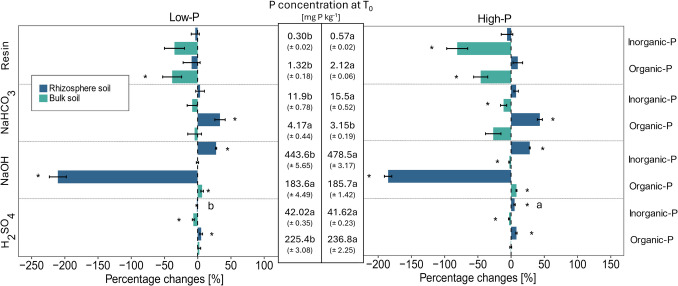 Figure 5
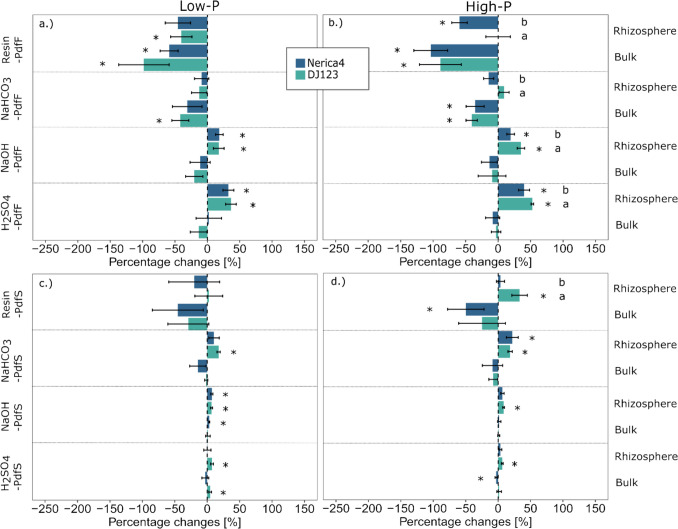 Figure 6
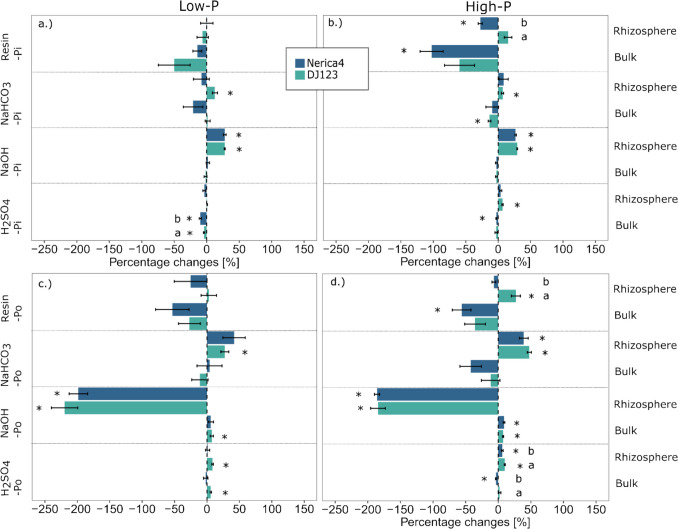 Figure 7
Peer Reviews
No public reviews on file for this paper yet. If you reviewed it on a platform where reviews are public (OpenReview, ICLR, NeurIPS, ICML), you can paste yours below so the community can read it here.
Videos
No videos yet. Explain this paper in a talk, walkthrough, or lecture? Add one.
Taxonomy
TopicsPlant nutrient uptake and metabolism · Phosphorus and nutrient management · Soil and Water Nutrient Dynamics