Case Report: Lateral C1–C2 puncture for intrathecal baclofen therapy: an alternative effective and safe approach after spinal cord injury
Rayan Fawaz, Hayat Belaid, Baptiste Eklu, Jean Baptiste Thiebaut, Manon Duraffourg

TL;DR
A new method using a lateral C1–C2 puncture successfully delivered baclofen to treat spasticity in a spinal cord injury patient when traditional methods failed.
Contribution
A novel lateral C1–C2 puncture technique is presented as a safe and effective alternative for intrathecal baclofen delivery in cervical spinal cord injury patients.
Findings
A patient with cervical spinal cord injury showed significant spasticity reduction using a lateral C1–C2 puncture method.
The catheter placement was guided by innovative 3D reconstruction imaging, ensuring safe and effective delivery.
This case highlights the potential of cervical intrathecal baclofen as an alternative when lumbar approaches are not feasible.
Abstract
Spasticity is a neurological disorder that disrupts the regulation of muscle tone following an injury to the central nervous system, such as spinal cord injury. Baclofen is the most effective medication for treating spasticity and can be delivered via a pump connected to an intrathecal catheter. The catheter is typically inserted via a lumbar punction and advanced up to the level corresponding to the disturbing spasticity. But this may not be possible, especially when cervical level is involved. We present the case of a patient with severe spasticity after a traumatic cervical spinal cord injury who successfully underwent a lateral C1–2 puncture for placement of a retrograde catheter to the C4 level, after an unsuccessful attempt at catheter placement via a lumbar puncture. The patient experienced a significant reduction in spasticity with no reported worsening during the 8 months…
Genes, proteins, chemicals, diseases, species, mutations and cell lines named across the full text — each resolved to its canonical identifier and authoritative record.
Click any figure to enlarge with its caption.
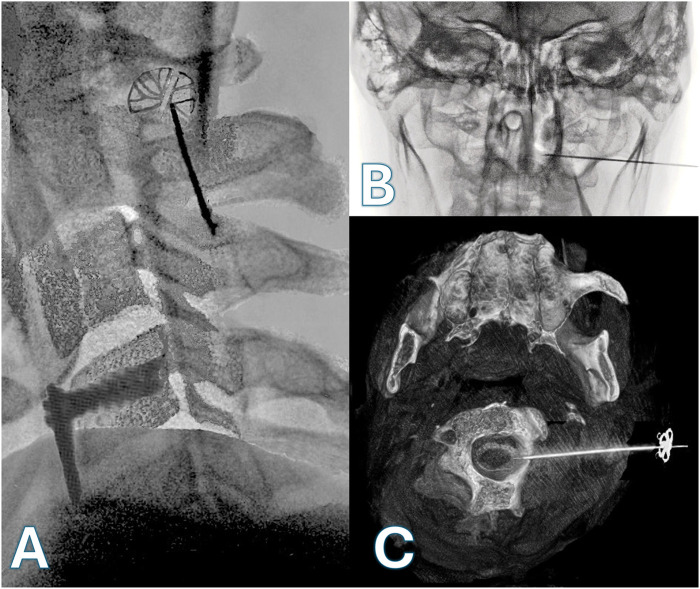 Figure 1
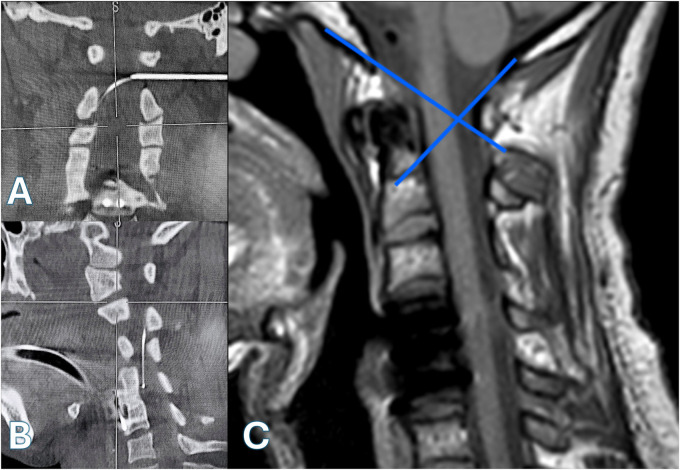 Figure 2
Peer Reviews
No public reviews on file for this paper yet. If you reviewed it on a platform where reviews are public (OpenReview, ICLR, NeurIPS, ICML), you can paste yours below so the community can read it here.
Videos
No videos yet. Explain this paper in a talk, walkthrough, or lecture? Add one.
Taxonomy
TopicsBotulinum Toxin and Related Neurological Disorders · Stroke Rehabilitation and Recovery · Pain Mechanisms and Treatments