Cytomegalovirus Reactivation Is Associated With Lower Rates of Hepatocellular Carcinoma Recurrence After Liver Transplantation
Victoria Aguilera, Sarai Romero Moreno, Isabel Conde, Angel Rubín, Angela Carvalho-Gomes, Mario Romero, Javier Zamora-Olaya, Miguel Angel Gómez-Bravo, Esteban Fuentes-Valenzuela, Cristina Dopazo, Nikita Bilbao, Antonio González, Ana Sánchez-Martínez, Sonia Pascual

TL;DR
This study finds that cytomegalovirus reactivation after liver transplant may reduce the risk of hepatocellular carcinoma recurrence.
Contribution
The study identifies a potential protective effect of CMV reactivation against HCC recurrence in liver transplant patients.
Findings
CMV reactivation was associated with a 54% lower risk of HCC recurrence in multivariate analysis.
Patients with CMV reactivation had similar tacrolimus exposure as those without, suggesting the effect is not due to immunosuppression differences.
Microvascular invasion and donor type were significant risk factors for HCC recurrence.
Abstract
In patients with hepatocellular carcinoma (HCC), undergoing liver transplantation (LT), cytomegalovirus reactivation (CMVr) may modulate the immune system to prevent tumor recurrence. In this multicenter retrospective study (2010–2015) involving 15 institutions, we assessed the effect of early CMVr in tumor recurrence rates among 771-LT HCC patients with tacrolimus-based immunosuppression (88% men, mean age 58 years). CMV prophylaxis was implemented for 19.7% of patients, while the rest were managed with preemptive therapy. The Milan criteria were met by 88% of patients. Microvascular invasion was present in 12.7% of explanted livers. The serum AFP level before transplantation was 5.1 (3–15) ng/mL. After a median follow-up of 7.4 years, 101 patients (13%) experienced HCC recurrence. CMVr occurred in 235 patients (30.5%) at a median of 41.5 days post-LT and 42 patients (5.6%) had CMV…
Genes, proteins, chemicals, diseases, species, mutations and cell lines named across the full text — each resolved to its canonical identifier and authoritative record.
Click any figure to enlarge with its caption.
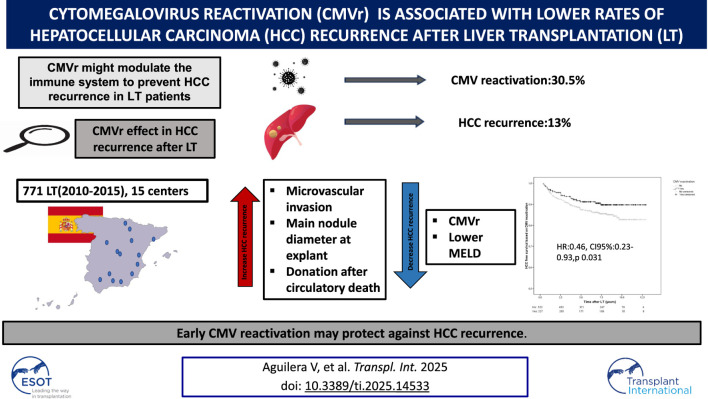 Figure 1
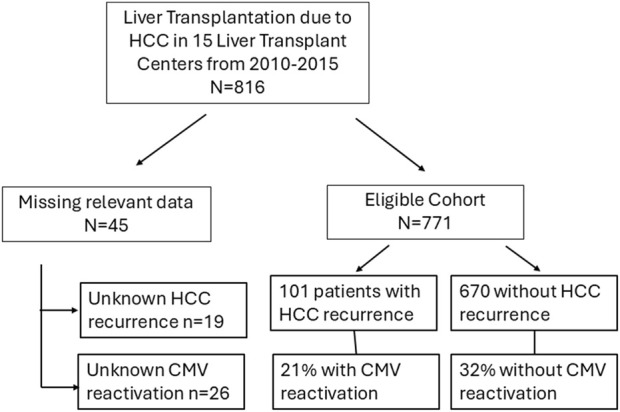 Figure 2
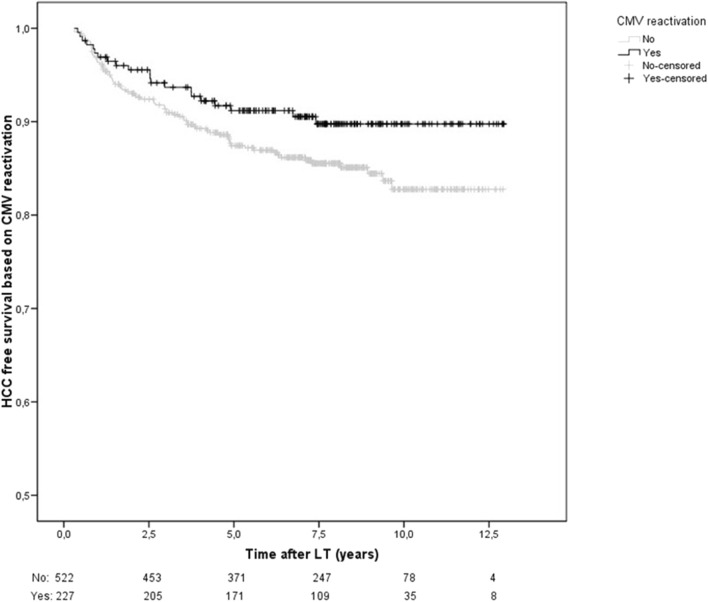 Figure 3
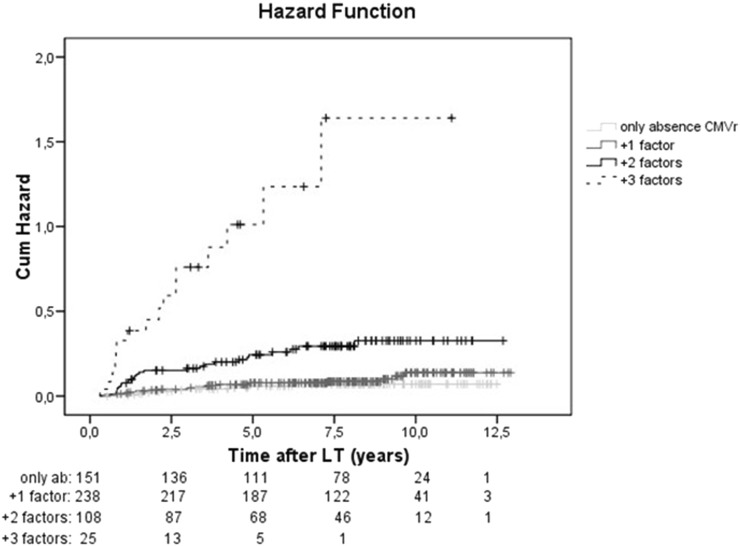 Figure 4
Peer Reviews
No public reviews on file for this paper yet. If you reviewed it on a platform where reviews are public (OpenReview, ICLR, NeurIPS, ICML), you can paste yours below so the community can read it here.
Videos
No videos yet. Explain this paper in a talk, walkthrough, or lecture? Add one.
Taxonomy
TopicsCytomegalovirus and herpesvirus research · Herpesvirus Infections and Treatments · Organ Transplantation Techniques and Outcomes