The impact of internet use on the subjective age of older adults: evidence and mechanisms
Zeyu Kong, Anqin Zhu

TL;DR
Using the internet helps older adults feel younger by improving health, confidence, and social connections.
Contribution
This study identifies mechanisms through which internet use reduces subjective age in older adults.
Findings
Internet use significantly lowers the subjective age of older adults.
The effect is stronger for younger-old individuals and those with better economic conditions.
Health, self-efficacy, and social capital mediate the impact of internet use on subjective age.
Abstract
In the context of digitalization and population aging, leveraging Internet technology to reduce the subjective age of older adults helps to promote active aging and healthy aging, thereby contributing to the realization of the development of high-quality national undertakings for the aged. Data from the Chinese Longitudinal Aging Social Survey (CLASS) in 2020 were analyzed. Regression analyses and instrumental variable methods were employed to examine the main effects, heterogeneous effects, and mechanisms of Internet use on the subjective age of older adults. Latent class models and multinomial treatment effect models were used to explore the impact of Internet use patterns on the subjective age of older adults. Internet use has a significant negative effect on the subjective age of older adults. This conclusion still holds after ruling out endogeneity using instrumental variables…
Genes, proteins, chemicals, diseases, species, mutations and cell lines named across the full text — each resolved to its canonical identifier and authoritative record.
Click any figure to enlarge with its caption.
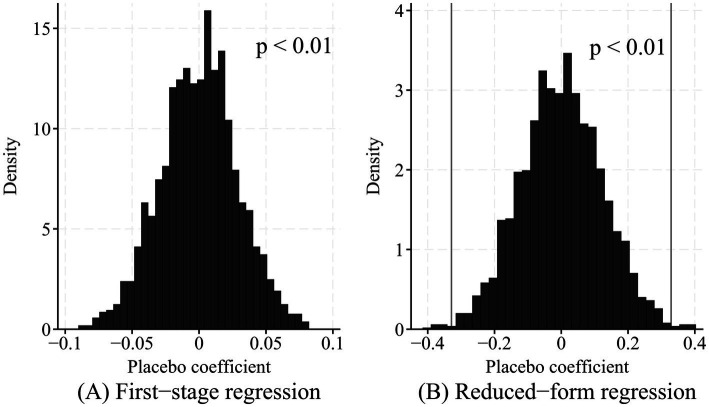 Figure 1
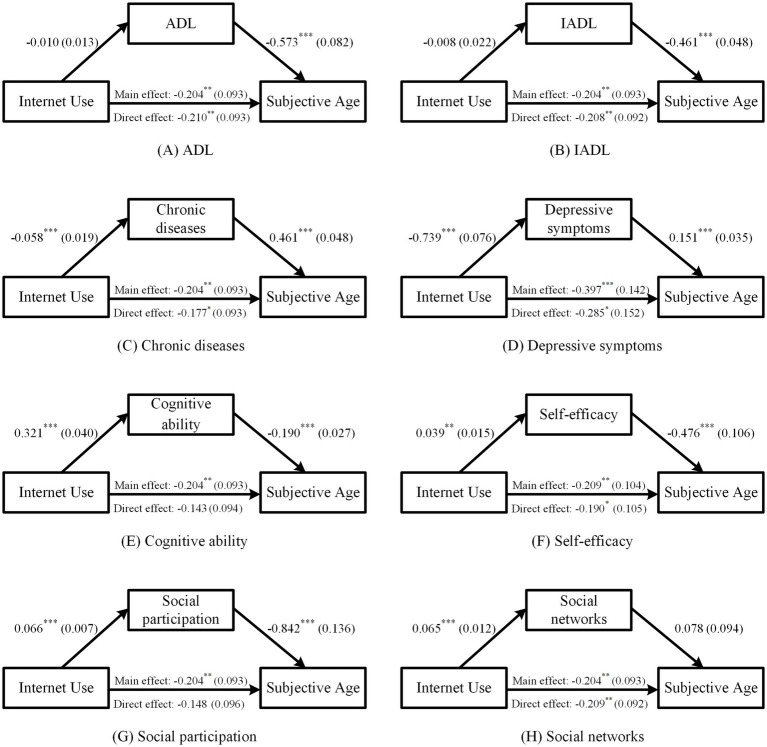 Figure 2
Peer Reviews
No public reviews on file for this paper yet. If you reviewed it on a platform where reviews are public (OpenReview, ICLR, NeurIPS, ICML), you can paste yours below so the community can read it here.
Videos
No videos yet. Explain this paper in a talk, walkthrough, or lecture? Add one.
Taxonomy
TopicsTechnology Use by Older Adults · Aging and Gerontology Research · Retirement, Disability, and Employment