Experimental Evaluation of Dose-Dependent Hepatorenal Toxicity of Traditionally Prepared Arak in Swiss Albino Mice
Rebuma Sorsa, Niguse Hamba, Daba Abdissa, Zelalem Banjaw, Hawi Gobena, Muntaha Hamza, Melese Abere, Tilahun Alemayehu Nigatu

TL;DR
This study examines how traditionally prepared Arak affects the liver and kidneys of mice at different doses, finding harmful effects that increase with higher doses.
Contribution
The study provides new empirical evidence on the dose-dependent hepatorenal toxicity of traditionally prepared Arak in Swiss albino mice.
Findings
Higher doses of Arak caused inflammation, edema, and necrosis in mouse liver and kidney tissues.
Arak increased serum levels of aspartate transaminase, alanine aminotransferase, blood urea nitrogen, and creatinine in a dose-dependent manner.
Lower doses of Arak had less severe effects on liver and kidney function compared to higher doses.
Abstract
Background: Arak is the most popular traditional alcohol in Ethiopia. Although it is widely consumed across the country, its effects on different organs have not been well studied yet. Thus, this study aims to evaluate the dose-dependent hepatorenal toxicity of traditionally prepared Arak in Swiss albino mice. Methods: The investigation utilized 24 newly bred Swiss albino mice (12 males and 12 females) aged 8–10 weeks, divided into four groups of six individuals each (three males and three females), with Group I receiving 1 mL of distilled water/kg, and Groups II–IV receiving 1 mL/kg of 20%, 40%, and 45% Arak, respectively, orally on daily basis for six weeks; the investigation included blood, urea and nitrogen; creatinine; aspartate transaminase; alanine aminotransferase; and histological examination. Results: The study found that Arak and its metabolite, ethanol, have a…
Genes, proteins, chemicals, diseases, species, mutations and cell lines named across the full text — each resolved to its canonical identifier and authoritative record.
Click any figure to enlarge with its caption.
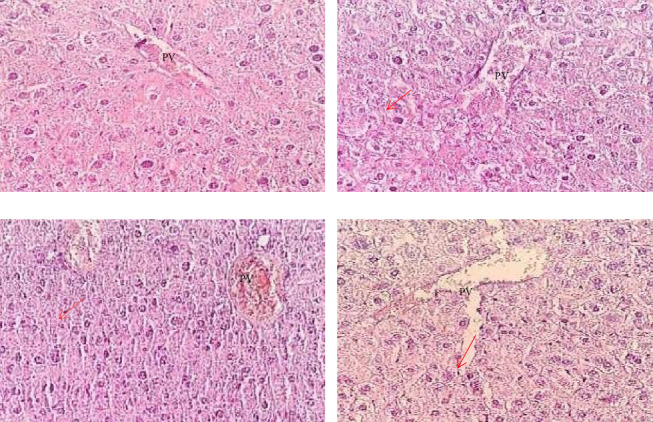 Figure 1
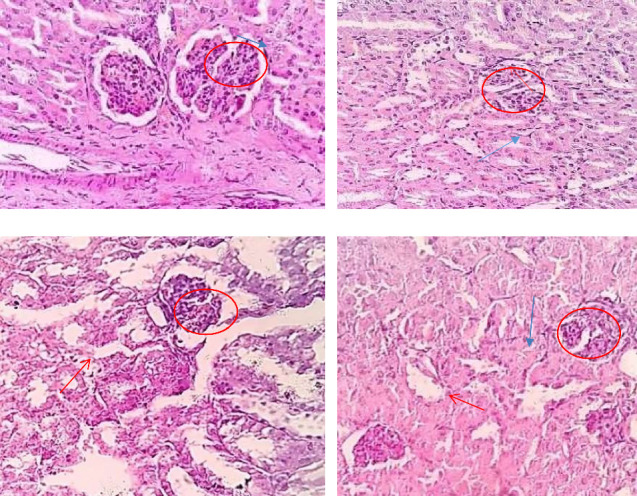 Figure 2
Peer Reviews
No public reviews on file for this paper yet. If you reviewed it on a platform where reviews are public (OpenReview, ICLR, NeurIPS, ICML), you can paste yours below so the community can read it here.
Videos
No videos yet. Explain this paper in a talk, walkthrough, or lecture? Add one.
Taxonomy
TopicsDrug-Induced Hepatotoxicity and Protection · Natural Antidiabetic Agents Studies · Ethnobotanical and Medicinal Plants Studies