Treatment of Focal Chondral Lesions in the Patellofemoral Joint with Collagen Membrane: Clinical and Functional Outcomes in a Two-Year Follow-Up
Pedro Debieux, José Ricardo Dantas Moura Costa, Wesley Araujo Weis, Diego da Costa Astur, Camila Cohen Kaleka, Moisés Cohen

TL;DR
This study shows that using the AMIC technique to treat cartilage damage in the patellofemoral joint leads to significant clinical and functional improvements over two years.
Contribution
The study provides long-term clinical evidence for the effectiveness of the AMIC technique in treating patellofemoral chondral lesions.
Findings
Patients showed statistically significant improvements in multiple outcome scores after AMIC treatment.
All treated chondral defects were full-thickness (grade IV) and showed functional recovery.
The AMIC technique was found to be safe and effective for properly selected cases.
Abstract
To evaluate the clinical and functional outcomes of patients undergoing surgical treatment to repair focal chondral lesions in the patella and trochlea using the autologous matrix-induced chondrogenesis (AMIC) technique after a minimum follow-up of 2 years. A total of 24 patients (25 knees) with a mean age of 39.6 ± 4.7 years underwent the patellofemoral AMIC technique and evaluation over a mean follow-up of 3.64 ± 0.65 years. We collected data on patient factors, lesion morphology, and patient-reported outcome measures, including the International Knee Documentation Committee (IKDC), Tegner, Kujala, Fulkerson, and Lysholm scores, as well as the Visual Analog Scale (VAS). Male subjects accounted for 76% of the sample. The mean defect size of the chondral lesions was of 1.99 ± 0.36 cm 2 . All defects were of grade IV according to the Outerbridge classification. At the last follow-up,…
Genes, proteins, chemicals, diseases, species, mutations and cell lines named across the full text — each resolved to its canonical identifier and authoritative record.
Click any figure to enlarge with its caption.
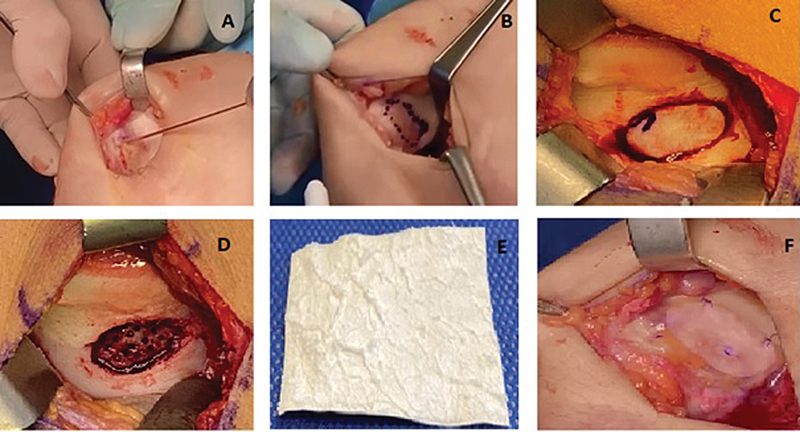 Figure 1
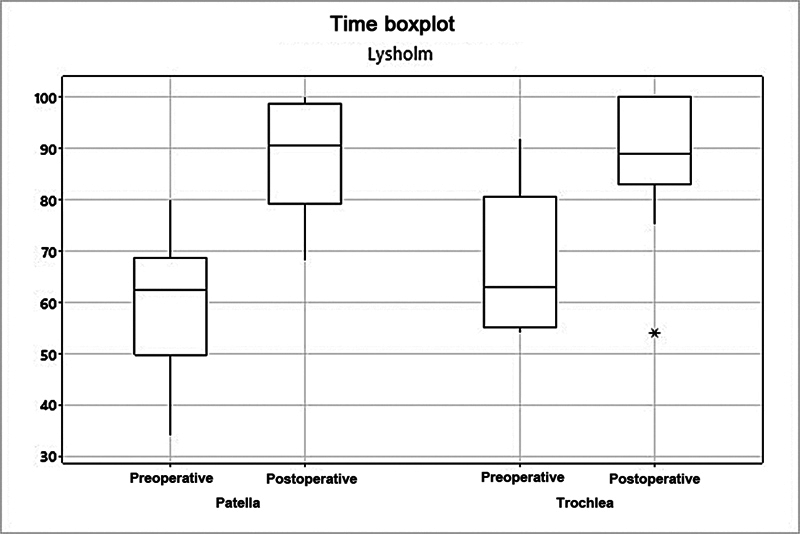 Figure 2
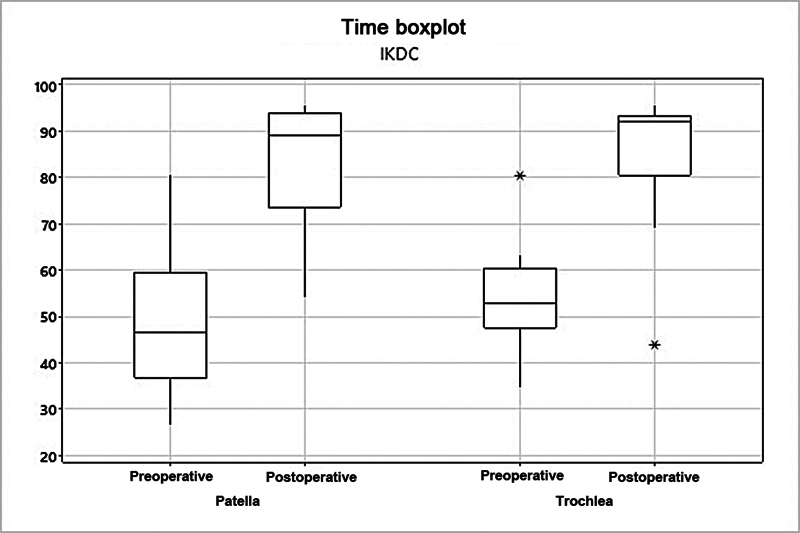 Figure 3
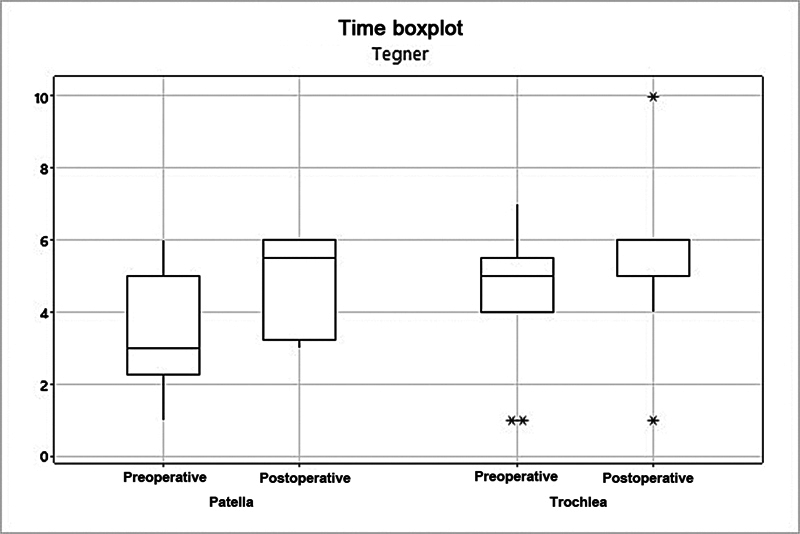 Figure 4
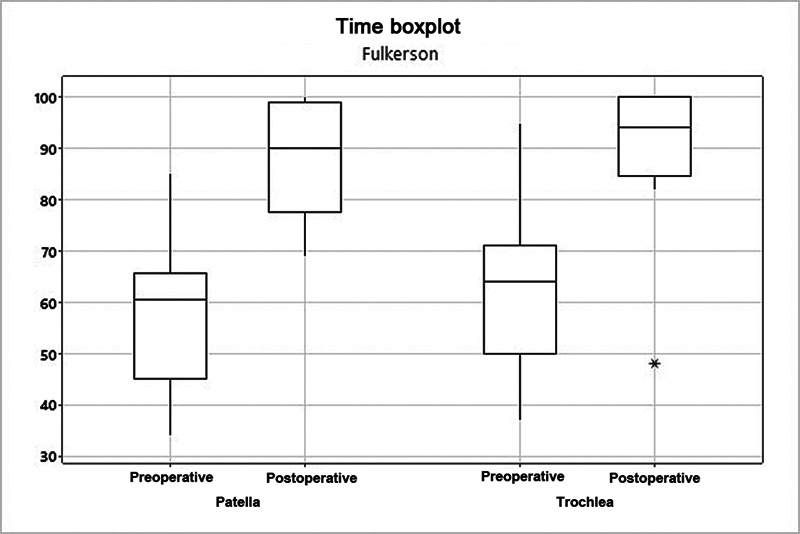 Figure 5
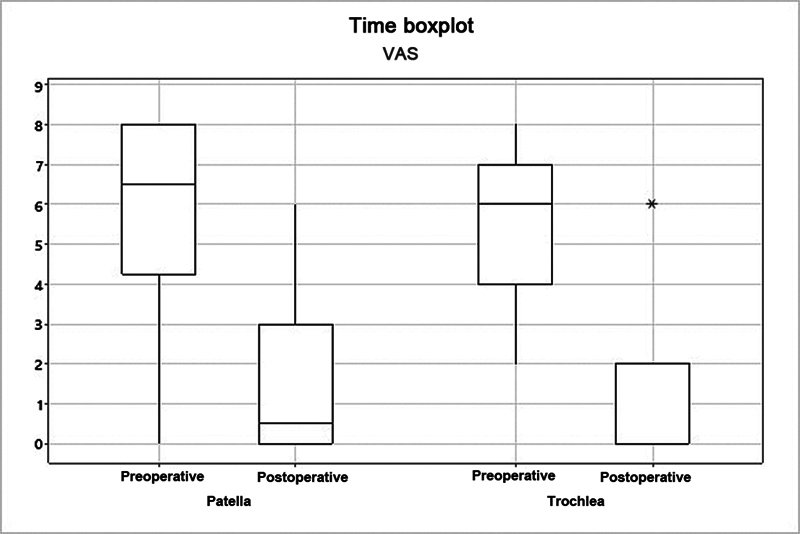 Figure 6
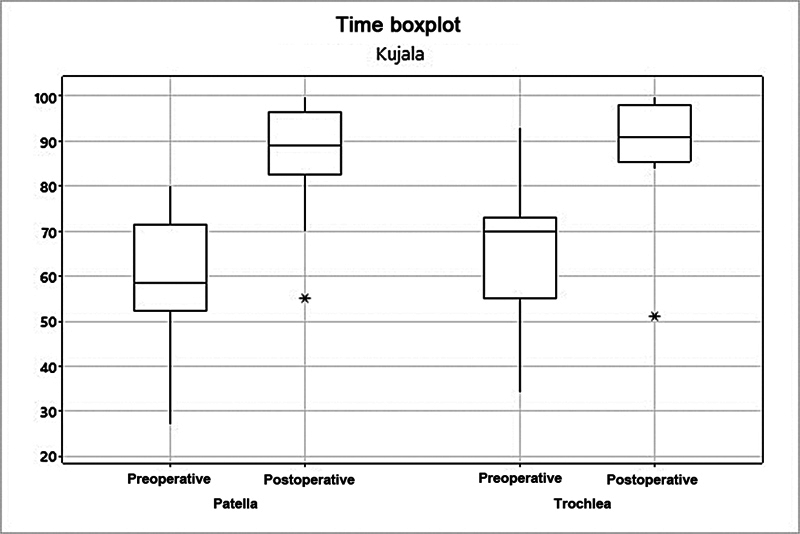 Figure 7
Peer Reviews
No public reviews on file for this paper yet. If you reviewed it on a platform where reviews are public (OpenReview, ICLR, NeurIPS, ICML), you can paste yours below so the community can read it here.
Videos
No videos yet. Explain this paper in a talk, walkthrough, or lecture? Add one.
Taxonomy
TopicsLower Extremity Biomechanics and Pathologies · Knee injuries and reconstruction techniques · Tendon Structure and Treatment