Sox9 in the epicardium: Implications for cell invasion, differentiation, and coronary vascular development
Andrew B. Harvey, Allison M. Trouten, Renélyn A. Wolters, Jenna R. Drummond, Raymond N. Deepe, Hannah G. Tarolli, Inara Devji, Silvia G. Vaena, Martin J. Romeo, Robin Muise-Helmericks, Paula S. Ramos, Russell A. Norris, Ge Tao, Andy Wessels

TL;DR
This study explores how the Sox9 gene affects heart development by influencing cell invasion, differentiation, and blood vessel formation in the epicardium.
Contribution
The study reveals new roles of Sox9 in epicardial cell fate decisions and coronary vascular development using single-cell RNA-sequencing.
Findings
Sox9 deficiency reduces epicardial-derived cell invasion and delays coronary plexus formation.
Sox9-deficient cells show elevated vascular smooth muscle cell gene expression.
Transcriptional changes confirm impaired epicardial-to-mesenchymal transformation in Sox9-deficient cells.
Abstract
The epicardium is the mesothelial lining of the heart and is a source of progenitor cells during heart development, giving rise to an invasive population of mesenchymal cells which differentiate into cardiac fibroblasts, mural cells, and other cell types essential for heart structure and function. Previously, we showed that epicardial-specific deletion of the gene encoding SRY-box transcription factor 9 (SOX9) impairs epicardial-derived cell invasion and reduces their contribution to the atrioventricular valve mesenchyme. In this study, we use single-cell RNA-sequencing to investigate broader roles of Sox9 in the epicardium as it relates to epicardial invasion, differentiation, and vascular development. We identified transcriptional changes indicative of decreased epicardial-to-mesenchymal transformation consistent with histological observations. Immunofluorescence analyses revealed…
Genes, proteins, chemicals, diseases, species, mutations and cell lines named across the full text — each resolved to its canonical identifier and authoritative record.
Click any figure to enlarge with its caption.
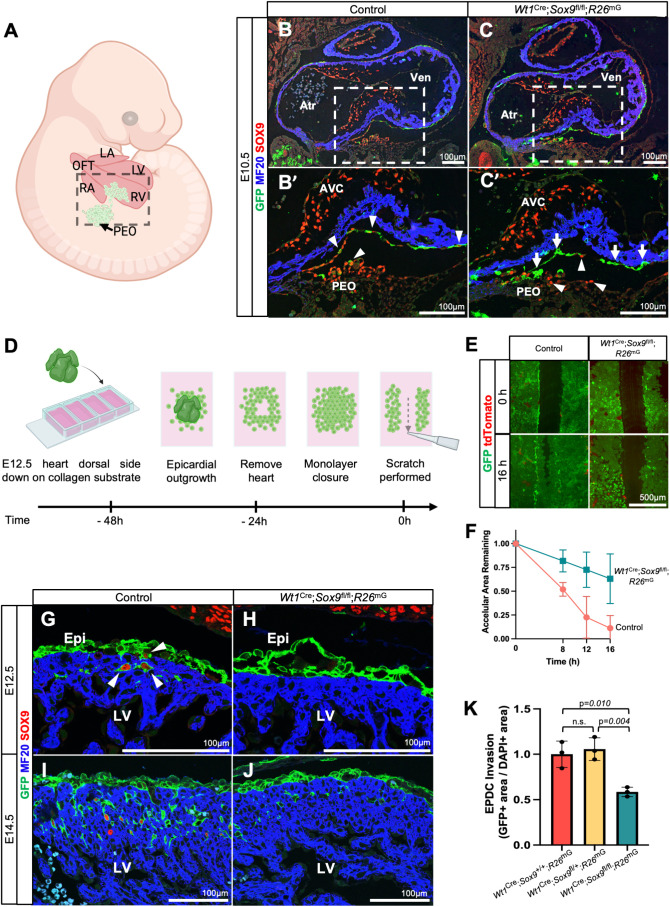 Figure 1
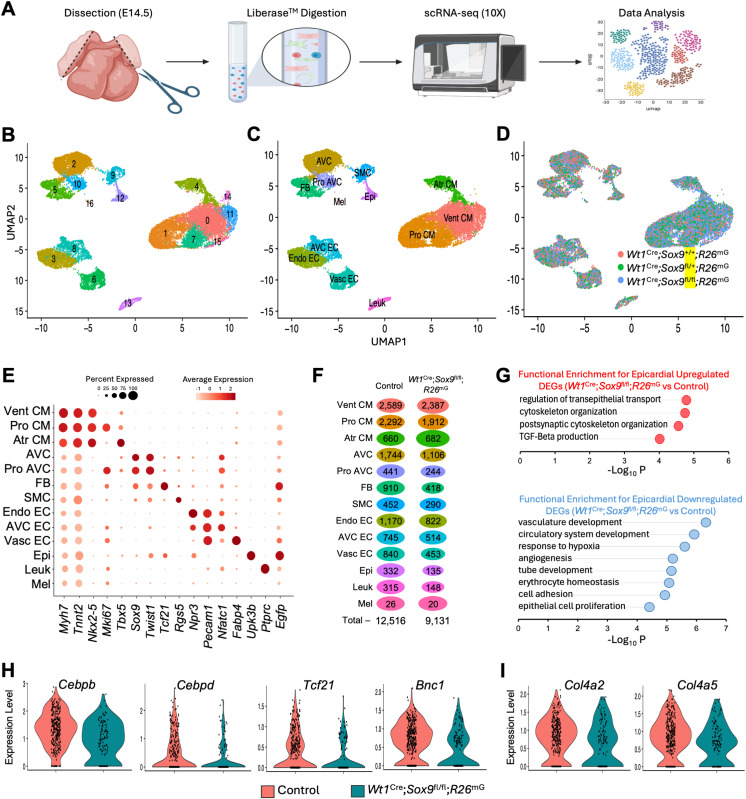 Figure 2
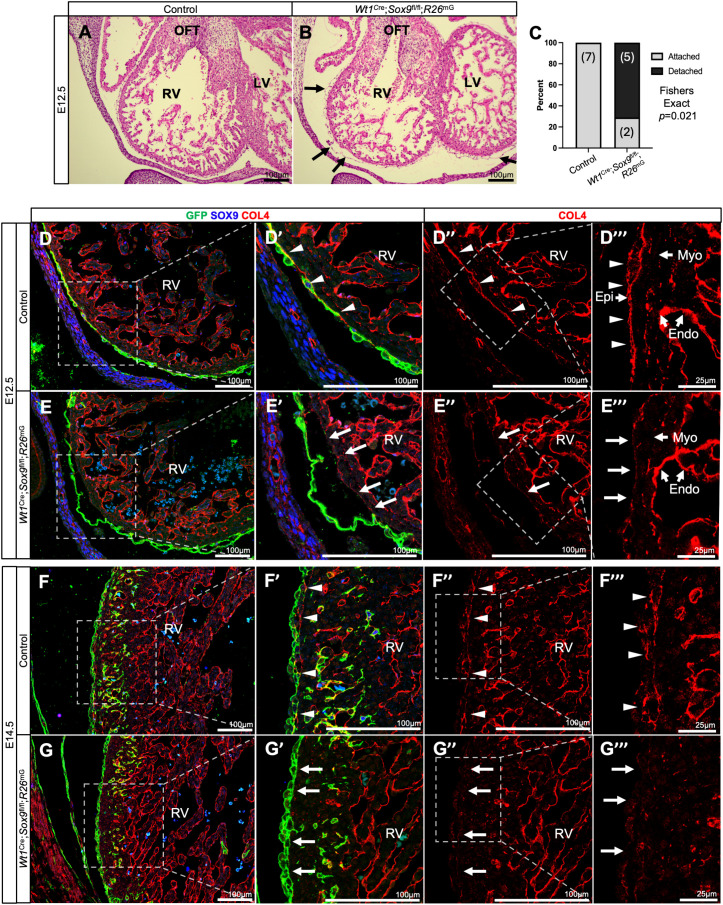 Figure 3
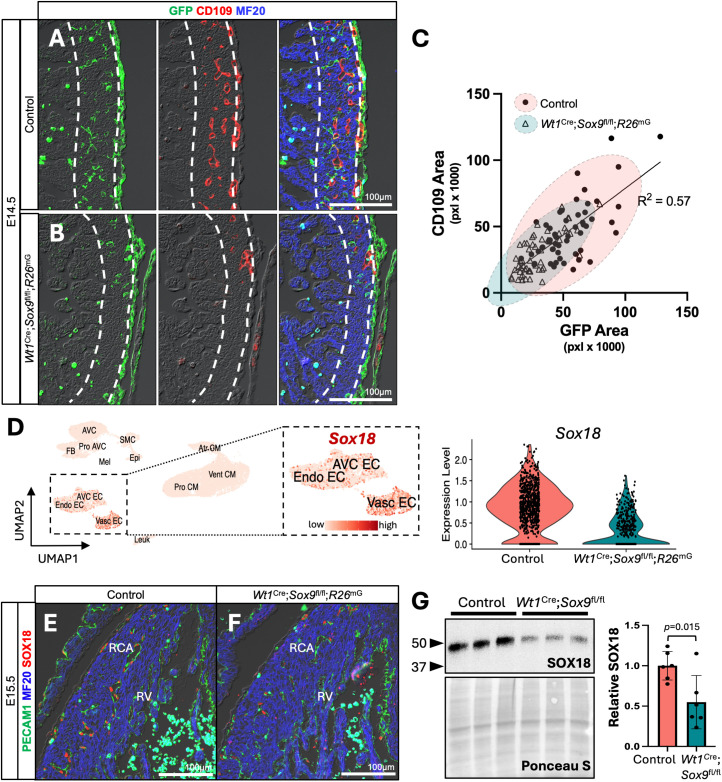 Figure 4
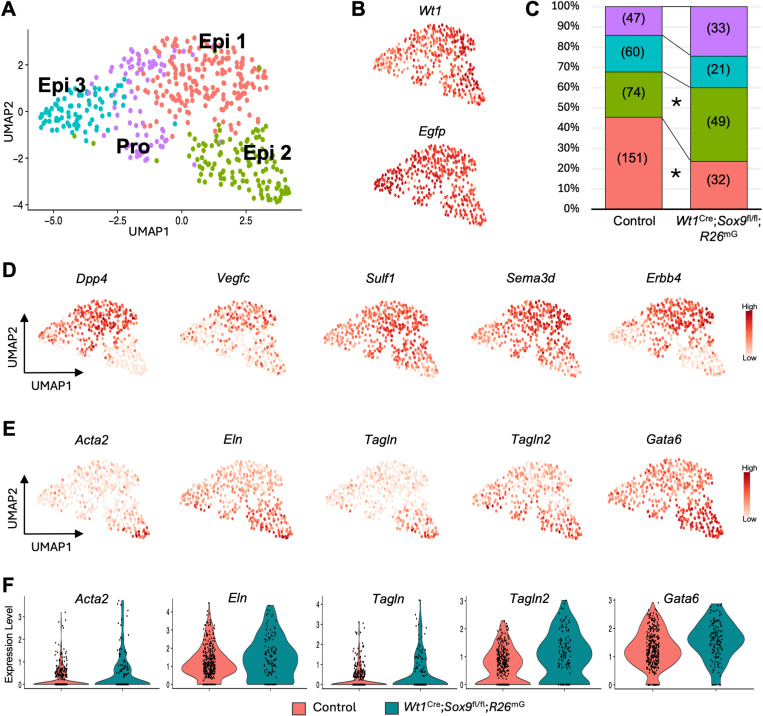 Figure 5
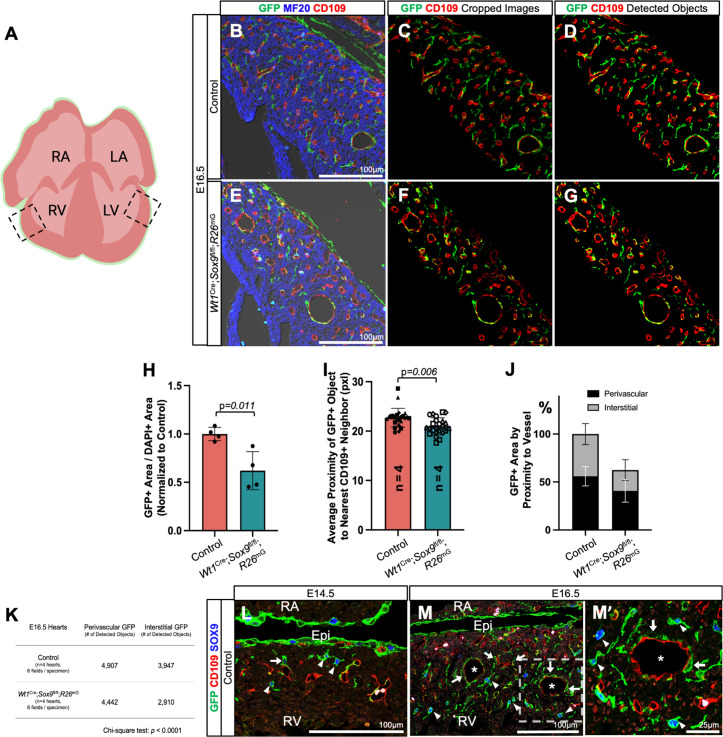 Figure 6
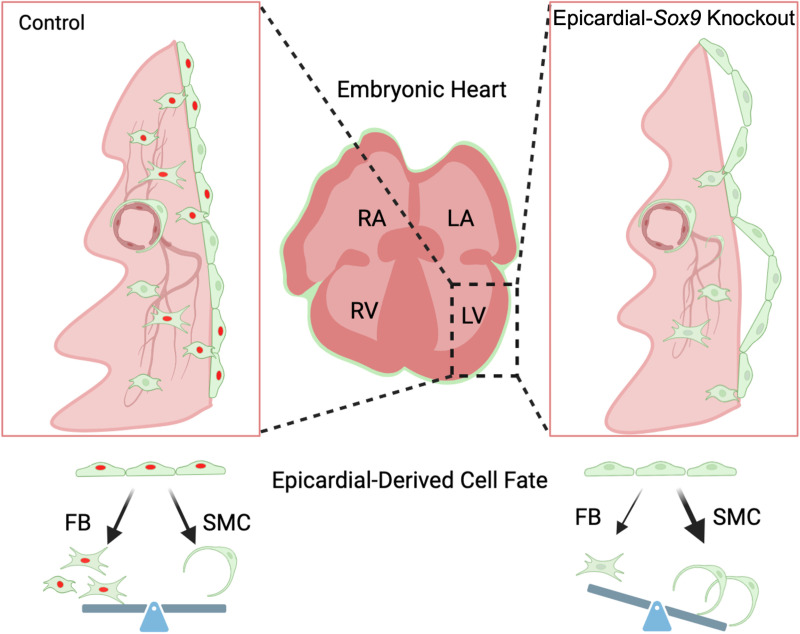 Figure 7
Peer Reviews
No public reviews on file for this paper yet. If you reviewed it on a platform where reviews are public (OpenReview, ICLR, NeurIPS, ICML), you can paste yours below so the community can read it here.
Videos
No videos yet. Explain this paper in a talk, walkthrough, or lecture? Add one.
Taxonomy
TopicsCongenital heart defects research