Impact of symmetry in local learning rules on predictive neural representations and generalization in spatial navigation
Janis Keck, Caswell Barry, Christian F. Doeller, Jürgen Jost, Daniele Marinazzo, Suhita Nadkarni, Daniele Marinazzo, Suhita Nadkarni, Daniele Marinazzo, Suhita Nadkarni

TL;DR
This paper explores how symmetric learning rules in neural networks improve spatial navigation and generalization by creating better predictive representations.
Contribution
The study introduces symmetric learning rules that are invariant to temporal order and demonstrates their benefits in modeling hippocampal function and navigation.
Findings
Symmetric learning rules produce successor representations that align with hippocampal place cell behavior.
Neural networks with symmetric learning rules generalize better in spatial navigation tasks.
Symmetry in learning rules provides an inductive bias beneficial for symmetric state spaces.
Abstract
In spatial cognition, the Successor Representation (SR) from reinforcement learning provides a compelling candidate of how predictive representations are used to encode space. In particular, hippocampal place cells are hypothesized to encode the SR. Here, we investigate how varying the temporal symmetry in learning rules influences those representations. To this end, we use a simple local learning rule which can be made insensitive to the temporal order. We analytically find that a symmetric learning rule results in a successor representation under a symmetrized version of the experienced transition structure. We then apply this rule to a two-layer neural network model loosely resembling hippocampal subfields CA3 - with a symmetric learning rule and recurrent weights - and CA1 - with an asymmetric learning rule and no recurrent weights. Here, when exposed repeatedly to a linear track,…
Genes, proteins, chemicals, diseases, species, mutations and cell lines named across the full text — each resolved to its canonical identifier and authoritative record.
Click any figure to enlarge with its caption.
 Figure 1
 Figure 2
 Figure 3
 Figure 4
 Figure 5
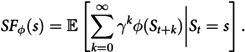 Figure 6
 Figure 7
 Figure 8
 Figure 9
 Figure 10
 Figure 11
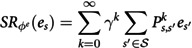 Figure 12
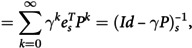 Figure 13
 Figure 14
 Figure 15
 Figure 16
 Figure 17
 Figure 18
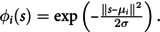 Figure 19
 Figure 20
 Figure 21
 Figure 22
 Figure 23
 Figure 24
 Figure 25
 Figure 26
 Figure 27
 Figure 28
 Figure 29
 Figure 30
 Figure 31
 Figure 32
 Figure 33
 Figure 34
 Figure 35
 Figure 36
 Figure 37
 Figure 38
 Figure 39
 Figure 40
 Figure 41
 Figure 42
 Figure 43
 Figure 44
 Figure 45
 Figure 46
 Figure 47
 Figure 48
 Figure 49
 Figure 50
Peer Reviews
No public reviews on file for this paper yet. If you reviewed it on a platform where reviews are public (OpenReview, ICLR, NeurIPS, ICML), you can paste yours below so the community can read it here.
Videos
No videos yet. Explain this paper in a talk, walkthrough, or lecture? Add one.
Taxonomy
TopicsMemory and Neural Mechanisms · Neuroscience and Neuropharmacology Research · Neural dynamics and brain function