Long-term benefit of vasodilating beta-blockers in acute myocardial infarction patients with mildly reduced left ventricular ejection fraction
Ki Yung Boo, Miyeon Kim, Jae-Geun Lee, Geum Ko, Joon Hyouk Choi, Song-Yi Kim, Seung-Jae Joo, Jin-Yong Hwang, Seung-Ho Hur, Kwang Soo Cha, Myung Ho Jeong, Ahmed Qasim Mohammed Alhatemi, Ahmed Qasim Mohammed Alhatemi, Ahmed Qasim Mohammed Alhatemi, Ahmed Qasim Mohammed Alhatemi

TL;DR
Vasodilating beta-blockers may offer better long-term outcomes for heart attack patients with mildly reduced heart function compared to conventional beta-blockers.
Contribution
This study provides evidence that vasodilating beta-blockers improve long-term outcomes in AMI patients with mildly reduced ejection fraction.
Findings
Vasodilating beta-blockers were associated with a 20% lower risk of adverse outcomes compared to conventional beta-blockers.
Propensity score-matched analysis showed a 34% lower risk of adverse outcomes with vasodilating beta-blockers.
Vasodilating beta-blockers reduced cardiac death and heart failure hospitalizations but not recurrent heart attacks.
Abstract
Beta-blockers have been considered the cornerstone of treatment for patients with acute myocardial infarction (AMI). However, long-term benefits of vasodilating beta-blockers remain uncertain. This study aimed to investigate the long-term clinical benefits of vasodilating beta-blockers compared to conventional beta-blockers in AMI patients with mildly reduced ejection fraction (mrEF). Among 13,624 patients who enrolled in the nationwide AMI database of South Korea, the KAMIR-NIH Registry, 2,662 AMI patients with mrEF, who were prescribed beta-blockers at discharge were selected for this study. The primary outcome was a composite of cardiac death, recurrent MI, or hospitalization for heart failure (HF) during 3-year follow up period. In the entire cohort, the use of vasodilating beta-blockers at discharge was associated with lower incidence of primary outcome at 3-year (hazard ratio [HR]…
Genes, proteins, chemicals, diseases, species, mutations and cell lines named across the full text — each resolved to its canonical identifier and authoritative record.
Click any figure to enlarge with its caption.
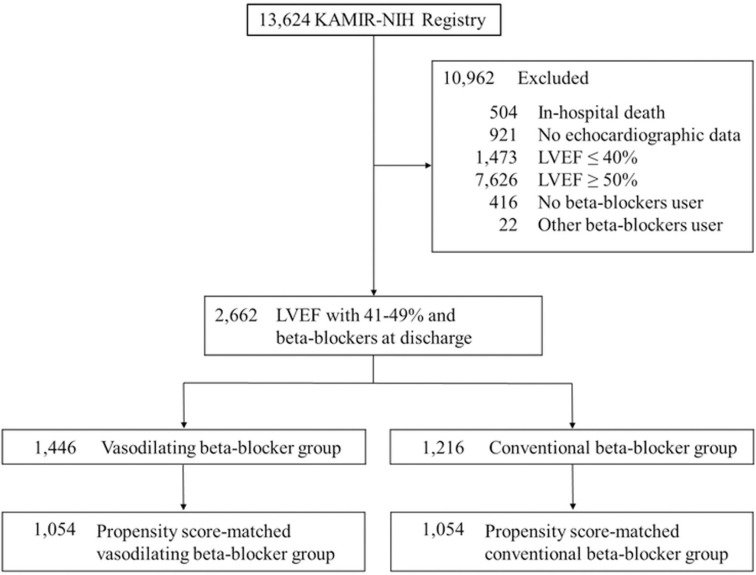 Figure 1
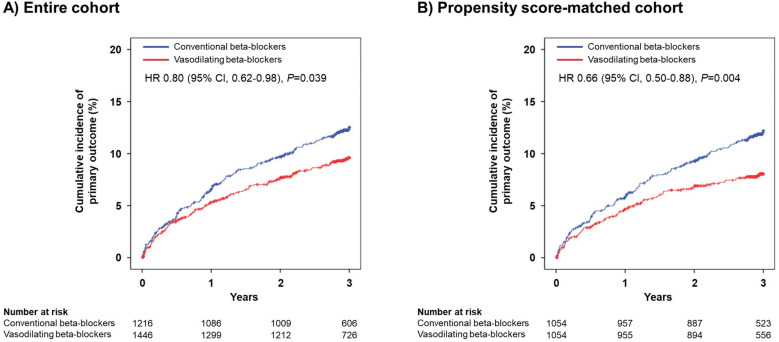 Figure 2
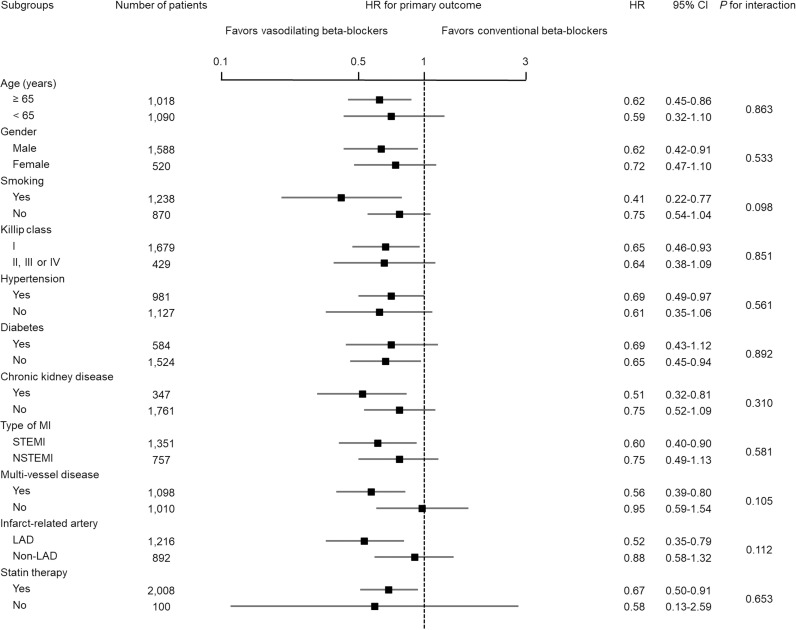 Figure 3
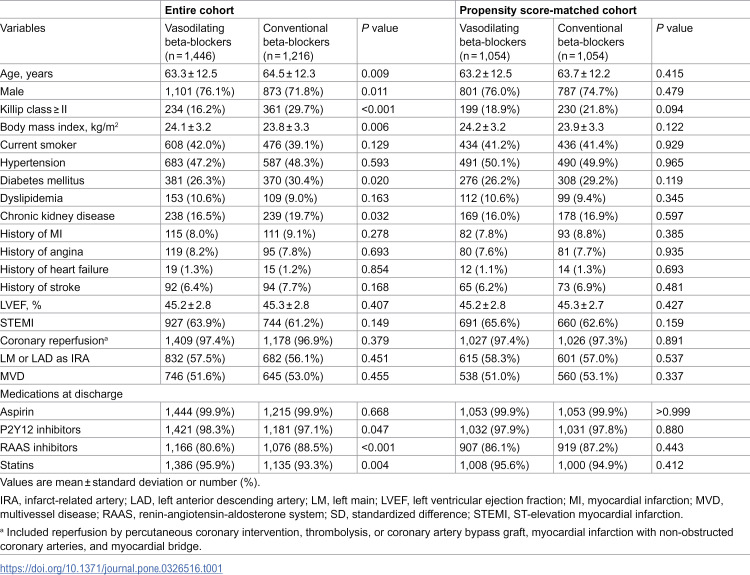 Figure 4
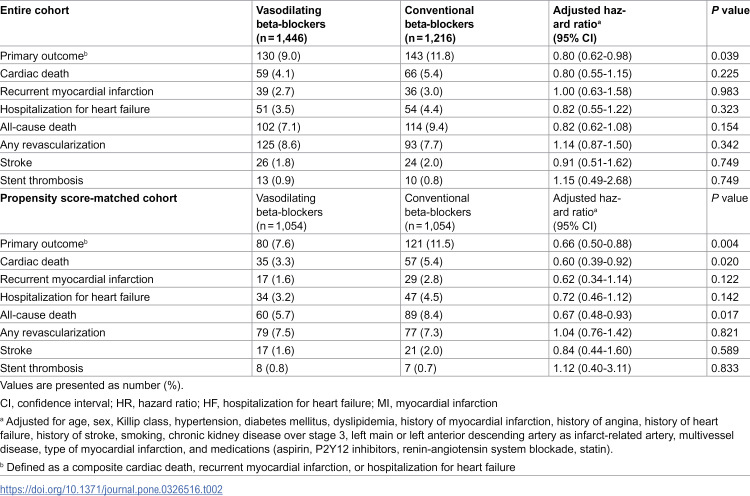 Figure 5
Peer Reviews
No public reviews on file for this paper yet. If you reviewed it on a platform where reviews are public (OpenReview, ICLR, NeurIPS, ICML), you can paste yours below so the community can read it here.
Videos
No videos yet. Explain this paper in a talk, walkthrough, or lecture? Add one.
Taxonomy
TopicsAcute Myocardial Infarction Research · Cardiac Imaging and Diagnostics · Heart Failure Treatment and Management